
Today in News History
On July 12, several notable moments in the history of News stand out. In 1576, While exploring the North Atlantic Ocean in an attempt to find the Northwest Passage, Martin Frobisher sights Greenland, mistaking it for the hypothesized (but non-existent) island of "Frisland". In 1836, The Fly-fisher's Entomology is published by Alfred Ronalds. The book transformed the sport and went to many editions. In 1849, N. E. Brown, English plant taxonomist and authority on succulents (died 1934) was born. In 1894, Erna Mohr, German zoologist (died 1968) was born. In 1901, Gwendolyn Lizarraga, Belizean businesswoman, activist, and politician (died 1975) was born. In 1930, Ezra Vogel, American sociologist (died 2020) was born. In 1930, Mike Foster, American politician, 53rd Governor of Louisiana (died 2020) was born. In 1933, Frank Kelso, American admiral and politician, United States Secretary of the Navy (died 2013) was born. In 1955, Balaji Sadasivan, Singaporean neurosurgeon and politician, Singaporean Minister of Health (died 2010) was born. In 1960, Congo Crisis: The State of Katanga breaks away from the Democratic Republic of the Congo. Together, these milestones provide historical context for today's news news and ongoing narratives.
Across ecosystems, dead organisms help shape the living world
A new paper has found the remnants of “foundation species” strongly influenced the fate of survivors.
Narrative Intelligence Brief
This article was published by Canada's National Observer, a source frequently categorized with a lean left bias based in Canada. Our narrative intelligence engine continuously monitors coverage from this outlet to track framing, bias, and rhetorical patterns. Our initial algorithmic scan of this specific piece did not flag high-confidence rhetorical techniques, suggesting a generally straightforward reporting style or neutral framing. By understanding the editorial perspective of Canada's National Observer, readers can better contextualize the information presented and compare it across our broader media matrix to find the real narrative.
More from Canada's National Observer
July 10, 2026
Manitoba expands flood assistance programs as cleanup continues
July 10, 2026
Unemployment rate falls to 6.5 per cent in June as youth add 33,000 jobs: StatCan
July 10, 2026
Boston Bar, BC, residents look on as a wildfire burns near small highway community
July 10, 2026
'It's infectious': Optimism is a priority for Ontario town's chief positivity officer
July 10, 2026
One of Spain's deadliest wildfires has killed at least 11 people, with 19 others still missing
Analysis Methodology
This narrative analysis was generated using the CoDataLab Global Intelligence Engine. Our proprietary AI scans thousands of cross-border sources to identify sentiment patterns, framing techniques, and potential media bias. While AI provides the data-driven foundation, our objective is to empower readers with additional context beyond the standard headline.The content displayed above is a structured summary designed for rapid information processing. For the full original report, please visit the source outlet.More Coverage
Discussion
"wimbledon"
Back-To-Back! Jannik Sinner Keeps Hold of His Wimbledon Crown

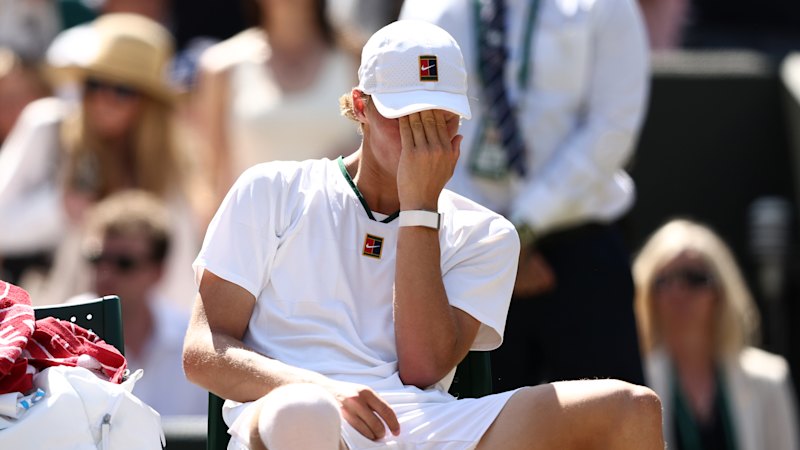
Heartbreak for Cruz Hewitt as teen loses Wimbledon boys’ final thriller
Jannik Sinner wins Wimbledon: Top seed beats Alexander Zverev in thrilling men's final to claim back-to-back titles

How other outlets are covering this story
Compare narratives across 6 related reports from 6 sources. Real Narrative News aggregates the coverage spectrum so you can see who emphasises what — bias tags reflect the outlet, not the story.
Coverage bias distribution
6 sources
Left 0%
Center 67%
Right 17%
Us Weekly
· Jul 3, 2026
Lower Oral Microbiome Diversity Tied to Higher Death Risk, Study Finds
The gut microbiome has dominated wellness conversations for years, but the community of bacteria living in your mouth may deserve equal attention. New research links the oral microbiome directly to how long you live and how your brain ages, giving one of the body’s most diverse microbial habitats a starring role in whole-body health. The []
Ars Technica
· Jun 25, 2026
New effort will get genome sequences for entire Endangered Species list
Colossal Biosciences will be biobanking tissues from all of them as well.
Science Daily
· Jun 24, 2026
Scientists discover hidden “footprints of death” that may help viruses spread
Scientists have uncovered a surprising new twist in what happens when cells die. As dying cells break apart, they leave behind tiny “footprints of death” packed with newly discovered particles that help guide the immune system to clean up the remains. But researchers found that influenza viruses can exploit this process, hiding inside these microscopic packages and potentially using them to spread to nearby cells.
Euro Weekly News
· Jul 8, 2026
Rediscovering the natural world through art. Free exhibition from July to October
“Biomagico” invites you to view a series of pieces designed around the idea of reconnecting ourselves with the natural world. []
New Scientist
· Jul 2, 2026
Synthetic biology may finally be ready to solve life's biggest mystery
What makes something alive? We simply don't know, but synthetic biologists are a step closer to providing an answer thanks to SpudCell, the most sophisticated attempt at creating an artificial life form yet
The Hindu BusinessLine
· Jun 23, 2026
Himachal forests worth ₹22,600 crore in bioeconomy, says report
The bioeconomy is an economic model which, instead of relying on fossil-based fuel, uses renewable biological resources such as crops, forests, animals and micro-organisms to produce food, energy, materials and services
Topics:
Related coverage for "Across ecosystems, dead organisms help shape the living world": Us Weekly — Lower Oral Microbiome Diversity Tied to Higher Death Risk, Study Finds. Ars Technica — New effort will get genome sequences for entire Endangered Species list. Science Daily — Scientists discover hidden “footprints of death” that may help viruses spread. Euro Weekly News — Rediscovering the natural world through art. Free exhibition from July to October. New Scientist — Synthetic biology may finally be ready to solve life's biggest mystery. The Hindu BusinessLine — Himachal forests worth ₹22,600 crore in bioeconomy, says report