Today in News History
On June 27, several notable moments in the history of News stand out. In 1880, Helen Keller, American author, academic, and activist (died 1968) was born. In 1936, Lucille Clifton, American author and poet (died 2010) was born. In 1941, Romanian authorities launch one of the most violent pogroms in Jewish history in the city of Iași, resulting in the murder of at least 13,266 Jews. In 1957, Hurricane Audrey makes landfall near the Texas-Louisiana border, killing over 400 people, mainly in and around Cameron, Louisiana. In 1975, Tobey Maguire, American actor was born. In 1980, The 'Ustica massacre': Itavia Flight 870 crashes in the sea while en route from Bologna to Palermo, Italy, killing all 81 on board. In 1988, The Gare de Lyon rail accident in Paris, France, kills 56 people. In 2005, John T. Walton, American businessman, co-founded the Children's Scholarship Fund (born 1946) passed away. In 2018, William McBride, Australian obstetrician (born 1927) passed away. In 2018, Liz Jackson, Australian journalist and former barrister (born 1951) passed away. Together, these milestones provide historical context for today's news news and ongoing narratives.
Abortion Bans Not Only Harm Patients, But Cost US Economy $140 Billion: Analysis
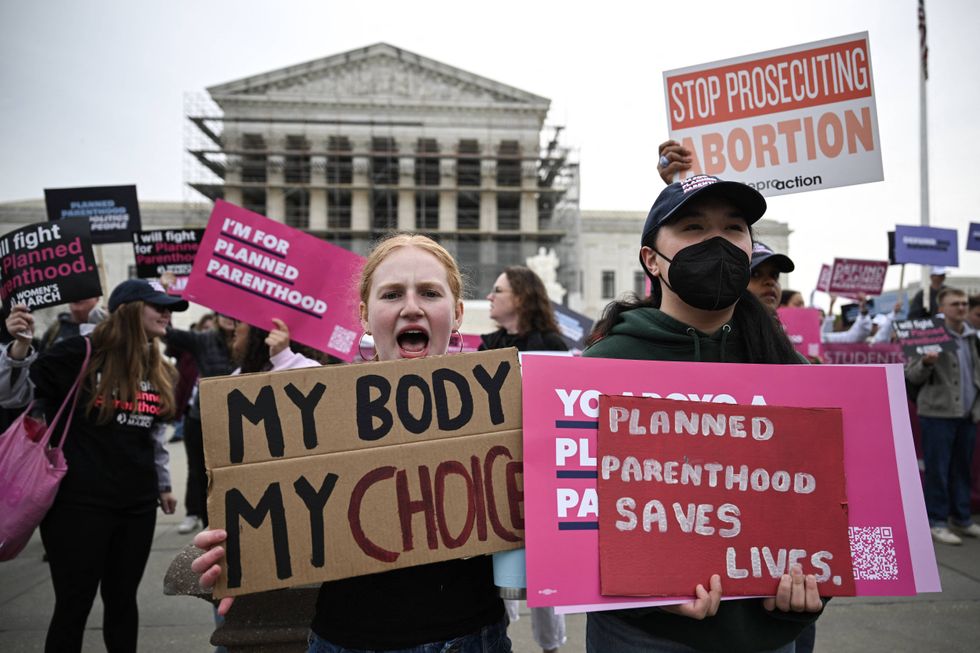
Reproductive rights advocates and experts have long highlighted the dangers of abortion bans to people's health, but amid a wave of new state-level restrictions in the wake of Roe v. Wade's reversal, some have also recently emphasized the economic impact, as detailed in an analysis published Tuesday by the Institute for Women's Policy Research.IWPR's latest estimates show that states with the most restrictive abortion policies could cost the national economy nearly 68 billion annually in lost earnings, up from 64 billion in last year's estimate, according to the analysis. Historically, legal abortion access has increased women's labor force participation and earnings. IWPR's analyses suggest that abortion restrictions continue to erode those gains nationwide, reducing women's labor force participation and earnings potential while weakening state and national economies in the process.Those losses—amounting to billions of dollars—could otherwise support what families actually need: affordable healthcare, caregiving, higher wages, business growth, and new jobs that strengthen local communities and state economies, the report notes. This 68 billion estimate reflects only the impact of the most severe restrictions, including total bans and six-week gestational bans, that were in effect in 16 states in 2025.The publication points out that many other states may not have banned abortion outright, but still impose barriers that make abortion care harder to access, like waiting periods, mandated counseling, or targeted regulations on abortion providers that delay or deny care altogether. When accounting for all state-level restrictions on abortion access, combined with the federal funding prohibitions and the absence of federal protections, the annual average economic cost now exceeds 140 billion nationwide.The overall figure is nearly 7 billion more than IWPR's estimate from last year. Putting that figure into context, the report explains that 7 billion could fund Supplemental Nutrition Assistance Program (SNAP) benefits for about 1 million American families with children for an entire year. This is a striking figure considering the so-called 'One Big Beautiful Bill's' cuts to the program, which are projected to reduce or eliminate benefits for many low-income households. Removing barriers to reproductive care on a national scale could mean nearly 325,000 more women participating in the labor force each year, with the largest increases concentrated in states with some of the most restrictive abortion policies, IWPR estimated. For example, in Alabama, Kentucky, and Louisiana, their labor force participation could be over 1.3 higher, while in Mississippi, it could be up 1.5.If more women joined the workforce thanks to policies allowing reproductive freedom, IWPR projected that national gross domestic product (GDP) could rise by 0.5, and the economic gains would be largest in states such as Alabama, Arkansas, South Carolina, and West Virginia, which rank poorly on both abortion protections and per capita GDP. These states could potentially see their GDP grow by nearly 1 annually.Like previous analyses, the publication also acknowledges that Black and Latina women are more likely to experience the consequences of restrictive abortion policies and confront additional economic and structural barriers to accessing care that their White counterparts do not—even as abortion restrictions harm all women and the economy more broadly.IWPR president and CEO Jamila K. Taylor stressed in a Tuesday statement that this is fundamentally about human rights and economic justice.We know that legal access to abortion care increases women's autonomy to be able to participate in the labor force, which supports the stability of our entire economy, Taylor said. When states deny people their bodily autonomy, they're also limiting their ability to pursue the education and career options that are right for them and to build financial stability for their family and community. Abortion restrictions don't just harm those who may become pregnant—they harm everyone.President Donald Trump delivered mixed messages during the last campaign cycle: bragging about being the one to appoint the justices who helped reverse Roe with the Dobbs v. Jackson Women's Health Organization decision, but also suggesting that he wasn't in favor of a nationwide ban on abortion and that the issue doesn't really matter to Americans. Since returning to the White House, the Republican and his allies in Congress have taken steps to reduce access to reproductive healthcare, and although the right-wing Supreme Court last month declined to restrict access to mifepristone, at least for now, Trump's Food and Drug Administration (FDA) is currently reviewing the medication, which is commonly used in abortion and miscarriage care.Reproductive rights advocates have sounded the alarm over the FDA review. In response to reporting on it earlier this month, Planned Parenthood CEO Alexis McGill Johnson called it a politically motivated farce.Mifepristone is safe and effective. We know it, the FDA knows it, and the more than 7.5 million people who've used mifepristone for abortion and miscarriage care over the past 25 years know it too, Johnson said. But the Trump administration is bulldozing the overwhelming body of medical research and evidence to try to make it harder for everyone, everywhere to get an abortion. It's time for every American to take this threat seriously.
Narrative Intelligence Brief
This article was published by Common Dreams, a source frequently categorized with a left bias based in United States of America. Our narrative intelligence engine continuously monitors coverage from this outlet to track framing, bias, and rhetorical patterns. Our initial algorithmic scan of this specific piece did not flag high-confidence rhetorical techniques, suggesting a generally straightforward reporting style or neutral framing. By understanding the editorial perspective of Common Dreams, readers can better contextualize the information presented and compare it across our broader media matrix to find the real narrative.
More from Common Dreams
June 27, 2026
AOC to Johnson and Trump: 'If You Don’t Want to Be Prosecuted for Crimes, Don’t Do Crimes'
June 27, 2026
AOC Says Mike Johnson’s GOP Is “Running a Protection Racket” for Trump
June 27, 2026
As Trump's Reflecting Pool Disaster Turns 'Dystopian,' Fully-Dressed Mamdani Jumps Into NYC Public Pool With a Joyful Smile
June 27, 2026
'Newsom Does Not Want to Tax Billionaires,' Say Campaigners, 'But Wants You to Think He Does'
June 27, 2026
In 'Most Serious Test Yet' of Ceasefire Deal, Trump Bombs Iran After Strike on Cargo Ship in Strait
Analysis Methodology
This narrative analysis was generated using the CoDataLab Global Intelligence Engine. Our proprietary AI scans thousands of cross-border sources to identify sentiment patterns, framing techniques, and potential media bias. While AI provides the data-driven foundation, our objective is to empower readers with additional context beyond the standard headline.The content displayed above is a structured summary designed for rapid information processing. For the full original report, please visit the source outlet.More Coverage
Discussion