Today in News History
On June 27, several notable moments in the history of News stand out. In 1941, Romanian authorities launch one of the most violent pogroms in Jewish history in the city of Iași, resulting in the murder of at least 13,266 Jews. In 1950, Milada Horáková, Czech politician, victim of judicial murder (born 1901) passed away. In 1954, The FIFA World Cup quarterfinal match between Hungary and Brazil, highly anticipated to be exciting, instead turns violent, with three players ejected and further fighting continuing after the game. In 1980, The 'Ustica massacre': Itavia Flight 870 crashes in the sea while en route from Bologna to Palermo, Italy, killing all 81 on board. In 1980, Hugo Campagnaro, Argentinian footballer was born. In 1988, Villa Tunari massacre: Bolivian anti-narcotics police kill nine to 12 and injure over a hundred protesting coca-growing peasants. In 1988, The Gare de Lyon rail accident in Paris, France, kills 56 people. In 2007, The Brazilian Military Police invades the favelas of Complexo do Alemão in an episode which is remembered as the Complexo do Alemão massacre. In 2014, At least fourteen people are killed when a Gas Authority of India Limited pipeline explodes in the East Godavari district of Andhra Pradesh, India. In 2015, Formosa Fun Coast fire: A dust fire occurs at a recreational water park in Taiwan, killing 15 people and injuring 497 others, 199 critically. Together, these milestones provide historical context for today's news news and ongoing narratives.
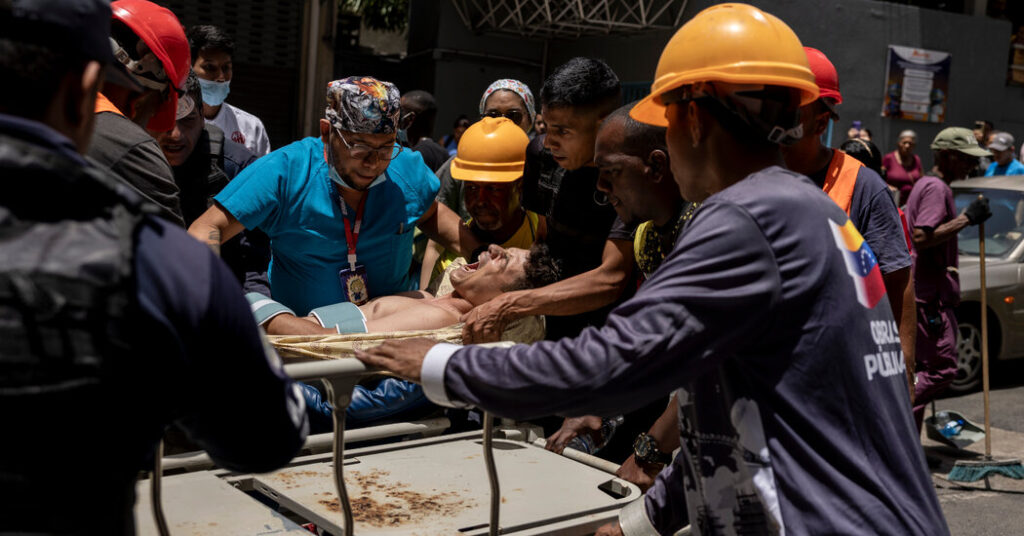
Why Venezuela’s Second Earthquake Was So Damaging to Buildings

Factors like the short interval between the two powerful quakes and different types of soil led to some structures collapsing while others stayed standing.
Narrative Intelligence Brief
This article was published by Wired, a source frequently categorized with a lean left bias based in United States of America. Our narrative intelligence engine continuously monitors coverage from this outlet to track framing, bias, and rhetorical patterns. Our initial algorithmic scan of this specific piece did not flag high-confidence rhetorical techniques, suggesting a generally straightforward reporting style or neutral framing. By understanding the editorial perspective of Wired, readers can better contextualize the information presented and compare it across our broader media matrix to find the real narrative.
More from Wired
June 27, 2026
62 Last Minute Prime Day Weekend Deals: Up to 45% Off (2026)
June 27, 2026
Duer’s Wear-Everywhere Pants Are on Sale This Weekend
June 27, 2026
Does DeleteMe Actually Get Your Info off the Internet? I Tried It
June 27, 2026
Security News This Week: LastPass Users Had Their Data Stolen—Again
June 27, 2026
The 37 Best Outdoor Deals From the REI 4th of July Sale
Analysis Methodology
This narrative analysis was generated using the CoDataLab Global Intelligence Engine. Our proprietary AI scans thousands of cross-border sources to identify sentiment patterns, framing techniques, and potential media bias. While AI provides the data-driven foundation, our objective is to empower readers with additional context beyond the standard headline.The content displayed above is a structured summary designed for rapid information processing. For the full original report, please visit the source outlet.More Coverage
Discussion
"venezuela"
Venezuela quakes kill almost 1,500, with millions more in need
Canadian teacher in Venezuela describes chaos as earthquakes’ death toll climbs

Scenes of Collapse: The Emergency at Venezuela’s Hospitals