
Today in News History
On July 12, several notable moments in the history of News stand out. In 1335, Pope Benedict XII issues the papal bull Fulgens sicut stella matutina to reform the Cistercian Order. In 1543, King Henry VIII of England marries his sixth and last wife, Catherine Parr, at Hampton Court Palace. In 1790, The Civil Constitution of the Clergy is passed in France by the National Constituent Assembly. In 1913, Serbian forces begin their siege of the Bulgarian city of Vidin; the siege is later called off when the war ends. In 1917, The Bisbee Deportation occurs as vigilantes kidnap and deport nearly 1,300 striking miners and others from Bisbee, Arizona. In 1961, Indian city Pune floods due to failure of the Khadakwasla and Panshet dams, killing at least two thousand people. In 1963, Pauline Reade, 16, disappears in Gorton, England, the first victim in the Moors murders. In 1975, São Tomé and Príncipe declare independence from Portugal. In 2001, Space Shuttle program: Space Shuttle Atlantis is launched on mission STS-104, carrying the Quest Joint Airlock to the International Space Station. In 2006, The 2006 Lebanon War begins. Together, these milestones provide historical context for today's news news and ongoing narratives.
5 takeaways from the Supreme Court as the term comes to a close
Narrative Analysis: Glittering Generalities
There were some themes in the first full Supreme Court term of Trump 2.0 — including expansion of his presidential power. The post 5 takeaways from the Supreme Court as the term comes to a close appeared first on MS NOW.
Narrative Intelligence Brief
This article was published by MS NOW, a source frequently categorized with a lean left bias based in United States of America. Our narrative intelligence engine continuously monitors coverage from this outlet to track framing, bias, and rhetorical patterns. In this specific piece, our systems detected the potential use of the "Glittering Generalities" technique. This narrative approach is often used to shape reader perception by highlighting specific emotional or rhetorical angles. By understanding the editorial perspective of MS NOW, readers can better contextualize the information presented and compare it across our broader media matrix to find the real narrative.
More from MS NOW
July 12, 2026
U.S. military says it is striking Iran in response to attack on civilian vessel in Strait of Hormuz
July 11, 2026
FBI analysts fired after refusing to join Georgia 2020 election probe
July 11, 2026
Rep. Khanna says he was held by armed Israeli settlers in West Bank
July 11, 2026
After another broken ceasefire with U.S., Iran talks with Gulf leaders
July 11, 2026
Trump vows U.S. will ‘decimate’ Iran if it attempts to assassinate him
Reliability Insights
P
Technique: Glittering Generalities
System analysis detected use of specific narrative techniques in this piece.Analysis Methodology
This narrative analysis was generated using the CoDataLab Global Intelligence Engine. Our proprietary AI scans thousands of cross-border sources to identify sentiment patterns, framing techniques, and potential media bias. While AI provides the data-driven foundation, our objective is to empower readers with additional context beyond the standard headline.The content displayed above is a structured summary designed for rapid information processing. For the full original report, please visit the source outlet.More Coverage
Discussion
"argentina"
Maxi Rodríguez se rinde ante Mikel Merino por su gran actuación con España | Hoy en el Mundial

Argentina Women’s Youth National Team Coach Accused of Sexual Harassment
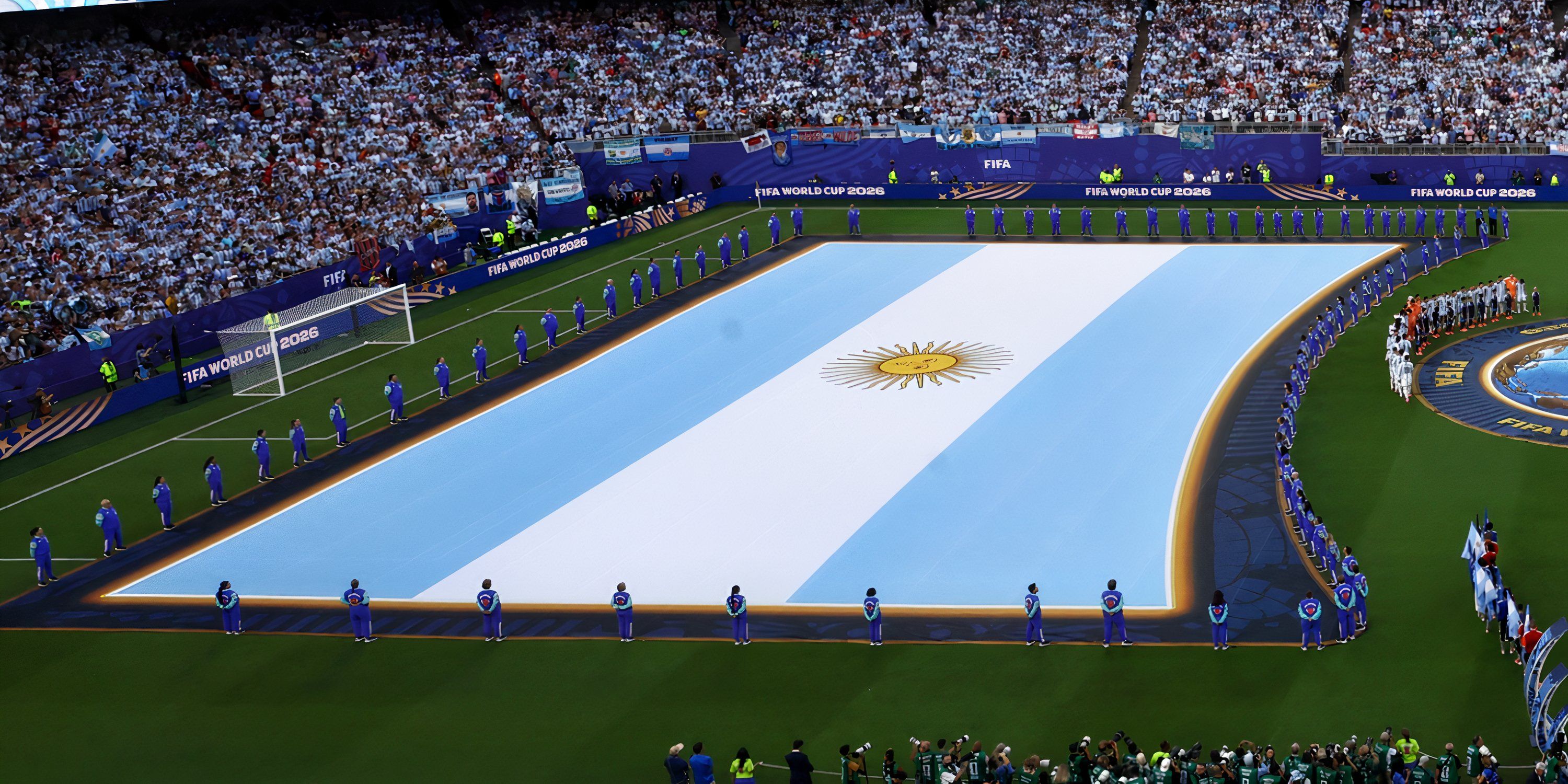
Argentina's Antonio Rattín Dies; 1966 World Cup Dismissal Led To Red & Yellow Cards

How other outlets are covering this story
Compare narratives across 6 related reports from 6 sources. Real Narrative News aggregates the coverage spectrum so you can see who emphasises what — bias tags reflect the outlet, not the story.
Coverage bias distribution
6 sources
Left 17%
Center 33%
Right 50%
The Hill
· Jul 5, 2026
FOR INSIDERS | Supreme Court's 6-3 cases: When did justices split along ideological lines?
The Supreme Court split along its 6-3 ideological lines in nearly a quarter of the argued cases this term. The battles were big and small, from President Trump’s agenda to thorny disputes over the meaning of securities statutes. All but two came down in June, the final month of opinion season. Meanwhile, nearly half the cases...
KSAT San Antonio
· Jun 26, 2026
Disagreements between Supreme Court justices bubble into public view as major rulings loom
Tensions are evident in a rare display among the Supreme Court justices at the end of the term.
The Daily Signal
· Jul 6, 2026
Not Just West Virginia or Idaho: Supreme Court Protects Women’s Sports in Several States
As part of the cases handed down by the U.S. Supreme Court this term, the six conservative justices delivered a win for women’s sports last week. While the cases came out of West Virginia and Idaho, the high court’s majority sent a message that reverberated in 25 states, including Ohio. In the combined cases of...
ProPublica
· Jul 1, 2026
A Troubling Milestone: Most Supreme Court Rulings Are Secretive Votes With Little Justification
The post A Troubling Milestone: Most Supreme Court Rulings Are Secretive Votes With Little Justification appeared first on ProPublica.
ArcaMax
· Jun 30, 2026
Supreme Court ruling in Trump v. Slaughter turbocharges presidential power
The U.S. Supreme Court – with its six conservative justices, three of whom were nominated by President Donald Trump – has recently reversed landmark decisions that have long guided American government and society. Over the last few years, the ...
American Thinker
· Jul 8, 2026
The 2026 Supreme Court -- a ‘C Minus’ at Best
Photo Credit:https://commons.wikimedia.org/wiki/File:Supreme_Court_of_the_United_States_-_Roberts_Court_2022.jpg Supreme CourtBy Don BrownThe Supreme Court’s just-concluded term produced several important victories for constitutional principles. Unfortunately, two catastrophic failures dragged the Court’s overall performance down.
Topics:
Related coverage for "5 takeaways from the Supreme Court as the term comes to a close": The Hill — FOR INSIDERS | Supreme Court's 6-3 cases: When did justices split along ideological lines?. KSAT San Antonio — Disagreements between Supreme Court justices bubble into public view as major rulings loom. The Daily Signal — Not Just West Virginia or Idaho: Supreme Court Protects Women’s Sports in Several States. ProPublica — A Troubling Milestone: Most Supreme Court Rulings Are Secretive Votes With Little Justification. ArcaMax — Supreme Court ruling in Trump v. Slaughter turbocharges presidential power. American Thinker — The 2026 Supreme Court -- a ‘C Minus’ at Best