Today in News History
On June 18, several notable moments in the history of News stand out. In 1053, Battle of Civitate: Three thousand Norman horsemen of Count Humphrey rout the troops of Pope Leo IX. In 1429, Charles VII's army defeats an English army under John Talbot at the Battle of Patay during the Hundred Years' War. The English lost 2,200 men, over half their army, crippling their efforts during this segment of the war. In 1934, Brian Kenny, English general (died 2017) was born. In 1938, Kevin Murray, Australian footballer and coach was born. In 1941, Roger Lemerre, French footballer and manager was born. In 1968, Frank Müller, German decathlete was born. In 1973, Gavin Wanganeen, Australian footballer and coach was born. In 1987, Omar Arellano, Mexican footballer was born. In 1994, The Troubles: Members of the Ulster Volunteer Force (UVF) attack a crowded pub with assault rifles in Loughinisland, Northern Ireland. Six Catholic civilians are killed and five wounded. It was crowded with people watching the 1994 FIFA World Cup. In 2015, Danny Villanueva, American football player and broadcaster, co-founded Univision (born 1937) passed away. Together, these milestones provide historical context for today's news news and ongoing narratives.
World Cup formations explained: How coaches set up their squads in group play
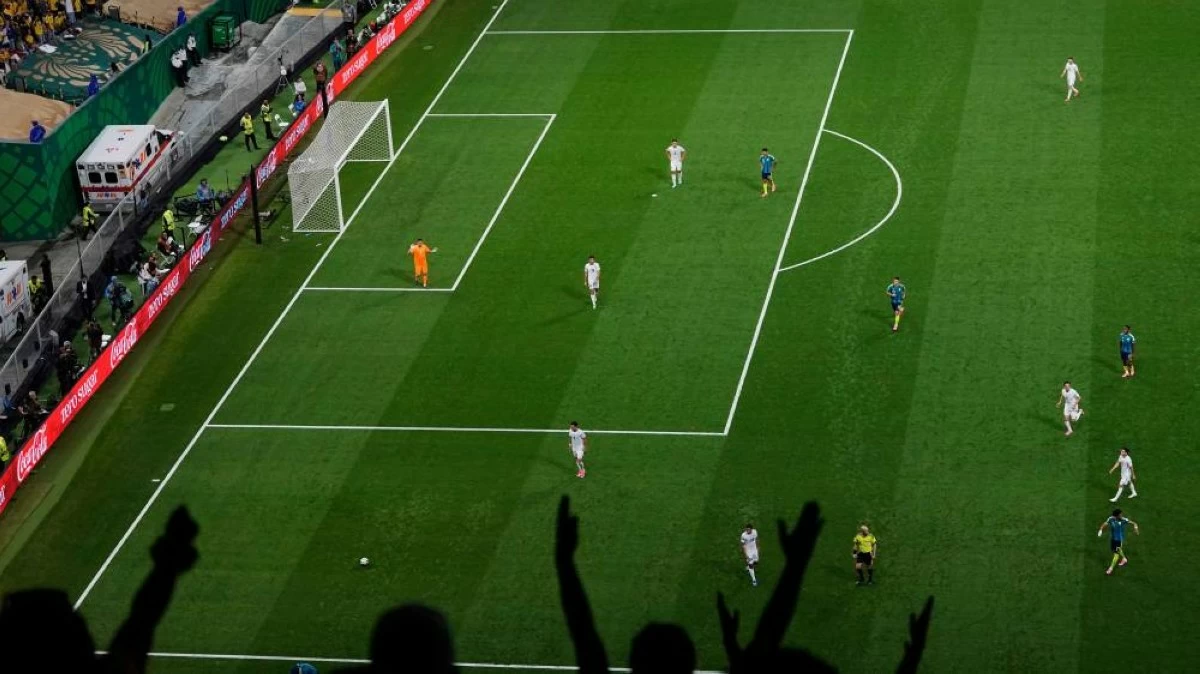
GUADALAJARA, Mexico: It’s number-crunching time when it comes to formations at the World Cup.Every team starts with a goalkeeper in front of the net, but then it’s up to the 48 coaches to try to arrange their lineups to optimize their players and match up effectively with opponents.On paper, the lists may look more like area codes, phone numbers or lottery combinations: 4-4-2, 5-3-2, 4-2-3-1 and so on.But it’s all about how coaches set up their 10 field players, with some of them focusing more on attacking, others on containing a tough opponent or maybe trying to capitalize on the talent of a star player.Coaches tend to have preferred formations, but it’s not unusual for them to change them depending on opponents or even during matches to secure a lead or reverse a deficit. Coaches frequently start a match with one scheme and finish it with another.Here’s a look at the nine formations used in the opening matches of World Cup group play, according to FIFA’s match reports, and what they mean:Four defenders, four midfielders and two forwardsThat was used by 12 of the 48 teams involved in the first 24 matches at the World Cup. But it produced only two wins - by Scotland over Haiti and Ivory Coast over Ecuador. It also matched the 3-4-3 scheme with the most losses, four.Brazil, Uruguay and co-host Canada were among the teams using the formation that theoretically promotes a balanced squad with a focus on solid defending by keeping the lines compact.It was a traditional formation in recent decades, along with the 4-3-3 and 5-3-2, until coaches began experimenting with more daring alternatives.Four defenders, two defensive midfielders, three attacking midfielders and one strikerThe formation has become common in modern soccer, with two holding midfielders protecting the back line and three more offensive players taking care of the transition toward the central striker.Ten teams used the design so far, with the United States, England, France and Austria winning their matches.Four defenders, one defensive midfielder, two midfielders and three forwardsThis formation and the 4-2-3-1 had the most wins, with four each.It's a slight change from the above, with an extra player in the offensive phase. Mexico, Norway, Ghana and Colombia used it to win their openers.Eight teams used the scheme, which has two wingers and a central striker up front ahead of the three-piece midfield. It’s a more offensive formation, with only one defensive midfielder.Title favorites Spain and the Netherlands also used the formation.Three central defenders, four midfielders and three forwardsSeven teams used the formation that promotes a balance between defense and offense around a solid midfield.Only two teams won - South Korea and Germany, which scored the most goals so far with a 7-1 rout of Curacao.Four defenders, three midfielders and three forwardsAmong the five teams using the formation was Lionel Messi's Argentina, and it helped him score three goals in a 3-0 win over Algeria.It was the only team that won with the traditional formation, with three midfielders feeding the two side forwards and the striker up front.It was used by one of the World Cup's most famous squads - Brazil's 1970 team led by Pelé.Argentina won the 2022 World Cup with that formation.Five defenders, three midfielders and two forwardsThere were no winners among the three teams that used the formation, which puts emphasis on the back line but has the two fullbacks changing into wingers in the offensive phase.South Africa and Tunisia lost, but it was good enough for Congo to manage a surprising 1-1 draw against Cristiano Ronaldo and Portugal.It was also a traditional scheme for decades.Five defenders, two midfielders and three forwardsOnly the Czech Republic, which lost to South Korea, used the formation in which the two fullbacks also work up toward the midfield, depending on the phase of the game.Five defenders, four midfielders and one strikerAustralia picked up a win against Turkey with the formation that focuses on defense first, with nine players between the back line and the midfield.Three central defenders, four midfielders, one attacking midfielder and two forwardsSweden used the formation in its 5-1 win over Tunisia. The design has an attacking midfielder playing in between the midfield and the forwards to try to promote an easier transition from defense to offense.
Narrative Intelligence Brief
This article was published by Emirates 24/7, a source frequently categorized with a lean right bias based in United Arab Emirates. Our narrative intelligence engine continuously monitors coverage from this outlet to track framing, bias, and rhetorical patterns. Our initial algorithmic scan of this specific piece did not flag high-confidence rhetorical techniques, suggesting a generally straightforward reporting style or neutral framing. By understanding the editorial perspective of Emirates 24/7, readers can better contextualize the information presented and compare it across our broader media matrix to find the real narrative.
More from Emirates 24/7
June 18, 2026
FANR chief reviews safety oversight at Barakah Nuclear Power Plant
June 18, 2026
First tankers cross strait after Iran deal as Israeli strikes in Lebanon raise doubts
June 18, 2026
DEWA summer tools: How Dubai residents can reduce electricity and water bills
June 18, 2026
Qantas to launch 22-hour nonstop London-Sydney flight in October next year
June 18, 2026
UAE bans social media for children under 15, sets age verification rules
Analysis Methodology
This narrative analysis was generated using the CoDataLab Global Intelligence Engine. Our proprietary AI scans thousands of cross-border sources to identify sentiment patterns, framing techniques, and potential media bias. While AI provides the data-driven foundation, our objective is to empower readers with additional context beyond the standard headline.The content displayed above is a structured summary designed for rapid information processing. For the full original report, please visit the source outlet.More Coverage
Discussion
"cup"
Bravo’s Insane ‘Summer House’ Scandal Just Got Worse

Failure to beat Panama in World Cup group stage will be disappointing – Ghanaian fans to Black Stars

Fraudster jailed after raking in £300k by sitting students’ exams and completing their coursework