
Today in News History
On June 20, several notable moments in the history of News stand out. In 1787, Oliver Ellsworth moves at the Federal Convention to call the government the 'United States'. In 1926, Rehavam Ze'evi, Israeli general and politician, 9th Israeli Minister of Tourism (died 2001) was born. In 1954, Ilan Ramon, Israeli colonel, pilot, and astronaut (died 2003) was born. In 1963, Following the Cuban Missile Crisis, the Soviet Union and the United States sign an agreement to establish the so-called "red telephone" link between Washington, D.C., and Moscow. In 1973, Snipers fire upon left-wing Peronists in Buenos Aires, Argentina, in what is known as the Ezeiza massacre. At least 13 are killed and more than 300 are injured. In 1980, Fabian Wegmann, German cyclist was born. In 1982, The International Conference on the Holocaust and Genocide opens in Tel Aviv, despite attempts by the Turkish government to cancel it, as it included presentations on the Armenian genocide. In 1990, The 7.4 Mw Manjil-Rudbar earthquake affects northern Iran with a maximum Mercalli intensity of X (Extreme), killing 35,000-50,000, and injuring 60,000-105,000. In 1994, The 1994 Imam Reza shrine bomb explosion in Iran leaves at least 25 dead and 70 to 300 injured. In 2019, Iran's Air Defense Forces shoot down an American surveillance drone over the Strait of Hormuz amid rising tensions between the two countries. Together, these milestones provide historical context for today's news news and ongoing narratives.
With Lebanon ceasefire set, Trump envoy heads to Switzerland for U.S.-Iran talks

U.S. President Donald Trump's special envoy, Steve Witkoff, is traveling to Switzerland for the first round of talks with Iran on a potential nuclear deal, a media report said.
Narrative Intelligence Brief
This article was published by The Japan Times, a source frequently categorized with a center bias based in Japan. Our narrative intelligence engine continuously monitors coverage from this outlet to track framing, bias, and rhetorical patterns. Our initial algorithmic scan of this specific piece did not flag high-confidence rhetorical techniques, suggesting a generally straightforward reporting style or neutral framing. By understanding the editorial perspective of The Japan Times, readers can better contextualize the information presented and compare it across our broader media matrix to find the real narrative.
More from The Japan Times
June 20, 2026
Trump envoy and Iranian minister head to Switzerland for talks
June 20, 2026
Peeling paint adds to woes of Trump’s pool project
June 20, 2026
Australia detects first case of contagious H5 bird flu
June 20, 2026
10 years on, how has Brexit affected key issues?
June 20, 2026
Would the EU take Britain back?
Analysis Methodology
This narrative analysis was generated using the CoDataLab Global Intelligence Engine. Our proprietary AI scans thousands of cross-border sources to identify sentiment patterns, framing techniques, and potential media bias. While AI provides the data-driven foundation, our objective is to empower readers with additional context beyond the standard headline.The content displayed above is a structured summary designed for rapid information processing. For the full original report, please visit the source outlet.More Coverage
Discussion
"matheus cunha"
Golazo de Matheus Cunha firma su doblete e ilusiona a Brasil ante Haití en Filadelfia
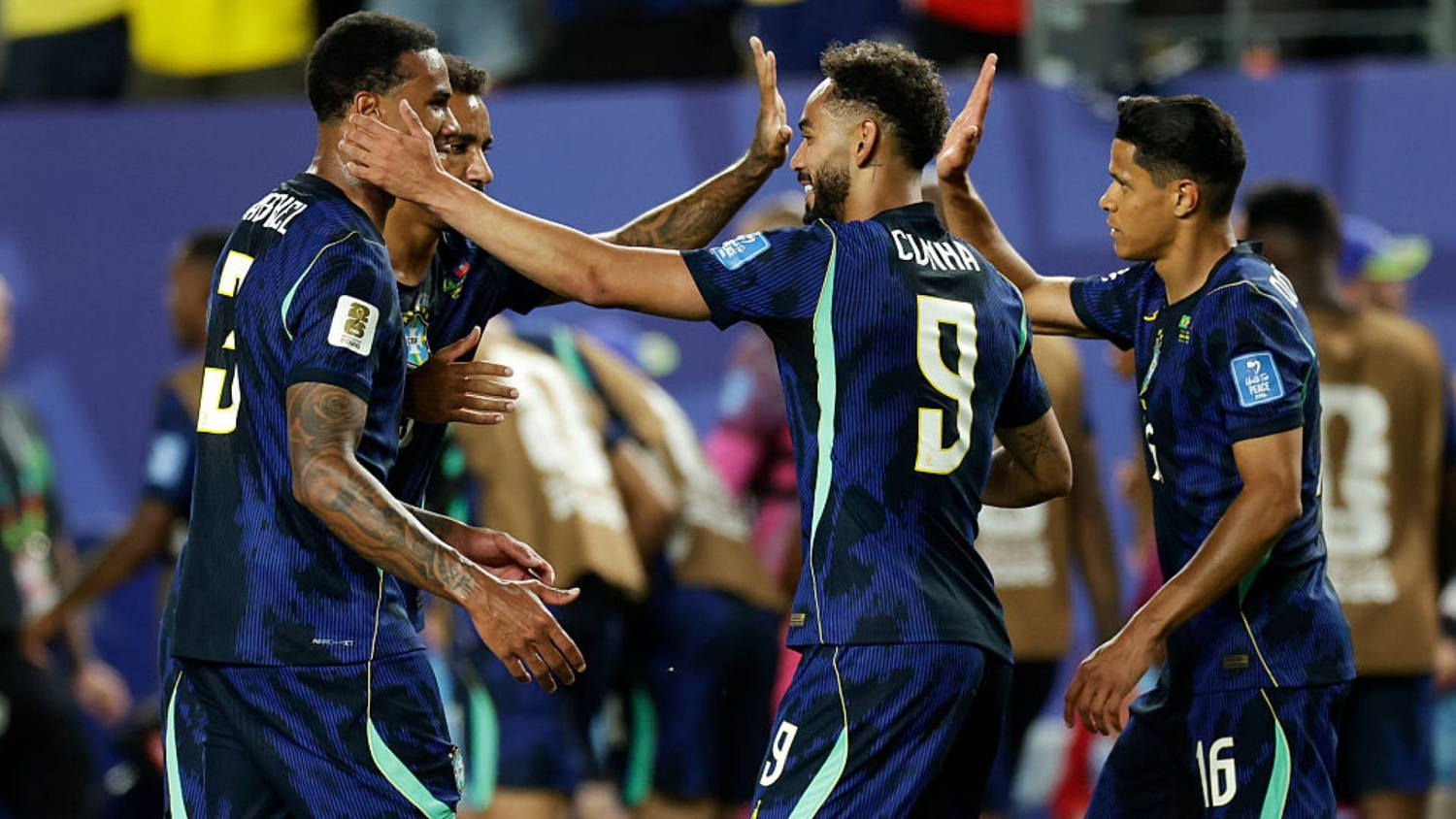
Matheus Cunha scores twice as rampant Brazil eliminate Haiti

Brazil vs Haiti - World Cup RECAP: Carlo Ancelotti's side surges to top of Group C after Vinicius Jr's first-half strike and a Matheus Cunha double
