
Today in News History
On July 12, several notable moments in the history of News stand out. In 981, Xue Juzheng, Chinese scholar-official and historian passed away. In 1488, Joseon Dynasty official Choe Bu returned to Korea after months of shipwrecked travel in China. In 1904, Pablo Neruda, Chilean poet and diplomat, Nobel Prize laureate (died 1973) was born. In 1913, The Second Revolution breaks out against the Beiyang government, as Li Liejun proclaims Jiangxi independent from the Republic of China. In 1970, Lee Byung-hun, South Korean actor, singer, and dancer was born. In 1995, Chinese seismologists successfully predict the 1995 Myanmar-China earthquake, reducing the number of casualties to 11. In 2006, The 2006 Lebanon War begins. In 2013, Amar Bose, American businessman, founded the Bose Corporation (born 1929) passed away. In 2015, Cheng Siwei, Chinese engineer, economist, and politician (born 1935) passed away. In 2015, D'Army Bailey, American lawyer, judge, and actor (born 1941) passed away. Together, these milestones provide historical context for today's news news and ongoing narratives.
Why U.S.–China Competition is Losing the Lithium Triangle
This essay won the 1990 Institute Prize at the recent essay contest jointly organized by The UCSD China Focus, The Carter Center, The 1990 Institute and The 21CCC. See more... The post Why U.S.–China Competition is Losing the Lithium Triangle appeared first on U.S.-China Perception Monitor.
Narrative Intelligence Brief
This article was published by U.S.-China Perception Monitor, a source frequently categorized with a center bias based in China. Our narrative intelligence engine continuously monitors coverage from this outlet to track framing, bias, and rhetorical patterns. Our initial algorithmic scan of this specific piece did not flag high-confidence rhetorical techniques, suggesting a generally straightforward reporting style or neutral framing. By understanding the editorial perspective of U.S.-China Perception Monitor, readers can better contextualize the information presented and compare it across our broader media matrix to find the real narrative.
More from U.S.-China Perception Monitor
Analysis Methodology
This narrative analysis was generated using the CoDataLab Global Intelligence Engine. Our proprietary AI scans thousands of cross-border sources to identify sentiment patterns, framing techniques, and potential media bias. While AI provides the data-driven foundation, our objective is to empower readers with additional context beyond the standard headline.The content displayed above is a structured summary designed for rapid information processing. For the full original report, please visit the source outlet.More Coverage
Discussion
"lindsey graham"
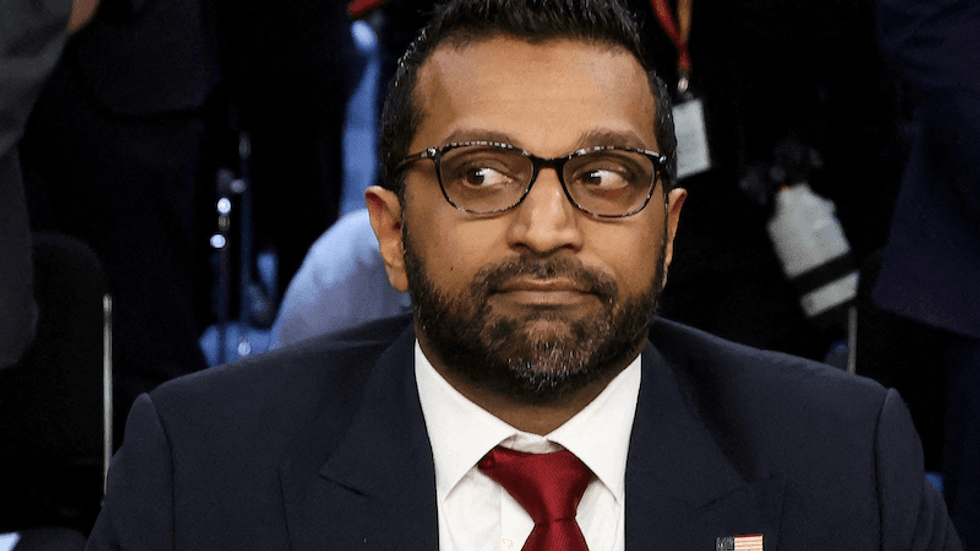
Kash Patel stuns with weird response to Lindsey Graham's death: 'Why is the FBI involved?'
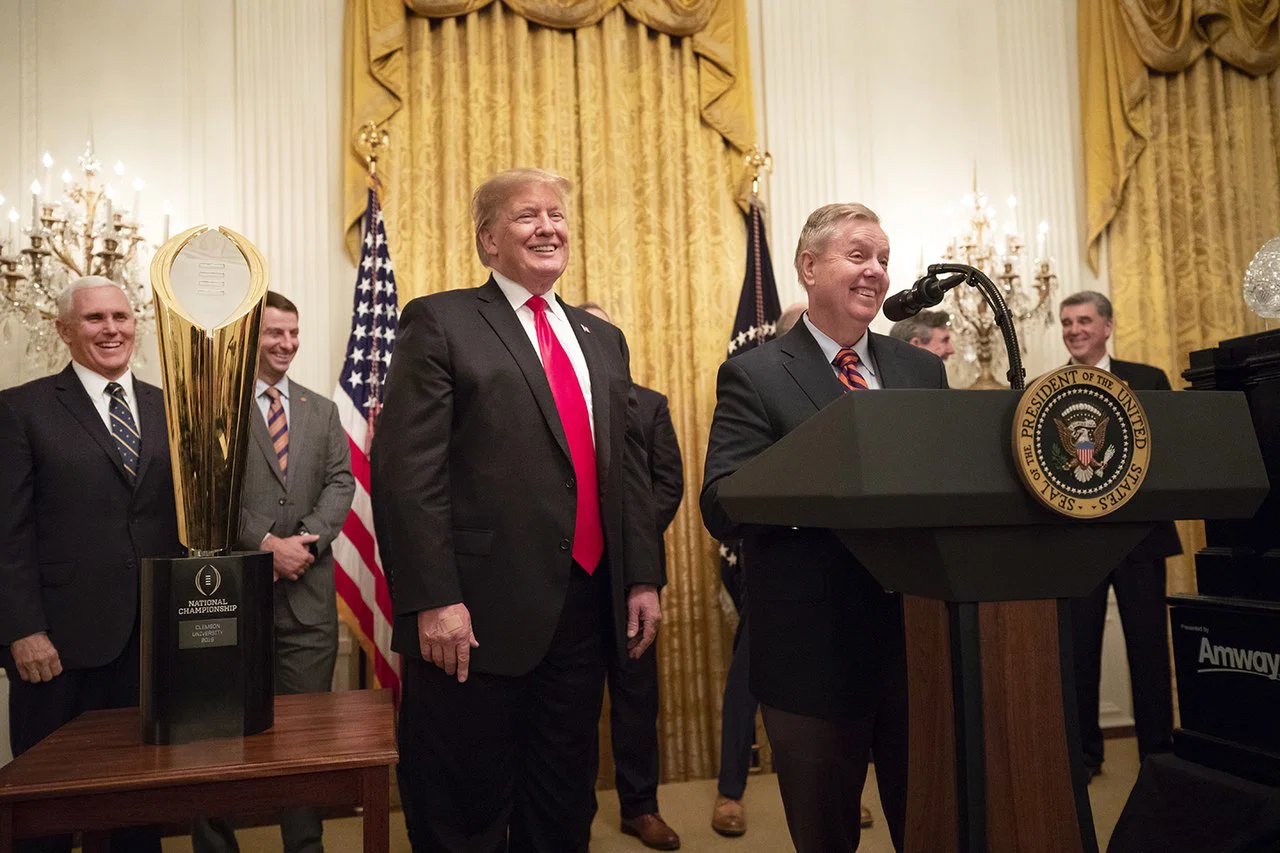
Lindsey Graham death and World Cup semis | Reuters World News

"No Conspiracy": Former Israeli Consul Dismisses Conspiracy Theories about Lindsey Graham's Death
How other outlets are covering this story
Compare narratives across 6 related reports from 6 sources. Real Narrative News aggregates the coverage spectrum so you can see who emphasises what — bias tags reflect the outlet, not the story.
Coverage bias distribution
6 sources
Left 33%
Center 50%
Right 17%
South China Morning Post
· Jul 6, 2026
Beijing opens lithium futures to foreign traders to cement pricing power over US
Beijing has unveiled new measures to keep its tight grip on lithium prices, in a move that may give it an edge over the US in the key material vital for electric vehicle and energy storage. Following mining endeavours worldwide to secure supplies, Chinese authorities announced they would allow offshore industrial players to trade lithium carbonate onshore to cement its pricing power. Effective July 3, the Guangzhou Futures Exchange, one of China’s major commodity bourses, began allowing miners,...
The korea Herald News
· Jun 23, 2026
Inside China's race for tech self-reliance
Korea Herald correspondent HEFEI, China — Far from slowing China's technological rise, US sanctions and export controls have accelerated Beijing's drive for self-reliance, pushing Chinese companies to build domestic alternatives across industries. Landlocked Anhui province, west of Shanghai, has emerged as one of the clearest examples of that effort. Home to a growing cluster of artificial intelligence, electric vehicle, battery and renewable energy companies, the province has transformed itself
Seeking Alpha
· Jul 2, 2026
Elevra Lithium: A Funded North American Scarcity Asset In A Recovering Lithium Market
Elevra Lithium: A Funded North American Scarcity Asset In A Recovering Lithium Market
BBC News - Business
· Jun 29, 2026
South Korea unveils $1tn chip and AI investment plan
It comes as regional rivals like Taiwan, China and Japan are investing heavily in chip factories and other technology.
The Hankyoreh
· Jun 24, 2026
Semiconductor boom increased economic polarization in Taiwan. Is Korea next?
Semiconductor boom increased economic polarization in Taiwan. Is Korea next?
Business Today
· Jul 2, 2026
Centre eyes dedicated push for electric trucks, may consider fresh support scheme: PM’s Advisor Tarun Kapoor
“We have to see that our dependence on China goes down,” Kapoor said, adding that batteries, electric motors and other strategic components should increasingly be produced within the country to avoid supply disruptions.
Topics:
Related coverage for "Why U.S.–China Competition is Losing the Lithium Triangle": South China Morning Post — Beijing opens lithium futures to foreign traders to cement pricing power over US. The korea Herald News — Inside China's race for tech self-reliance. Seeking Alpha — Elevra Lithium: A Funded North American Scarcity Asset In A Recovering Lithium Market. BBC News - Business — South Korea unveils $1tn chip and AI investment plan. The Hankyoreh — Semiconductor boom increased economic polarization in Taiwan. Is Korea next?. Business Today — Centre eyes dedicated push for electric trucks, may consider fresh support scheme: PM’s Advisor Tarun Kapoor