Today in News History
On July 2, several notable moments in the history of News stand out. In 1893, Ralph Hancock, Welsh gardener and author (died 1950) was born. In 1914, Mário Schenberg, Brazilian physicist and engineer (died 1990) was born. In 1941, Wendell Mottley, Trinidadian sprinter, economist, and politician was born. In 1949, Greg Brown, American musician was born. In 1970, Steve Morrow, Northern Irish footballer and manager was born. In 2012, Betty Meggers, American archaeologist and academic (born 1921) passed away. In 2013, Douglas Engelbart, American computer scientist, invented the computer mouse (born 1925) passed away. In 2014, Harold W. Kuhn, American mathematician and academic (born 1925) passed away. In 2014, Manuel Cardona, Spanish physicist and academic (born 1934) passed away. In 2016, Elie Wiesel, Holocaust survivor, activist, and author (born 1928) passed away. Together, these milestones provide historical context for today's news news and ongoing narratives.
‘Why is your cat blue?’: Wilbur, the pet who changed colour, puzzles owners
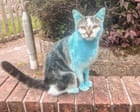
Family find answers via social media after their furry friend returned home with an unusual makeoverWilbur the cat is usually a rather elegant grey, black and white creature, so his human family were a little taken aback, to say the least, when she came home bright blue.Concern that Wilbur might have been the target of an unkind paint attack turned to relief when it turned out she had gatecrashed a neighbour’s gender-reveal party and rolled around in blue dye. Continue reading...
Narrative Intelligence Brief
This article was published by Animals | The Guardian, a source frequently categorized with a lean left bias based in United Kingdom. Our narrative intelligence engine continuously monitors coverage from this outlet to track framing, bias, and rhetorical patterns. Our initial algorithmic scan of this specific piece did not flag high-confidence rhetorical techniques, suggesting a generally straightforward reporting style or neutral framing. By understanding the editorial perspective of Animals | The Guardian, readers can better contextualize the information presented and compare it across our broader media matrix to find the real narrative.
More from Animals | The Guardian
July 2, 2026
Ghosts of the Azteca: England return to scene of infamous Maradona handball
July 2, 2026
Thomas Tuchel claims Fifa rule puts England at ‘huge’ disadvantage in Mexico City altitude
July 2, 2026
Defra breached law when it let farmers use bee-killing pesticide, watchdog says
July 2, 2026
Spain v Austria: World Cup 2026 last 32 – live
July 2, 2026
Outrage over ‘cruel’ Florida move to ban undocumented students from college
Analysis Methodology
This narrative analysis was generated using the CoDataLab Global Intelligence Engine. Our proprietary AI scans thousands of cross-border sources to identify sentiment patterns, framing techniques, and potential media bias. While AI provides the data-driven foundation, our objective is to empower readers with additional context beyond the standard headline.The content displayed above is a structured summary designed for rapid information processing. For the full original report, please visit the source outlet.More Coverage
Discussion
"cup"
Markwayne Mullin’s celebration of Iran’s World Cup exit is worse than poor sportsmanship

The 2026 FIFA World Cup… or World War II in Disguise?
Fans Erupt After Team USA’s Star Player Ejected On Controversial Call