
Today in News History
On July 12, several notable moments in the history of News stand out. In 965, Meng Chang, emperor of Later Shu (born 919) passed away. In 981, Xue Juzheng, Chinese scholar-official and historian passed away. In 1488, Joseon Dynasty official Choe Bu returned to Korea after months of shipwrecked travel in China. In 1807, Thomas Hawksley, English engineer and academic (died 1893) was born. In 1913, The Second Revolution breaks out against the Beiyang government, as Li Liejun proclaims Jiangxi independent from the Republic of China. In 1918, The Imperial Japanese Navy battleship Kawachi blows up at Shunan, western Honshu, Japan, killing at least 621. In 1931, Geeto Mongol, Canadian-American wrestler and trainer (died 2013) was born. In 1933, Victor Poor, American engineer, developed the Datapoint 2200 (died 2012) was born. In 1995, Chinese seismologists successfully predict the 1995 Myanmar-China earthquake, reducing the number of casualties to 11. In 2015, Cheng Siwei, Chinese engineer, economist, and politician (born 1935) passed away. Together, these milestones provide historical context for today's news news and ongoing narratives.
Why China’s technical schools offer both hope and despair for jobless college grads
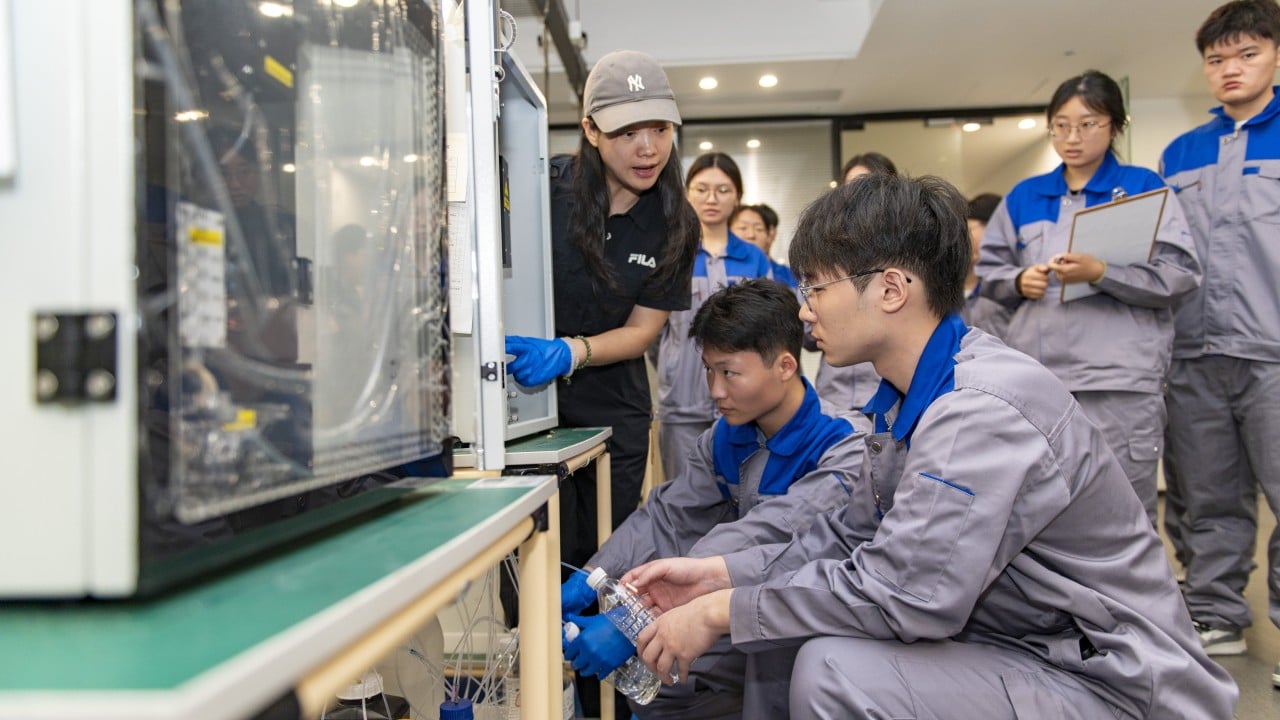
China’s technical schools offer hope to desperate university graduates who cannot find a job – but for many, the reality falls short of the promise. As China’s university graduates face mounting pressure in the job market, a growing number are turning to an unconventional lifeline: vocational training schools. The phenomenon, known as “returning to the furnace”, involves degree-holders enrolling in technical programmes to acquire practical, employable skills. The trend is gaining measurable...
Narrative Intelligence Brief
This article was published by South China Morning Post, a source frequently categorized with a lean left bias based in Hong Kong. Our narrative intelligence engine continuously monitors coverage from this outlet to track framing, bias, and rhetorical patterns. Our initial algorithmic scan of this specific piece did not flag high-confidence rhetorical techniques, suggesting a generally straightforward reporting style or neutral framing. By understanding the editorial perspective of South China Morning Post, readers can better contextualize the information presented and compare it across our broader media matrix to find the real narrative.
More from South China Morning Post
July 12, 2026
Thousands of flights cancelled as Typhoon Bavi hits eastern China bringing heavy rains
July 12, 2026
South Korean ticket touts to face the music when new penalties come into play
July 12, 2026
Taiwan military gains 5,000 volunteers, but ‘real problem’ is retention
July 12, 2026
Japan wants 60 million tourists, but China isn’t sending them
July 12, 2026
EU isn’t just selling aircraft to China. It’s helping strengthen a competitor
Analysis Methodology
This narrative analysis was generated using the CoDataLab Global Intelligence Engine. Our proprietary AI scans thousands of cross-border sources to identify sentiment patterns, framing techniques, and potential media bias. While AI provides the data-driven foundation, our objective is to empower readers with additional context beyond the standard headline.The content displayed above is a structured summary designed for rapid information processing. For the full original report, please visit the source outlet.More Coverage
Discussion


How other outlets are covering this story
Compare narratives across 6 related reports from 6 sources. Real Narrative News aggregates the coverage spectrum so you can see who emphasises what — bias tags reflect the outlet, not the story.
Coverage bias distribution
6 sources
Left 33%
Center 17%
Right 50%
South China Morning Post
· Jul 6, 2026
China’s technical schools offer both hope and despair for jobless university graduates
China’s technical schools offer hope to desperate university graduates who cannot find a job – but for many, the reality falls short of the promise. As China’s university graduates face mounting job market pressures, a growing number are turning to an unconventional lifeline: vocational training schools. The phenomenon, colloquially known as “returning to the furnace”, sees degree-holders enrolling in technical programmes to acquire practical, employable skills. The trend is gaining measurable...
BOL News
· Jun 23, 2026
17 Thar students complete technical training program in China
Students were sent to Pingdingshan Polytechnic College in Henan Province under a scholarship initiative. The post 17 Thar students complete technical training program in China appeared first on BOL News.
Korea Times News
· Jul 3, 2026
Why a Mongolian computer engineering student is leaving Korea for China
Why a Mongolian computer engineering student is leaving Korea for China
Seeking Alpha
· Jun 30, 2026
KWEB: World Class Tech Weighed By The China Discount
KWEB: World Class Tech Weighed By The China Discount
Entrepreneur.com
· Jul 9, 2026
Americans Are Skipping College for No-Degree Jobs That Pay More Than $100,000 a Year
The average tuition for four-year colleges has doubled over 30 years.
The 74
· Jun 23, 2026
What Today’s College Students Need That Previous Generations Didn’t
For high school graduates about to head off to college the news is alarming: The degree they’re about to pursue might not land them the job they want. College grads are facing a tough job market, with headlines almost daily declaring their prospects “grim” or “shrinking” or call their “hiring woes” a “job market hell.” []
Topics:
Related coverage for "Why China’s technical schools offer both hope and despair for jobless college grads": South China Morning Post — China’s technical schools offer both hope and despair for jobless university graduates. BOL News — 17 Thar students complete technical training program in China. Korea Times News — Why a Mongolian computer engineering student is leaving Korea for China. Seeking Alpha — KWEB: World Class Tech Weighed By The China Discount. Entrepreneur.com — Americans Are Skipping College for No-Degree Jobs That Pay More Than $100,000 a Year. The 74 — What Today’s College Students Need That Previous Generations Didn’t