
Today in News History
On July 12, several notable moments in the history of News stand out. In 965, Meng Chang, emperor of Later Shu (born 919) passed away. In 981, Xue Juzheng, Chinese scholar-official and historian passed away. In 1394, Ashikaga Yoshinori, Japanese shōgun (died 1441) was born. In 1488, Joseon Dynasty official Choe Bu returned to Korea after months of shipwrecked travel in China. In 1527, Lê Cung Hoàng ceded the throne to Mạc Đăng Dung, ending the Lê dynasty and starting the Mạc dynasty. In 1879, Han Yong-un, Korean poet (died 1944) was born. In 1909, Motoichi Kumagai, Japanese photographer and illustrator (died 2010) was born. In 1913, The Second Revolution breaks out against the Beiyang government, as Li Liejun proclaims Jiangxi independent from the Republic of China. In 1979, Maya Kobayashi, Japanese journalist was born. In 2015, Cheng Siwei, Chinese engineer, economist, and politician (born 1935) passed away. Together, these milestones provide historical context for today's news news and ongoing narratives.
Why Apple wants Chinese memory it can't use
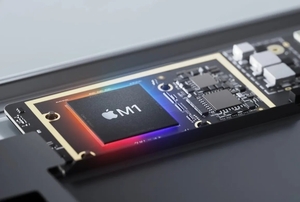
When Apple raised MacBook and iPad prices by up to 20 percent last month, wiping 263 billion off its market value in a day, it blamed unsustainable memory prices. Then it went to Washington to ask permission to buy DRAM from a Chinese company sitting on a Pentagon blacklist. Kim Yang-paeng, a semiconductor researcher at the state-run Korea Institute for Industrial Economics and Trade, does not think Apple actually wants to buy these chips. He thinks it wants to be seen trying. From the consu
Narrative Intelligence Brief
This article was published by The korea Herald News, a source frequently categorized with a center bias based in South Korea. Our narrative intelligence engine continuously monitors coverage from this outlet to track framing, bias, and rhetorical patterns. Our initial algorithmic scan of this specific piece did not flag high-confidence rhetorical techniques, suggesting a generally straightforward reporting style or neutral framing. By understanding the editorial perspective of The korea Herald News, readers can better contextualize the information presented and compare it across our broader media matrix to find the real narrative.
More from The korea Herald News
July 12, 2026
Cooling off along Seoul's waterways
July 12, 2026
Summer heat sends 200,000 to Gangwon beaches for weekend dip
July 12, 2026
Global IP productions fuel record growth in Korea's theater market
July 12, 2026
Hanwha Life Esports wins 2026 MSI title after marathon five-game final
July 12, 2026
New slice-of-life novel finds comfort in food and human connection
Analysis Methodology
This narrative analysis was generated using the CoDataLab Global Intelligence Engine. Our proprietary AI scans thousands of cross-border sources to identify sentiment patterns, framing techniques, and potential media bias. While AI provides the data-driven foundation, our objective is to empower readers with additional context beyond the standard headline.The content displayed above is a structured summary designed for rapid information processing. For the full original report, please visit the source outlet.More Coverage
Discussion
"iran"
Trump Threatens to ‘Completely Decimate’ Iran as Mojtaba Khamenei Vows Revenge | Iran-US Crisis |

Acting Iranian Defense Minister: ‘enemy's weak points closely monitored’

"No Conspiracy": Former Israeli Consul Dismisses Conspiracy Theories about Lindsey Graham's Death

How other outlets are covering this story
Compare narratives across 6 related reports from 6 sources. Real Narrative News aggregates the coverage spectrum so you can see who emphasises what — bias tags reflect the outlet, not the story.
Coverage bias distribution
6 sources
Left 33%
Center 17%
Right 17%
The Next Web
· Jun 27, 2026
Apple wants US approval to buy chips from CXMT as memory prices quadruple
Apple has been lobbying Commerce Department officials and other members of the Trump administration for approval to buy memory chips from ChangXin Memory Technologies, according to the Financial Times. CXMT is China’s largest DRAM manufacturer and sits on the Pentagon’s list of companies with alleged ties to the Chinese military. Six people familiar with the [] This story continues at The Next Web
South China Morning Post
· Jul 12, 2026
In China’s electronics hub, a memory chip crisis is hitting consumers hard
For Cai, a trader in Shenzhen’s vast Huaqiangbei electronics hub, the business of assembling computers for gamers and corporate clients has suddenly become dramatically more expensive. The price of memory products in Huaqiangbei has tripled over the past year amid the global artificial intelligence boom – and the spike has hit the world’s largest wholesale electronics market hard. “Right now, memory and SSDs are the biggest cost drivers in a personal computer build,” Cai said, referring to...
Borneo Bulletin
· Jul 12, 2026
Apple tests Chinese memory as chip prices surge
Apple tests Chinese memory as chip prices surge
Digital Trends
· Jul 5, 2026
I hope Apple keeps the MacBook Neo away from the AI hype and preserves its true identity
Apple doesn't need to give the MacBook Neo DDR5 memory, a desktop-class NPU, or 16GB of RAM.
iPhone in Canada
· Jun 30, 2026
Xiaomi, Oppo, and Vivo Are Quietly Slashing Production Targets
Rising memory chip costs driven by the AI server boom have forced Xiaomi, Oppo, and Vivo to slash their 2026 smartphone shipment targets by up to 30. The post Xiaomi, Oppo, and Vivo Are Quietly Slashing Production Targets first appeared on iPhone in Canada.
TechNode
· Jun 22, 2026
YMTC NAND market share climbs to 13% as global competition intensifies
Yangtze Memory Technologies Corporation (YMTC) has increased its global NAND flash memory market share from 8 in the same period in 2025 to 13. Major Korean players such as Samsung and SK Hynix said that the pace of Chinese memory chipmakers’ catch-up has exceeded expectations. According to the latest report from market research firm Counterpoint []
Topics:
Related coverage for "Why Apple wants Chinese memory it can't use": The Next Web — Apple wants US approval to buy chips from CXMT as memory prices quadruple. South China Morning Post — In China’s electronics hub, a memory chip crisis is hitting consumers hard. Borneo Bulletin — Apple tests Chinese memory as chip prices surge. Digital Trends — I hope Apple keeps the MacBook Neo away from the AI hype and preserves its true identity. iPhone in Canada — Xiaomi, Oppo, and Vivo Are Quietly Slashing Production Targets. TechNode — YMTC NAND market share climbs to 13% as global competition intensifies