Today in News History
On July 4, several notable moments in the history of News stand out. In -362 BC, Battle of Mantinea: The Thebans, led by Epaminondas, defeated the Spartans. In 1862, Lewis Carroll tells Alice Liddell a story that would grow into Alice's Adventures in Wonderland and its sequels. In 1910, The Johnson-Jeffries riots occur after African-American boxer Jack Johnson knocks out white boxer Jim Jeffries in the 15th round. Between 11 and 26 people are killed and hundreds more injured. In 1942, World War II: The 250-day Siege of Sevastopol in the Crimea ends when the city falls to Axis forces. In 1943, Fred Wesley, American jazz and funk trombonist was born. In 1954, Food rationing in Great Britain ends, with the lifting of restrictions on sale and purchase of meat, 14 years after it began early in World War II, and nearly a decade after the war's end. In 2004, Greece beats Portugal in the UEFA Euro 2004 Final and becomes European Champion for first time in its history. In 2008, A bomb explodes at a concert in Minsk's Independence Square, injuring 50 people. In 2009, The Statue of Liberty's crown reopens to the public after eight years of closure due to security concerns following the September 11 attacks. In 2015, William Conrad Gibbons, American historian, author, and academic (born 1926) passed away. Together, these milestones provide historical context for today's news news and ongoing narratives.
When did clowns become monsters, and can they make a comeback?
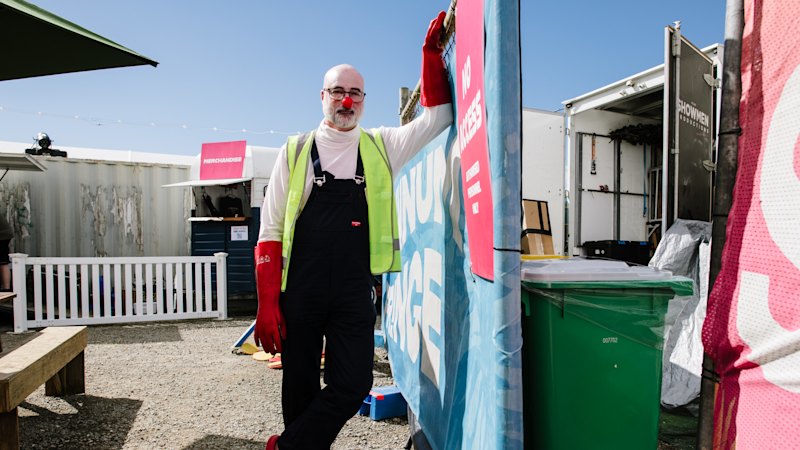
One of the brains behind Bluey’s World is launching a Brisbane clowning festival, a celebration of “human failure”. First he has to overcome the horror tropes.
Narrative Intelligence Brief
This article was published by Brisbane Times, a source frequently categorized with a center bias based in Australia. Our narrative intelligence engine continuously monitors coverage from this outlet to track framing, bias, and rhetorical patterns. Our initial algorithmic scan of this specific piece did not flag high-confidence rhetorical techniques, suggesting a generally straightforward reporting style or neutral framing. By understanding the editorial perspective of Brisbane Times, readers can better contextualize the information presented and compare it across our broader media matrix to find the real narrative.
More from Brisbane Times
July 4, 2026
Minns warns Labor must ‘climb Everest’ to beat back One Nation surge
July 4, 2026
‘I deeply grieve it’: Deeming defends legal action but regrets damaging party
July 4, 2026
AFL LIVE: Dominant Dees in command in Tassie as Hawks star suffers nasty wound
July 4, 2026
‘This doesn’t happen to us’: Family’s horror after Sydney day care abuser unmasked
July 4, 2026
Socceroos v Egypt as it happened: Colombia beat Ghana 1-0; Argentina beat Cape Verde 3-2 in extra time; Australia knocked out of World Cup by Egypt after penalties
Analysis Methodology
This narrative analysis was generated using the CoDataLab Global Intelligence Engine. Our proprietary AI scans thousands of cross-border sources to identify sentiment patterns, framing techniques, and potential media bias. While AI provides the data-driven foundation, our objective is to empower readers with additional context beyond the standard headline.The content displayed above is a structured summary designed for rapid information processing. For the full original report, please visit the source outlet.More Coverage
Discussion
"cup"
Putin is in danger as Russia’s air defence collapses

Mohamed Salah explains penalty after Egypt make history at World Cup 2026: ‘I had to decide at the last minute’
Ibrahimović and Henry believe Croatia were wronged: "The referee and VAR made the wrong decision"