Today in News History
On June 21, several notable moments in the history of News stand out. In 1898, The United States captures Guam from Spain. The few warning shots fired by the U.S. naval vessels are misinterpreted as salutes by the Spanish garrison, which was unaware that the two nations were at war. In 1913, Madihe Pannaseeha Thero, Sri Lankan monk and scholar (died 2003) was born. In 1927, Carl Stokes, American lawyer, politician, and diplomat, United States Ambassador to Seychelles (died 1996) was born. In 1930, Gerald Kaufman, English journalist and politician, Shadow Foreign Secretary (died 2017) was born. In 1942, Marjorie Margolies, American journalist and politician was born. In 1958, Gennady Padalka, Russian colonel, pilot, and astronaut was born. In 1990, Cedric Belfrage, English journalist and author, co-founded the National Guardian (born 1904) passed away. In 2009, Greenland assumes self-rule. In 2012, An Indonesian Air Force Fokker F27 Friendship crashes near Halim Perdanakusuma International Airport, killing 11. In 2012, A boat carrying more than 200 migrants capsizes in the Indian Ocean between the Indonesian island of Java and Christmas Island, killing 17 people and leaving 70 others missing. Together, these milestones provide historical context for today's news news and ongoing narratives.
What we’ve learnt from remote territory bird flu outbreak
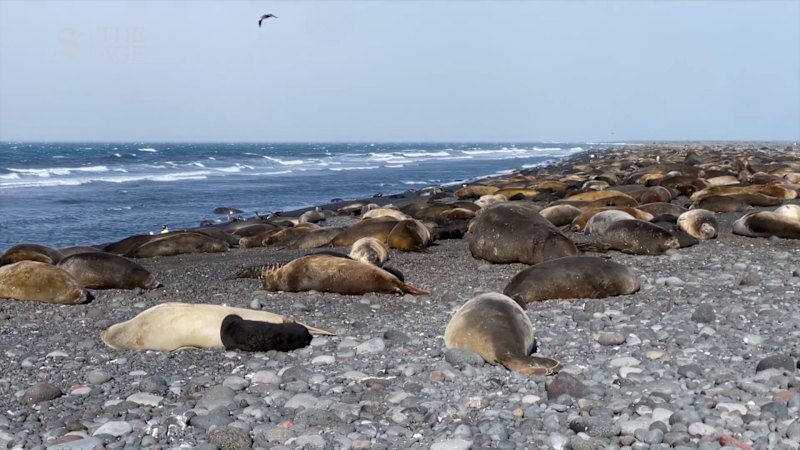
The Australian mainland has recorded its first case of H5N1 bird flu, but the disease has already wreaked havoc on Heard Island.
Narrative Intelligence Brief
This article was published by Brisbane Times, a source frequently categorized with a center bias based in Australia. Our narrative intelligence engine continuously monitors coverage from this outlet to track framing, bias, and rhetorical patterns. Our initial algorithmic scan of this specific piece did not flag high-confidence rhetorical techniques, suggesting a generally straightforward reporting style or neutral framing. By understanding the editorial perspective of Brisbane Times, readers can better contextualize the information presented and compare it across our broader media matrix to find the real narrative.
More from Brisbane Times
June 21, 2026
A suspended net and a gothic lament: Melbourne gets a welcome return
June 21, 2026
FIFA World Cup 2026 LIVE updates: Ecuador stun Curacao; Germany defeat Ivory Coast; Netherlands rout Sweden; Tunisia and Japan in action today
June 21, 2026
Melbourne’s massive data centre boom forces planners to rewrite the script
June 21, 2026
Historic mouth-covering red card hands Socceroos a massive World Cup boost
June 21, 2026
Can smart kitchen devices with a Wi-Fi chip make me a better cook?
Analysis Methodology
This narrative analysis was generated using the CoDataLab Global Intelligence Engine. Our proprietary AI scans thousands of cross-border sources to identify sentiment patterns, framing techniques, and potential media bias. While AI provides the data-driven foundation, our objective is to empower readers with additional context beyond the standard headline.The content displayed above is a structured summary designed for rapid information processing. For the full original report, please visit the source outlet.More Coverage
Discussion