Today in News History
On July 9, several notable moments in the history of News stand out. In 1908, Minor White, American photographer, critic, and educator (died 1976) was born. In 1910, Govan Mbeki, South African anti-apartheid and ANC leader and activist (died 2001) was born. In 1916, Edward Heath, English colonel and politician; Prime Minister of the United Kingdom, 1970-74 (died 2005) was born. In 1933, Oliver Sacks, English-American neurologist, author, and academic (died 2015) was born. In 1940, Eugene Victor Wolfenstein, American psychoanalyst and theorist (died 2010) was born. In 1961, Whittaker Chambers, American spy and witness in Hiss case(born 1901) passed away. In 1975, Jack White, American singer-songwriter, guitarist, and producer was born. In 1977, Alice Paul, American activist (born 1885) passed away. In 1993, Metin Altıok, Turkish poet and educator (born 1940) passed away. In 2004, The Senate Report on Iraqi WMD Intelligence is released by the United States Senate Select Committee on Intelligence, casting doubt on the rationale for the Iraq War. Together, these milestones provide historical context for today's news news and ongoing narratives.
What was the 'alt-right'? 'Whitepill' clears up the media hysteria
Narrative Analysis: Name Calling
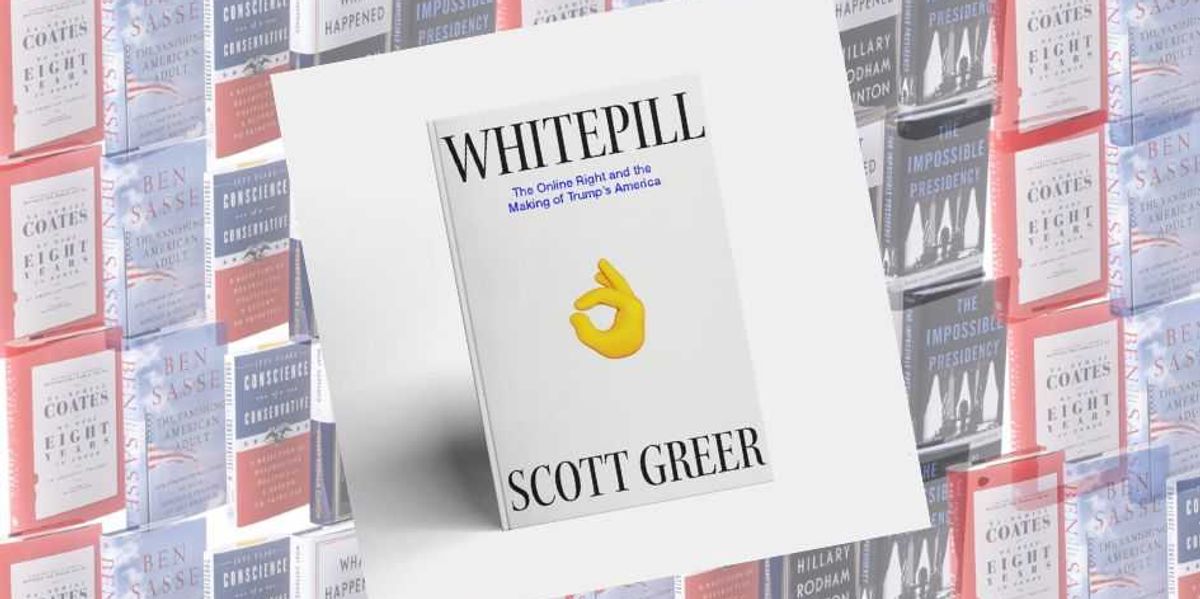
I remember back in the early Trump days, I would cruise by the Politics section of my local bookstore to see which celebrity leftist pundit they were promoting this week.One day, I noticed a small subsection within Politics called the Alt-Right.The alt-right was like the early punk movement. If you were actually there, it was crazy fun. If you weren’t, everything you heard about it was negative.I was amazed that a bookstore in my blue city would admit that the “alt-right” existed. But then I saw that all these books were about the evils of the alt-right.Without exception, these books described a dark and dangerous world of neo-Nazis, white supremacists, fascists, racists, homophobes, and misogynists ... most of whom apparently lived in caves in the darkest reaches of Idaho.The authors of these books often struck a self-congratulatory tone. How brave they were to explore these nefarious netherworlds!Eggheads unlimitedThe truth was that all of these books were incredibly dry and boring. Most were published by university presses and featured dubious statistics, out-of-context quotes, and obvious misrepresentations.The writers were brain-dead academics. They had no understanding of trends, or vibes, or zeitgeists. They barely knew what a meme was.And of course, they lacked any sense of humor at all. This made it impossible for them to understand the sarcasm and irony of the quick-witted young bloggers and commentators they were supposedly writing about.An untold storyI remember wondering if anyone would ever write an honest account of the alt-right. Probably not. It’s fairly common that most vanguard youth cultures are dismissed or misinterpreted.The alt-right was like the early punk movement. If you were actually there, it was crazy fun. If you weren’t, everything you heard about it was negative.So you can imagine my surprise when I heard about Scott Greer’s latest book, Whitepill: The Online Right and the Making of Trump’s America.Though the official title was relatively innocuous,the word on the street was this is it, this is the first serious history of the alt-right, by a writer who understood it, participated in it, and was very nearly destroyed by its fallout.Needless to say, I was eager to read it.How far we’ve comeGreer named his book Whitepill because it describes the many advances conservatives have made during the Trump era and celebrates their many victories.For those of us over 50: To be “white-pilled” about something means to be excited or happy about it.In the first sections of the book, Greer reminds us of the state of conservatism during the Clinton, Bush, and Obama administrations.It was “cuckservatism” basically, to borrow an alt-right-ism. The Republicans were so eager to please and so afraid of offending that they came up with catchphrases like “compassionate conservatism” to market themselves.They promoted same-sex marriage, amnesty for illegal immigrants, affirmative action, and a host of other leftist projects.We think of our current Republicans as being hypocritical, if not traitorous, for not protecting Americans from voter fraud, violent crime, and open borders.But they were even worse 20 years ago! Greer gives a good, succinct accounting of this.A new defiant energyIn response to the extreme wimpiness of 2000s establishment Republicans, a new defiant energy began to appear among young conservatives.Greer describes an obscure 2008 article by historian Paul Gottfried, who predicted the end of that era’s gutless conservatism:Beneath that crumbling establishment, [Gottfried] saw the stirrings of a “younger, less inhibited” generation of rightists willing to defy taboos and confront head-on what he described as an “intolerable political situation.” He called this nascent rebellion the Alternative Right.Most people who read Whitepill will have a rough idea of what Gottfried’s alternative right became, but Greer simplifies it for the normies: [The alt-right] was an online phenomenon, an ideological and aesthetic counter-culture that broke hard from the philosophical premises underpinning the modern [liberal] 'idea' of America.And more specifically:Many young white men in particular came to feel alienated by a new liberalism that pathologized their whiteness and demanded that they check their privilege. The Alt-Right explained to them in explicit terms why and how they could reject this new social paradigm.RELATED: The cure for liking socialism? Visiting a socialist country L-R: The author in East Berlin, 1984. Blake Nelson; Cuba, 2007. Matt Cardy/Getty ImagesYouth must be servedFrom there, Greer takes us through the initial flourishing of alt-right culture. The kids were going to have their say!But he also points out its obvious limitations, mainly that it was completely online and mostly anonymous. Its growth was therefore random and chaotic. There was no accountability; there were no boundaries.If it sometimes felt like a “movement” or even a “political party,” in reality, it was a free-floating, spontaneous, cultural phenomenon created in the cartoon world of the internet.Still, an entire generation came to know its symbols, its humor, its language, its youthful goofiness. It was hopeful and fun, and it pointed toward a way out of the mess we were in.The end of the beginningOf course, we all know where the alt-right story ended: in Charlottesville, in the summer of 2017.The Charlottesville “Unite the Right Rally” was doomed from the beginning. Though I had only just become aware of the alt-right myself, even I could sense the danger inherent in its real-world manifestation.I remember one blogger I followed begging people to stay away. “IT’S A TRAP!” he kept saying. And he was right. And a lot of people got caught in it.Life in the swampGreer occasionally inserts his own experiences as a writer, editor, and journalist into this narrative. And it’s good that he does. As he describes his early career in Washington, D.C., you get a sense of what a treacherous time it was to work in politics.Imagine trying to hold down a real-world job as a young conservative in the midst of peak wokeness! At different points, Greer was doxxed, fired, and blacklisted. But he managed to soldier on.Which is good news for the rest of us. Because he has written an exceptional book about a very important subject.Perhaps the most notable thing about Whitepill is that despite Greer’s obvious right-wing bias, he actually succeeds in producing a balanced and objective account of what happened and why. He is — as best he can — attempting to tell the truth.Imagine that. An honest person in politics. That is indeed a white pill.
Narrative Intelligence Brief
This article was published by Conservative Review, a source frequently categorized with a right bias based in United States of America. Our narrative intelligence engine continuously monitors coverage from this outlet to track framing, bias, and rhetorical patterns. In this specific piece, our systems detected the potential use of the "Name Calling" technique. This narrative approach is often used to shape reader perception by highlighting specific emotional or rhetorical angles. By understanding the editorial perspective of Conservative Review, readers can better contextualize the information presented and compare it across our broader media matrix to find the real narrative.
More from Conservative Review
July 9, 2026
Watch live: Day 4 of the Charlie Kirk assassination Tyler Robinson pretrial hearing
July 9, 2026
Exclusive: Border Patrol nabs convicted child sex offender who allegedly jumped from moving train
July 9, 2026
'Rape of Britain' ignored because of the Muslim vote, UK lawmaker tells Joe Rogan
July 9, 2026
CNN Host Eats Humble Pie After Appearing To Think Parody Post Was Legit
July 9, 2026
Popular 'Citizen Vigilante' movie promotes death wish for multicultural melting pot
Reliability Insights
P
Technique: Name Calling
System analysis detected use of specific narrative techniques in this piece.Analysis Methodology
This narrative analysis was generated using the CoDataLab Global Intelligence Engine. Our proprietary AI scans thousands of cross-border sources to identify sentiment patterns, framing techniques, and potential media bias. While AI provides the data-driven foundation, our objective is to empower readers with additional context beyond the standard headline.The content displayed above is a structured summary designed for rapid information processing. For the full original report, please visit the source outlet.More Coverage
Discussion