
What new mothers can teach us about the future of work
Narrative Analysis: Plain Folks
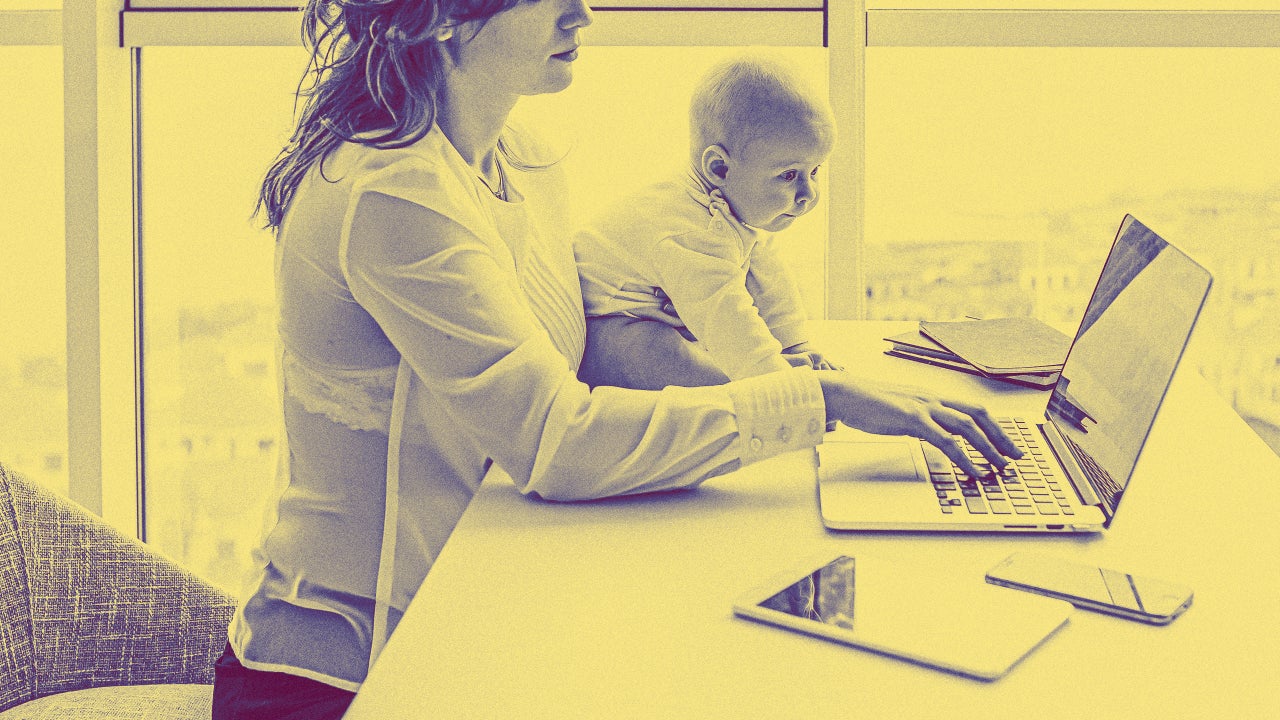
If you want to know whether a workplace is built for the future, don’t ask the CEO. Ask the woman sprinting to daycare pickup at 5 pm. For the past several years we’ve approached new mothers as workers who need support. Flex schedules. Rooms to pump. Extended leave. Grace when the baby gets sick for the fourth time in as many weeks. All that is important, certainly. But it also may have led us to ask the wrong question. Instead of what do mothers need from work? Maybe we should be asking what can work learn from mothers? AI can’t fix a culture addicted to busywork We are at a moment in time where AI is transforming every aspect of how work gets done. New mothers are serving as a stress test (think canary in the coal mine) to reveal if companies are evolving with technology or just leveraging tech to maintain the status quo. For years, many companies assessed commitment by how many hours you logged or how visible you were. The best employee was the person who showed up first, stayed the latest, replied to emails at 10 pm, and was basically reachable at all hours. Burnout became a badge of honor. AI has the potential to change all of that. Tasks that used to take hours can now be accomplished in minutes. Meetings can be summarized automatically, research pulled at the click of a button. The work we do can be accomplished faster than ever before. With AI on our side, you’d think that would free us up for the work that humans are truly good at. Creative thinking. Big-picture strategy. Relationship building. Problem-solving. Exercise judgement. But most workers today feel busier than ever. Why? Because AI is not solving that problem for the majority. Instead of asking What can we now stop doing, companies are asking How can we cram in more? New mothers can spot workplace waste immediately The time we gain from technology isn’t used to breathe. It gets converted to more meetings. More check-ins. More decks. More unrealistic expectations. I learned this from talking to new mothers. “When I returned from maternity leave, I had the same drive I always had,” Marva, an accountant, told me. “But now I have a kid and I need to get home, so I notice when things waste our time.” Pay attention to that. When you are sleep deprived, managing the logistics of childcare, working your job, and keeping a baby alive; there is no time for nonsense. Suddenly you can see the absurdity of workplace traditions we’ve accepted for years. Do we need to have this meeting? Why are six people involved in making this decision? Why does this report need three rounds of approvals? Are we rewarding visibility or actual contribution? What would happen if we eliminated this altogether? These aren’t the questions of an employee who suddenly wants less on her plate. They are the questions of someone who cannot afford to waste time anymore. Many employers assume that when women come back from maternity leave they are less ambitious, less serious about their job, or not capable of handling more meaningful work. But new mothers aren’t lowering expectations, they are raising them. They want to know what to expect when they wake up in the morning. They want predictability. Less meetings that suck away our hours. Less busy work. Less crap. They want more transparency around what absolutely must get done and what continues to exist because “we’ve always done it that way.” Many new mothers are asking for the same things we all want. If you think about it, one of the greatest ironies about work these days is that technology has made a lot of tasks easier but work somehow feels harder than ever. We are expected to reply to messages instantly but receive more messages than ever. We can create a PowerPoint in minutes but are expected to produce more than before. We can meet with anyone from anywhere so naturally we are expected to be available anytime. Which is why new mothers are priceless. Judgement is the new productivity skill Motherhood will illuminate the problems in any workplace. If you have exactly 27 minutes to get to daycare before they close, you will not waste time in meetings pretending that everyone needs to be in attendance or that this status update about a status update is productive. You will know the difference between meaningful collaboration and having six people slowly chew on a decision that one person should make. That doesn’t make you less committed. It makes you insightful. And in an AI driven economy, I think that might become one of the most valuable assets a person can have on a resume. The future of work is not only about how companies define value. If technology can handle more routine tasks, then human contribution has to mean something more than the ability to sit through another meeting with a camera on (and your soul quietly leaving your body). The best workplaces will not just use AI to make everyone produce more. They will use it to make the work and workplace culture better. That means questioning old habits, rewarding judgement over busyness, and letting people contribute in creative ways. It also means recognizing that employees who challenge the status quo are not being difficult. Which brings me back to the woman racing to daycare pickup. For years, she has been treated as the person who needs work to bend around her life. She understands value, what wastes time, which expectations are real, which are just performative. And if companies are serious about building the future of work, they should listen to her. She may already be working the way everyone else will have to very soon.
Narrative Intelligence Brief
This article was published by Fast Company, a source frequently categorized with a lean left bias based in United States of America. Our narrative intelligence engine continuously monitors coverage from this outlet to track framing, bias, and rhetorical patterns. In this specific piece, our systems detected the potential use of the "Plain Folks" technique. This narrative approach is often used to shape reader perception by highlighting specific emotional or rhetorical angles. By understanding the editorial perspective of Fast Company, readers can better contextualize the information presented and compare it across our broader media matrix to find the real narrative.
Explore related topics: Stay informed with Real Narrative News as we track unfolding stories. Dive deeper into our coverage of pivotal topics including elon musk, worlds trillionaire, white house, spacex ipo, musk worlds, coupe monde, facebook instagram, david hockney, elon musks, and cup opener. Our intelligence streams continuously monitor these keywords to bring you unbiased analysis and real-time updates on topics like "What new mothers can teach us about the future of work".
More from Fast Company
June 12, 2026
MetLife Stadium? Lumen Field? Not during the World Cup
June 12, 2026
Bots are the audience now and that changes everything for media
June 12, 2026
SpaceX just went public. These alum-founded startups are following its playbook
June 12, 2026
The Pentagon and Pete Hegseth are facing a lawsuit from 9 renewable energy groups. Here’s why
June 12, 2026
SpaceX IPO today: How volatile trading could impact your 401k retirement account—and why investors are worried
Reliability Insights
P
Technique: Plain Folks
System analysis detected use of specific narrative techniques in this piece.Analysis Methodology
This narrative analysis was generated using the CoDataLab Global Intelligence Engine. Our proprietary AI scans thousands of cross-border sources to identify sentiment patterns, framing techniques, and potential media bias. While AI provides the data-driven foundation, our objective is to empower readers with additional context beyond the standard headline.The content displayed above is a structured summary designed for rapid information processing. For the full original report, please visit the source outlet.More Coverage
Discussion