
Today in News History
On June 22, several notable moments in the history of News stand out. In 1812, France declares war on Russia, starting Napoleon's invasion. In 1845, Richard Seddon, English-New Zealand politician, 15th Prime Minister of New Zealand (died 1906) was born. In 1870, The United States Department of Justice is created by the U.S. Congress. In 1944, World War II: Opening day of the Soviet Union's Operation Bagration against the Army Group Centre. In 1945, World War II: The Battle of Okinawa comes to an end with an American flag-raising ceremony. In 1945, Isamu Chō, Japanese general (born 1895) passed away. In 1948, King George VI formally gives up the title "Emperor of India", half a year after Britain actually gave up its rule of India. In 1956, Shah Mehmood Qureshi, Pakistani agriculturist and politician, 25th Pakistani Minister of Foreign Affairs was born. In 1965, The Treaty on Basic Relations between Japan and the Republic of Korea is signed. In 2014, Rama Narayanan, Indian director and producer (born 1949) passed away. Together, these milestones provide historical context for today's news news and ongoing narratives.
What does US Pacific Command name change mean for China and India?
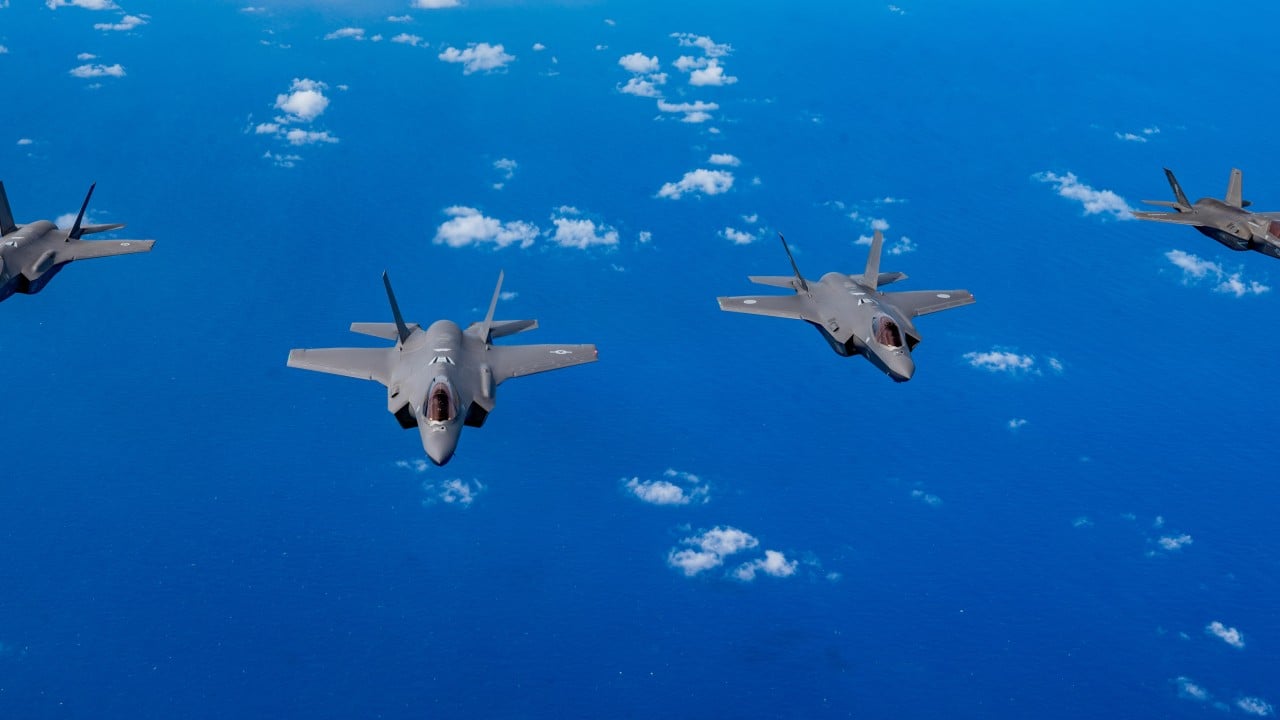
In a layered signal to Indo-Pacific nations and America’s domestic audience, the Trump administration last week said the US Indo-Pacific Command would revert to its long-used name, the US Pacific Command. The Honolulu-headquartered command was renamed in 2018 during Donald Trump’s first presidency. The administrative order by the Department of Defence was justified to honour the legacy of America’s oldest and largest unified combatant command, established in 1947. In the run-up to the 250th...
Narrative Intelligence Brief
This article was published by South China Morning Post, a source frequently categorized with a lean left bias based in Hong Kong. Our narrative intelligence engine continuously monitors coverage from this outlet to track framing, bias, and rhetorical patterns. Our initial algorithmic scan of this specific piece did not flag high-confidence rhetorical techniques, suggesting a generally straightforward reporting style or neutral framing. By understanding the editorial perspective of South China Morning Post, readers can better contextualize the information presented and compare it across our broader media matrix to find the real narrative.
More from South China Morning Post
June 22, 2026
Hong Kong cockatoos could help save Indonesia’s endangered species, study shows
June 22, 2026
China’s green exports to the US surge as AI boom, Iran war lift demand
June 22, 2026
China says it warned off multiple Japanese ‘provocations’ during aircraft carrier drills
June 22, 2026
Hong Kong doctor fired over misconduct linked to medical intern case
June 22, 2026
Australian public cooling on Trump’s US while thawing on China, survey finds
Analysis Methodology
This narrative analysis was generated using the CoDataLab Global Intelligence Engine. Our proprietary AI scans thousands of cross-border sources to identify sentiment patterns, framing techniques, and potential media bias. While AI provides the data-driven foundation, our objective is to empower readers with additional context beyond the standard headline.The content displayed above is a structured summary designed for rapid information processing. For the full original report, please visit the source outlet.More Coverage
Discussion
"keir starmer"
Breaking! Keir Starmer Steps Down, Trump’s Cuba Threats, Oil Barrel Crisis | PBD #821

Full text: Prime Minister Keir Starmer’s resignation speech
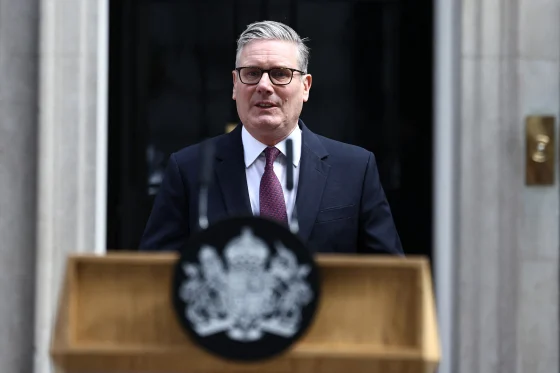
U.K. Prime Minister Keir Starmer Quits After Party Rebellion
