
What does it mean to be a chief design officer?
Narrative Analysis: Plain Folks
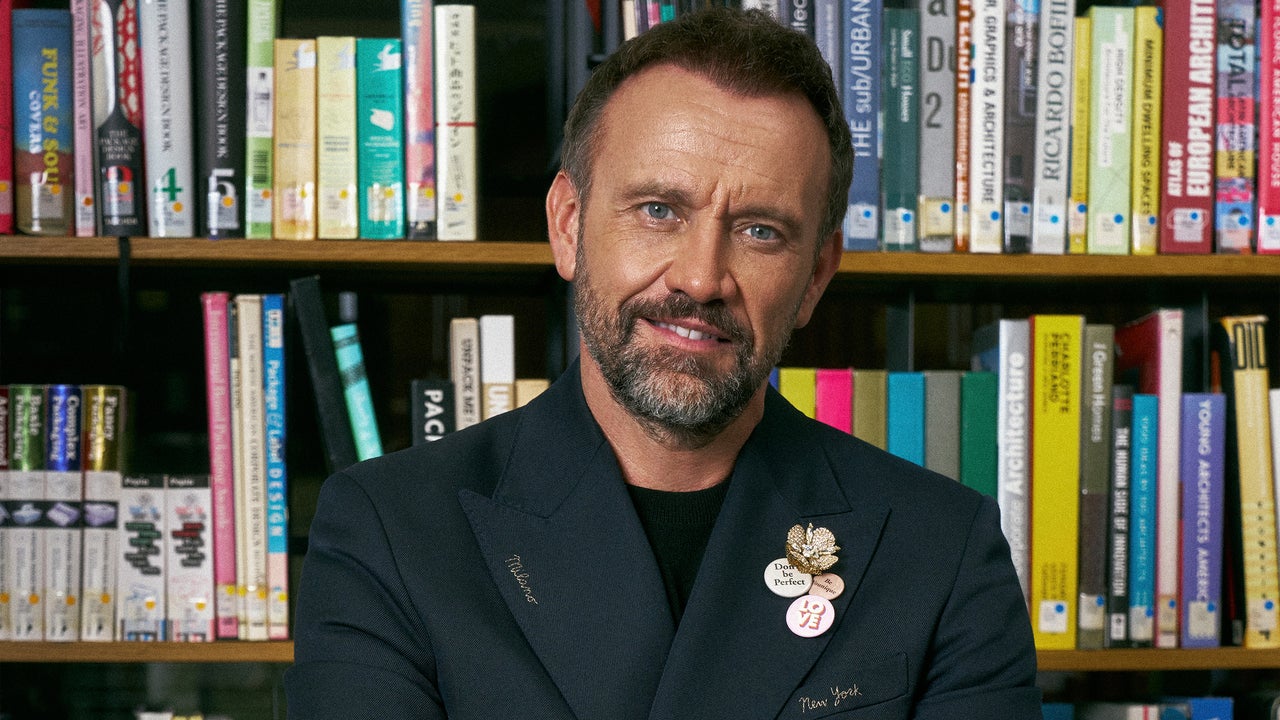
If you pitched the job of “chief design officer,” 20 years ago, you might’ve been laughed out of the boardroom. Now, design can be found in the C-suite. The U.S. government even has its own chief design officer now—Airbnb cofounder Joe Gebbia. What does it mean to hold the CDO title today? At By Design, we wanted to know, so we had Mauro Porcini, Samsung’s chief design officer, come on the show. Porcini was among the first chief design officers ever, taking on the role first at 3M and later at PepsiCo. He now holds the same title at Samsung, where he brings a big vision and unique philosophy to the tech company. Below are a few excerpts from the podcast, which have been edited for length and clarity. Check out the full episode on Apple Podcasts, Spotify, or YouTube. You pioneered the role of chief design officer. How is this position different from, say, a creative director? First of all, a chief design officer, to me, is a business leader. Many years ago, in my previous company, one of the executives of the company told me, “Mauro, you need to stop always thinking like a design leader. You are an executive of this company, and you need to really think like an executive of the company.” And it was an aha moment because there is a difference between always advocating for design versus elevating yourself to be bigger than that, and really trying to understand how to impact the company—with their goals and their difficulties and complexities—through design. Half of the job is being a business leader. The other half is being a design leader. You need to be able to combine the two, and be a business leader that understands deeply the world of design, but also understands other dimensions of the business, and leverage design, creativity, human centricity—this humanistic approach to innovation—to drive business growth. Does that mean that sometimes you have to swallow your passions as a design leader or creative to be practical when it comes to what this means for the business in a way that maybe some designers at the company wouldn’t? It depends on what your passion is. If my passion is to grow the business, to succeed long term, to really have an impact on the business, then you’re not swallowing your passion. You’re managing everything you do—your approach, your resources—to achieve that goal. But it means that sometimes maybe the perfect design that you can think of as a traditional design leader is not the right answer in the moment. You need to do something different to achieve that goal. Now, I also want to give the other answer, though, because it’s fundamental for me. Look, being a chief design officer, especially of a big company, means that you are at the top of the company, and so you have access to billions of people, as well as financial resources. And then you can influence so many different people as well. So that’s an opportunity and also a responsibility. How would you like to see people think about Samsung design differently in the next few years? What will surprise us the most? I want the company to be a leader in a humanistic approach to innovation. I want the company to drive a change and evolution in the tech world where we open up to diversity of products, diversity of languages, a diversity that reflects the diversity of people and humanity. With the leadership position of Samsung in so many product categories, there is a probability that if we change something in a category, competition will follow. And so this will have a chain effect, and the industry will change. There is some fatigue in this industry. People are looking for newness. They want to go back to a store and get excited. They want to discover new things. I think they’re ready. The world is ready. We need to lead that change. What I don’t know is how fast we’re going to move. Not as a company, but when you start to change a few things, the users, the consumers, need to follow you. So we need to understand how fast they will react. And second, when they start to follow, you’re going to do more of this, and then competition will start to follow. So the speed will be decided by the market. The speed will be decided by how fast consumers embrace it. But I do believe that in 10 years’ time, this industry will be completely different. I have no doubt about this. We can’t go on in this kind of uniformity of language in the industry.
Narrative Intelligence Brief
This article was published by Fast Company, a source frequently categorized with a lean left bias based in United States of America. Our narrative intelligence engine continuously monitors coverage from this outlet to track framing, bias, and rhetorical patterns. In this specific piece, our systems detected the potential use of the "Plain Folks" technique. This narrative approach is often used to shape reader perception by highlighting specific emotional or rhetorical angles. By understanding the editorial perspective of Fast Company, readers can better contextualize the information presented and compare it across our broader media matrix to find the real narrative.
Explore related topics: Stay informed with Real Narrative News as we track unfolding stories. Dive deeper into our coverage of pivotal topics including david hockney, elon musk, fifa cup, dies aged, spacex ipo, coupe monde, taylor swift, donald trump, white house, and artist david. Our intelligence streams continuously monitor these keywords to bring you unbiased analysis and real-time updates on topics like "What does it mean to be a chief design officer?".
More from Fast Company
June 12, 2026
Meet the NASA crew who will keep Artemis III on track for its 2028 moon landing
June 12, 2026
Giant, beautiful soccer balls are popping up around New York City
June 12, 2026
13 career insurance policies every professional should have
June 12, 2026
The battery startup powering the laser-weapons race
June 12, 2026
Bruce Springsteen’s new center in New Jersey is a jewel box monument to his music
Reliability Insights
P
Technique: Plain Folks
System analysis detected use of specific narrative techniques in this piece.Analysis Methodology
This narrative analysis was generated using the CoDataLab Global Intelligence Engine. Our proprietary AI scans thousands of cross-border sources to identify sentiment patterns, framing techniques, and potential media bias. While AI provides the data-driven foundation, our objective is to empower readers with additional context beyond the standard headline.The content displayed above is a structured summary designed for rapid information processing. For the full original report, please visit the source outlet.More Coverage
Discussion