
Today in News History
On June 23, several notable moments in the history of News stand out. In 1860, The United States Congress establishes the Government Printing Office. In 1943, Ellyn Kaschak, American psychologist and academic was born. In 1948, Clarence Thomas, American lawyer and jurist, Associate Justice of the Supreme Court of the United States was born. In 1951, Angelo Falcón, Puerto Rican-American political scientist, activist, and academic, founded the National Institute for Latino Policy (died 2018) was born. In 1969, IBM announces that effective January 1970 it will price its software and services separately from hardware thus creating the modern software industry. In 1972, Watergate scandal: U.S. President Richard M. Nixon and White House Chief of Staff H. R. Haldeman are taped talking about illegally using the Central Intelligence Agency to obstruct the Federal Bureau of Investigation's investigation into the Watergate break-ins. In 1994, NASA's Space Station Processing Facility, a new state-of-the-art manufacturing building for the International Space Station, officially opens at Kennedy Space Center. In 2012, James Durbin, English economist and statistician (born 1923) passed away. In 2015, Nirmala Joshi, Indian nun, lawyer, and social worker (born 1934) passed away. In 2017, A series of terrorist attacks take place in Pakistan, resulting in 96 deaths and wounding 200 others. Together, these milestones provide historical context for today's news news and ongoing narratives.
What are the Fed’s bank stress tests and what’s new this year?
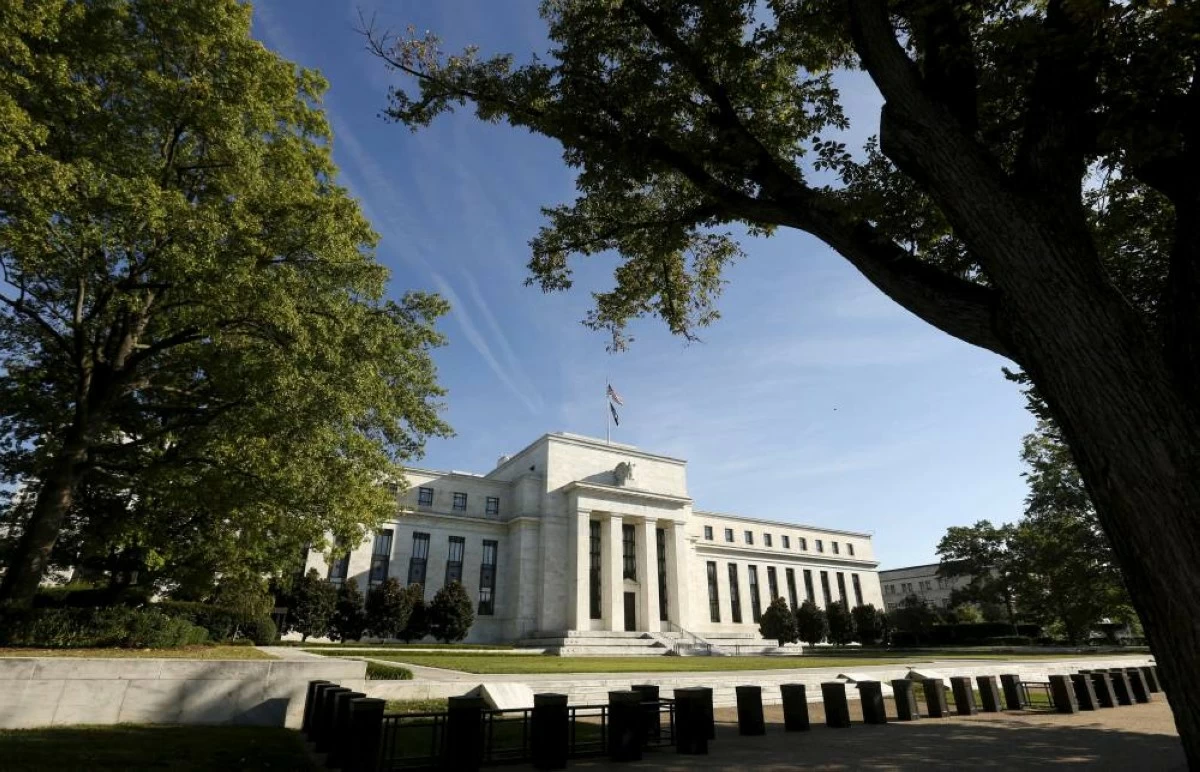
Washington: The U.S. Federal Reserve is set to release the results of its annual bank stress tests, offering insight into the resilience of major lenders under severe economic conditions, although this year’s results will not affect capital requirements or shareholder payouts.What are the Fed’s stress tests?The Federal Reserve introduced stress tests in 2011 following the 2007–2009 global financial crisis to ensure banks could withstand a similar economic shock. The tests simulate a severe downturn and assess how banks’ balance sheets would perform under pressure.Initially, several major banks, including Citigroup, Bank of America, JPMorgan Chase and Goldman Sachs, struggled to meet the required standards, prompting revisions to their capital plans. Over time, banks have adapted to the process, and the Fed has made the framework more transparent. In 2020, the central bank replaced the earlier “pass-fail” model with a more tailored system that assesses each bank individually.How are banks assessed?The stress tests evaluate whether banks can maintain a minimum capital ratio of 4.5 percent during a simulated downturn. This ratio reflects a bank’s capital relative to its assets. Large global banks must also hold an additional buffer, known as the G-SIB surcharge.A key outcome of the test is the “stress capital buffer”, an extra layer of capital determined by the losses a bank would face under the simulated scenario. The higher the projected losses, the larger the buffer required.This year’s test covers 32 banks and includes a scenario of a severe global recession, along with significant stress in commercial and residential real estate markets. Banks with major trading operations are also evaluated against a global market shock and the potential failure of a key counterparty.What’s different in 2026?In a major shift, the Federal Reserve has decided that this year’s stress test results will not lead to changes in banks’ capital requirements. Instead, existing capital buffers will remain in place.While the results will still provide valuable insight for investors and analysts about the financial health of major institutions, they will not influence how much capital banks must hold or how much they can return to shareholders through dividends or share buybacks.Why are capital levels unchanged?The Fed is maintaining current capital levels while it reviews and updates the stress testing framework in response to industry concerns. Banks have long criticised the process as overly opaque and complex.In response, regulators have proposed allowing banks to review and provide feedback on the models and scenarios used in future stress tests. This marks a significant shift towards greater transparency and collaboration.Fed Vice Chair for Supervision Michelle Bowman said the decision to freeze capital levels during this year’s exercise would allow regulators to incorporate feedback and address any shortcomings in the system.What does it mean for the banking sector?Although the 2026 stress tests will not directly impact capital allocations, they remain a key tool for assessing the strength of the U.S. banking system. The results are expected to offer a snapshot of how major banks would cope with a deep economic downturn, even as the regulatory framework continues to evolve.
Narrative Intelligence Brief
This article was published by Emirates 24/7, a source frequently categorized with a lean right bias based in United Arab Emirates. Our narrative intelligence engine continuously monitors coverage from this outlet to track framing, bias, and rhetorical patterns. Our initial algorithmic scan of this specific piece did not flag high-confidence rhetorical techniques, suggesting a generally straightforward reporting style or neutral framing. By understanding the editorial perspective of Emirates 24/7, readers can better contextualize the information presented and compare it across our broader media matrix to find the real narrative.
More from Emirates 24/7
June 23, 2026
Think big, move fast: How Dubai residents are living the ‘Dubai-it’ philosophy
June 23, 2026
'Dubai-it': The mindset that turns ambition into action
June 23, 2026
US opens probe of fatal Tesla Model 3 crash into Texas home
June 23, 2026
Dubai retains No.1 global ranking for Greenfield FDI in 2025
June 23, 2026
Angelina Jolie turns personal pain into performance for ‘Couture’ film
Analysis Methodology
This narrative analysis was generated using the CoDataLab Global Intelligence Engine. Our proprietary AI scans thousands of cross-border sources to identify sentiment patterns, framing techniques, and potential media bias. While AI provides the data-driven foundation, our objective is to empower readers with additional context beyond the standard headline.The content displayed above is a structured summary designed for rapid information processing. For the full original report, please visit the source outlet.More Coverage
Discussion
"cup"
DHS’ bizarre post about the U.S. men’s World Cup advancement got it all wrong

Jeremy Doku’s Belgium World Cup return date confirmed as presenter apologises for "completely useless" comment
/https%3A%2F%2Fsportsmole-media-prod.s3.gra.io.cloud.ovh.net%2Fuploads%2F2026%2F06%2Faaa-jd-6a3a27296adb3055463402.jpg)
Granddaughter spent $6,000 on 89-year-old grandpa’s dream to watch World Cup match; he was left outside in tears
