
What are Jamaica’s foreign reserves and why do they matter now?
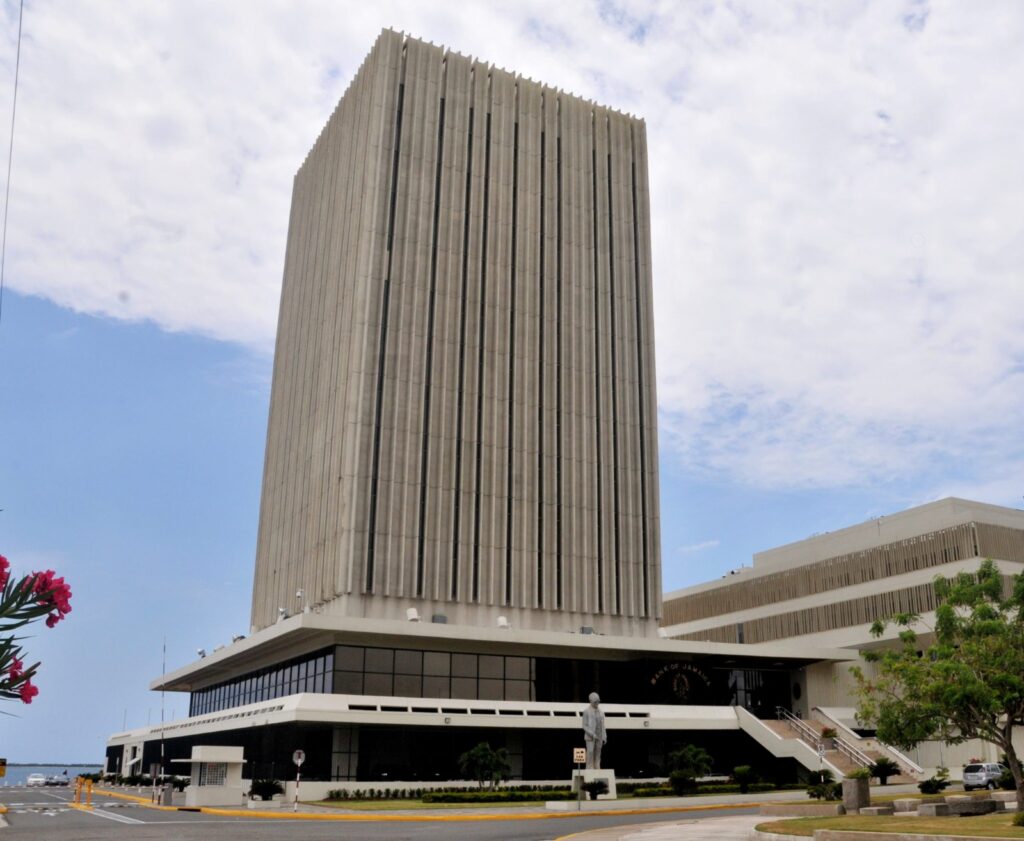
KINGSTON, Jamaica — Jamaica’s dollar has held steady through an oil shock and a hurricane.That is not an accident.It is, in large part, the result of a financial cushion most Jamaicans rarely think about until pressure builds: the country’s foreign reserves.With inflation expected to rise further and the economy still recovering from Hurricane Melissa, the reserves have become more than a central bank number. They help determine how much room the Bank of Jamaica (BOJ) has to smooth pressure in the foreign exchange market, supply US dollars when demand spikes, and prevent sharper movements in the Jamaican dollar.What are foreign reserves?Foreign reserves are the stock of foreign currencies, financial assets and other internationally accepted holdings that a central bank keeps available to help manage the country’s external obligations.Jamaica is a small, open economy. It imports oil, food, medicines, machinery and many other goods it does not produce locally — and most of those imports are paid for in US dollars.Tourism earnings, remittances, exports and investment flows bring foreign currency into the country. But those inflows do not always arrive at the same time, or in the same amounts, as the dollars needed to pay for imports, fuel or foreign debt.The reserves are the buffer between those two realities.When foreign currency inflows slow, or when demand for US dollars rises sharply, BOJ can use the reserves to supply the market and reduce the risk of a disorderly slide in the exchange rate.What does Jamaica actually hold?At the end of May 2026, Jamaica’s gross foreign assets stood at US6.493 billion.Most of that was held in two forms: US3.327 billion in currency and deposits, and US2.951 billion in securities. Jamaica also held US177.61 million in Special Drawing Rights, which are reserve assets issued by the International Monetary Fund, and US37.44 million in its IMF reserve position.After subtracting foreign liabilities of US9.69 million, net international reserves stood at US6.484 billion at the end of May.The distinction is important. Gross reserves show the total foreign assets held. Net reserves subtract what is owed externally. The net figure gives a clearer sense of what Jamaica can actually use.How much is enough?Central banks do not measure reserve strength by the headline dollar amount alone. They ask whether the reserves are large enough for the risks the country faces.One basic measure is import cover — how many weeks of imports Jamaica could pay for if other foreign exchange inflows stopped.At the end of May, Jamaica’s reserves covered 40.35 weeks of goods imports and 26.62 weeks of goods and services imports.That is well above the traditional minimum benchmark of about 12 weeks.Another measure is the IMF’s Assessing Reserve Adequacy metric, known as the ARA. This looks beyond imports and considers a wider set of possible drains on the country’s external accounts, including exports of goods and services, broad money, short-term external debt and other portfolio liabilities.At the end of May, Jamaica’s reserves stood at 139.21 per cent of the ARA metric. In plain English, BOJ had more reserves than the IMF’s broader adequacy measure says Jamaica needs for a normal shock scenario.Both measures point in the same direction: Jamaica’s reserve position is strong.But they answer different questions. Import cover asks whether Jamaica can keep buying what it needs from abroad. The ARA asks whether the country has enough protection against several external pressures happening at the same time.How did Jamaica build the buffer? Jamaica did not reach this level overnight.Byles told Parliament that gross international reserves rose from US3.6 billion in 2019 to about US6.4 billion at May 2026.The documents presented to Parliament do not provide a full breakdown of how that increase was built. But the result is clear: BOJ now has a larger cushion than it had when Byles became governor.That gives the central bank more room to supply US dollars during periods of higher fuel costs, weaker tourism inflows or increased import demand after a hurricane.The core mechanism is straightforward: when foreign currency flows into Jamaica faster than the market needs it — during strong tourism seasons, periods of high remittances or export surges — BOJ can buy that excess from the market and add it to the reserve stock. Over time, consistent buying during good periods builds the cushion that gets deployed during difficult ones.What does BOJ do with the reserves?The main use is foreign exchange intervention.When demand for US dollars is stronger than the normal supply coming from tourism, remittances, exports and investment flows, BOJ can sell US dollars into the market. That does not mean the central bank is trying to fix the exchange rate at one level. It means BOJ is trying to prevent sharp, disorderly movements.This is especially important for fuel.Energy companies need large amounts of US dollars to pay for imported oil, gas and other energy supplies. If all that demand hits the market at once, it can put pressure on the Jamaican dollar.BOJ’s Monetary Policy Committee said in May that it would continue special measures to preserve stability in the foreign exchange market, including directly supplying the foreign exchange needs of selected entities in the energy sector.In practical terms, BOJ is using part of its reserve strength to stop concentrated energy-sector demand from creating wider instability in the currency market.At May 26, the exchange rate had appreciated by 1.5 per cent year over year to J157.90 to US1, compared with depreciation of 2.3 per cent over the previous 12 months. BOJ said the market had been supported by its strategic use of reserves to increase US-dollar supply and reduce volatility.What could test the buffer now?Three forces are pulling on Jamaica’s external accounts at the same time.The first is oil.BOJ told Parliament that average crude oil prices rose 59.4 per cent between March and May 2026 compared with the average prices immediately before the Middle East conflict. Higher oil prices mean Jamaica needs more US dollars to pay for the same energy imports.The second is reconstruction.Rebuilding after Hurricane Melissa requires imported materials, machinery, equipment and fuel. BOJ said increased imports for the post-hurricane infrastructure rebuild are expected to help weaken Jamaica’s current account position.The third is tourism.Hurricane Melissa also hurt the tourism industry, reducing one of Jamaica’s most important sources of foreign currency.Together, those pressures are expected to swing Jamaica’s current account position by as much as 3.5 percentage points of GDP in a single year — from a healthy surplus of 3.0 per cent of GDP in FY2024/25 to near balance or a small deficit in FY2025/26.That is not a crisis reading, but it is a material deterioration, and it means the reserves will need to work harder to cover the gap between what Jamaica earns in foreign currency and what it spends.This is where reserves become more than a comfort number. If oil stays expensive, reconstruction imports remain heavy and tourism takes longer to recover, BOJ may have to keep using its reserves more actively to prevent sharper pressure on the dollar.Should Jamaicans be worried?Not immediately.Jamaica’s reserves are well above basic adequacy measures, and the exchange rate has remained relatively stable. BOJ also has shown that it is willing to use the reserves to support the market when pressure builds.But the cushion is not something to ignore.Higher oil prices can feed into electricity bills, transport costs and the price of goods moved by road or sea. Reconstruction demand can increase the need for imported materials and machinery. A slower tourism recovery can reduce the natural flow of US dollars into the market.Those pressures can reach households and businesses through higher prices, tighter financing conditions and greater uncertainty about the exchange rate.The May numbers show that the buffer is still holding. Net international reserves rose by US32.11 million between end-April and end-May.But the ARA adequacy ratio fell by 5.55 percentage points, from 144.76 per cent to 139.21 per cent.That may seem contradictory — more dollars in the reserve, yet a lower adequacy score. The reason is that the ARA benchmark is not a fixed number. It rises as Jamaica’s external vulnerabilities grow: a larger import bill, higher short-term debt obligations or greater exposure to capital outflows all increase what the IMF considers adequate.When those vulnerabilities grow faster than the reserve stock, the ratio falls even if the dollar amount rises. In May, the risk picture shifted faster than the buffer grew.The honest reading is this: Jamaica has a strong reserve position for a moderate, temporary shock. A longer oil shock, slower tourism recovery or sustained reconstruction import surge would make the test harder.What should readers watch? The first thing to watch is the monthly net international reserves figure. A one-month dip would not mean a crisis. A steady decline over several months would be more important.The second is the exchange rate. Gradual movement is normal. Faster depreciation would suggest stronger pressure in the foreign exchange market.The third is the current account. If Jamaica keeps spending more foreign currency than it earns over several quarters, the reserves will have to do more of the work.For now, Jamaica enters this period with a real buffer — one built over seven years and now handed to a new governor at the moment it is most needed.The question is not whether the cushion exists. It is whether the conditions that test it ease quickly enough to keep it intact.
Narrative Intelligence Brief
This article was published by Jamaica Observer, a source frequently categorized with a Unknown bias based in Jamaica. Our narrative intelligence engine continuously monitors coverage from this outlet to track framing, bias, and rhetorical patterns. Our initial algorithmic scan of this specific piece did not flag high-confidence rhetorical techniques, suggesting a generally straightforward reporting style or neutral framing. By understanding the editorial perspective of Jamaica Observer, readers can better contextualize the information presented and compare it across our broader media matrix to find the real narrative.
Explore related topics: Stay informed with Real Narrative News as we track unfolding stories. Dive deeper into our coverage of pivotal topics including elon musk, worlds trillionaire, white house, spacex ipo, musk worlds, coupe monde, facebook instagram, david hockney, elon musks, and cup opener. Our intelligence streams continuously monitor these keywords to bring you unbiased analysis and real-time updates on topics like "What are Jamaica’s foreign reserves and why do they matter now?".
More from Jamaica Observer
June 12, 2026
Scotiabank moves to take Scotia Group Jamaica private
June 12, 2026
Main Event loss widens as revenue falls across key business lines
June 12, 2026
What are Jamaica’s foreign reserves and why do they matter now?
June 12, 2026
Pele’s 1958 World Cup winners’ medal set to fetch £500,000
June 12, 2026
Jamaica launches ambitious movement to become ‘sports capital of the global south’
Analysis Methodology
This narrative analysis was generated using the CoDataLab Global Intelligence Engine. Our proprietary AI scans thousands of cross-border sources to identify sentiment patterns, framing techniques, and potential media bias. While AI provides the data-driven foundation, our objective is to empower readers with additional context beyond the standard headline.The content displayed above is a structured summary designed for rapid information processing. For the full original report, please visit the source outlet.More Coverage
Discussion