Today in News History
On June 18, several notable moments in the history of News stand out. In 1887, The Reinsurance Treaty between Germany and Russia is signed. In 1920, The Troubles in Northern Ireland (1920-1922) begin with a week of sectarian violence in Derry. In 1928, Roald Amundsen, Norwegian pilot and explorer (born 1872) passed away. In 1939, Jean-Claude Germain, Canadian historian, author, and journalist was born. In 1951, Ian Hargreaves, English-Welsh journalist and academic was born. In 1973, Alexandra Meissnitzer, Austrian skier was born. In 1980, Sergey Kirdyapkin, Russian race walker was born. In 1984, A major clash between about 5,000 police and a similar number of striking miners takes place at Orgreave, South Yorkshire, during the 1984-85 UK miners' strike. In 1997, Lev Kopelev, Ukrainian-German author and academic (born 1912) passed away. In 2013, Michael Hastings, American journalist and author (born 1980) passed away. Together, these milestones provide historical context for today's news news and ongoing narratives.
Weatherwatch: UK’s migrant waders feel the effects of a changing Arctic
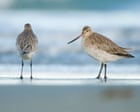
Warmer winters and springs are drying out wetlands and the birds are missing out on an abundance of insects to eatWhen we think of spring migrant birds, it is easy to focus on songbirds such as warblers, flycatchers and swallows. Yet during late spring, many are waders – passing through Britain on their way north to breed in the high Arctic from their winter quarters in sub-Saharan Africa.According to the British Trust for Ornithology’s regular migration blog, it has been a good year for waders: including more common species such as ringed and grey plovers, bar-tailed godwit, sanderling and knot. Continue reading...
Narrative Intelligence Brief
This article was published by Animals | The Guardian, a source frequently categorized with a lean left bias based in United Kingdom. Our narrative intelligence engine continuously monitors coverage from this outlet to track framing, bias, and rhetorical patterns. Our initial algorithmic scan of this specific piece did not flag high-confidence rhetorical techniques, suggesting a generally straightforward reporting style or neutral framing. By understanding the editorial perspective of Animals | The Guardian, readers can better contextualize the information presented and compare it across our broader media matrix to find the real narrative.
More from Animals | The Guardian
June 18, 2026
More than 13,000 seal pups die on remote Australian island amid bird flu outbreak
June 18, 2026
Colombia squeeze past dogged Uzbekistan to open World Cup campaign with victory
June 18, 2026
From frustration to party time: Mexico ready for lift-off after steady start
June 18, 2026
Ghana grab vital World Cup victory over Panama after Caleb Yirenkyi’s last-gasp goal
June 18, 2026
Uzbekistan v Colombia: World Cup 2026 – live
Analysis Methodology
This narrative analysis was generated using the CoDataLab Global Intelligence Engine. Our proprietary AI scans thousands of cross-border sources to identify sentiment patterns, framing techniques, and potential media bias. While AI provides the data-driven foundation, our objective is to empower readers with additional context beyond the standard headline.The content displayed above is a structured summary designed for rapid information processing. For the full original report, please visit the source outlet.More Coverage
Discussion