Today in News History
On June 22, several notable moments in the history of News stand out. In 1927, Anthony Low, Indian-English historian and academic (died 2015) was born. In 1941, Ed Bradley, American journalist (died 2006) was born. In 1944, World War II: Opening day of the Soviet Union's Operation Bagration against the Army Group Centre. In 1953, Bruce McAvaney, Australian journalist and sportscaster was born. In 2000, Wuhan Airlines Flight 343 is struck by lightning and crashes into Wuhan's Hanyang District, killing 49 people. In 2007, The small town of Elie, Manitoba is hit by Canada’s most intense tornado on record. In 2009, A Washington D.C Metro train traveling southbound near Fort Totten station collides into another train waiting to enter the station. Nine people are killed in the collision (eight passengers and the train operator) and at least 80 others are injured. In 2012, A Turkish Air Force McDonnell Douglas F-4 Phantom II fighter plane is shot down by the Syrian Armed Forces, killing both of the plane's pilots and worsening already-strained relations between Turkey and Syria. In 2014, Fouad Ajami, Lebanese-American author and academic (born 1945) passed away. In 2022, An earthquake occurs in eastern Afghanistan resulting in over 1,000 deaths. Together, these milestones provide historical context for today's news news and ongoing narratives.
WA ‘hoping for best, preparing for worst’ as second case of deadly bird flu confirmed
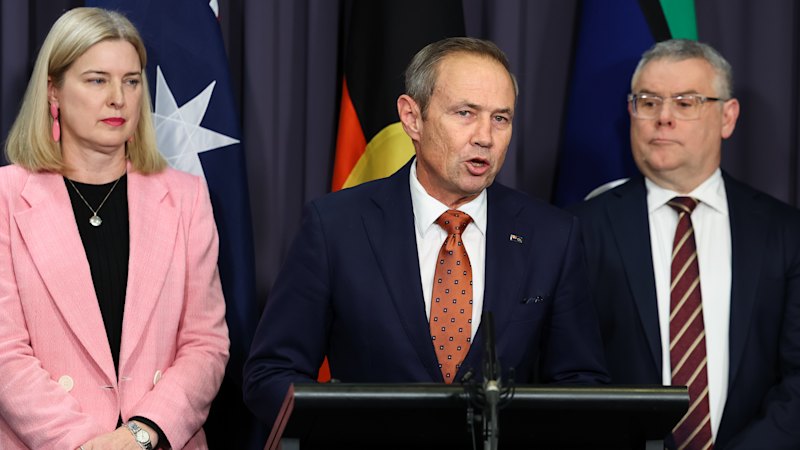
Testing has confirmed a second case of H5N1 in a giant petrel found near Esperance. Meanwhile, shares in Inghams dropped as much as 14 per cent as the company revealed it had locked down its WA operations.
Narrative Intelligence Brief
This article was published by Brisbane Times, a source frequently categorized with a center bias based in Australia. Our narrative intelligence engine continuously monitors coverage from this outlet to track framing, bias, and rhetorical patterns. Our initial algorithmic scan of this specific piece did not flag high-confidence rhetorical techniques, suggesting a generally straightforward reporting style or neutral framing. By understanding the editorial perspective of Brisbane Times, readers can better contextualize the information presented and compare it across our broader media matrix to find the real narrative.
More from Brisbane Times
June 22, 2026
Can’t get into Joy? Because its chef is hosting a long lunch at this bucolic urban farm
June 22, 2026
State-owned power company sued for $1 billion over troubled coal-fired power station
June 22, 2026
Catholic college in Essendon reaches $1m settlement with sex abuse victim
June 22, 2026
Newcastle player referred straight to judiciary for alleged homophobic slur
June 22, 2026
‘Low-hanging fruit’: New deal lets neighbours trade excess solar power
Analysis Methodology
This narrative analysis was generated using the CoDataLab Global Intelligence Engine. Our proprietary AI scans thousands of cross-border sources to identify sentiment patterns, framing techniques, and potential media bias. While AI provides the data-driven foundation, our objective is to empower readers with additional context beyond the standard headline.The content displayed above is a structured summary designed for rapid information processing. For the full original report, please visit the source outlet.More Coverage
Discussion
"trump"
Trump Marks Father’s Day With Angry Rant

When I moved to Texas people warned me about the Trump-mad lunatics. I’ve been surprised

‘Slowly, then very quickly’: Economist shares striking warning as Trump’s war deal falters