Today in News History
On July 10, several notable moments in the history of News stand out. In 1850, U.S. President Millard Fillmore is sworn in, a day after becoming president upon Zachary Taylor's death. In 1877, The then-villa of Mayagüez, Puerto Rico, formally receives its city charter from the Royal Crown of Spain. In 1924, Paavo Nurmi wins the 1,500 m and 5,000 m events at the Paris Olympics, with just an hour between the two races. In 1929, José Vicente Rangel, Venezuelan politician; 21st Vice President of Venezuela (died 2020) was born. In 1941, Jedwabne pogrom: Massacre of Polish Jews living in and near the village of Jedwabne. In 1974, An EgyptAir Tupolev Tu-154 stalls and crashes at Cairo International Airport, killing all six people on board. In 1985, An Aeroflot Tupolev Tu-154 stalls and crashes near Uchkuduk, Uzbekistan (then part of the Soviet Union), killing all 200 people on board in the USSR's worst-ever airline disaster. In 1992, In Miami, former Panamanian leader Manuel Noriega is sentenced to 40 years in prison for drug and racketeering violations. In 1997, Miguel Ángel Blanco, a member of Partido Popular (Spain), is kidnapped (and later murdered) in the Basque city of Ermua by ETA members, sparking widespread protests. In 2013, Concha García Campoy, Spanish journalist (born 1958) passed away. Together, these milestones provide historical context for today's news news and ongoing narratives.
Venezuela Races for Prefab Homes as Quake Camps Keep Filling
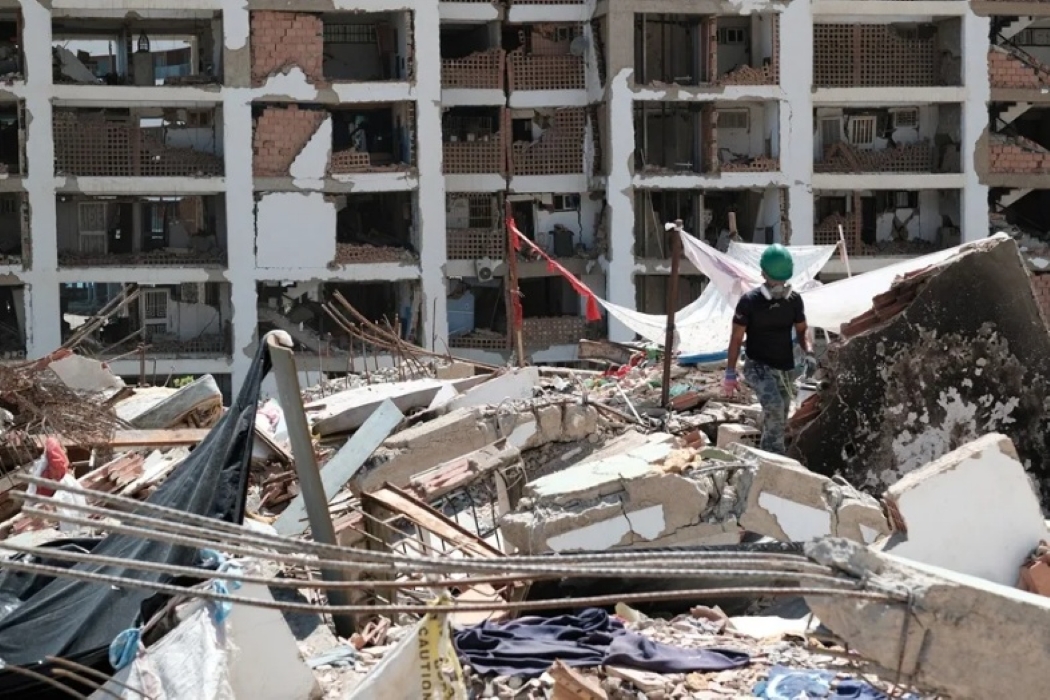
After Venezuela’s deadliest earthquake in a century, nearly 18,000 people remain without homes, pushing Caracas and the United Nations toward prefabricated housing as temporary camps swell. Survivors face the hardest question after a disaster: where to live safely next. The post Venezuela Races for Prefab Homes as Quake Camps Keep Filling appeared first on LatinAmerican Post.
Narrative Intelligence Brief
This article was published by Latin American Post, a source frequently categorized with a center bias based in Colombia. Our narrative intelligence engine continuously monitors coverage from this outlet to track framing, bias, and rhetorical patterns. Our initial algorithmic scan of this specific piece did not flag high-confidence rhetorical techniques, suggesting a generally straightforward reporting style or neutral framing. By understanding the editorial perspective of Latin American Post, readers can better contextualize the information presented and compare it across our broader media matrix to find the real narrative.
More from Latin American Post
July 10, 2026
Cuba Moves a Dissident from Prison into a Darker Silence
July 10, 2026
Peru Offers Mexico an Olive Branch Wrapped in Old Grudges
July 10, 2026
Argentina’s Messi Magic Keeps Finding FIFA’s Convenient Blind Spots Again
July 10, 2026
Mexico Turns ICE Deaths into a Cross-Border Day of Reckoning
July 9, 2026
Latin America Sweats as Air Conditioning Booms and Bills Bite
Analysis Methodology
This narrative analysis was generated using the CoDataLab Global Intelligence Engine. Our proprietary AI scans thousands of cross-border sources to identify sentiment patterns, framing techniques, and potential media bias. While AI provides the data-driven foundation, our objective is to empower readers with additional context beyond the standard headline.The content displayed above is a structured summary designed for rapid information processing. For the full original report, please visit the source outlet.More Coverage
Discussion