Today in News History
On July 4, several notable moments in the history of News stand out. In 1541, Pedro de Alvarado, Spanish general and explorer (born 1495) passed away. In 1898, Pilar Barbosa, Puerto Rican-American historian and activist (died 1997) was born. In 1910, The Johnson-Jeffries riots occur after African-American boxer Jack Johnson knocks out white boxer Jim Jeffries in the 15th round. Between 11 and 26 people are killed and hundreds more injured. In 1911, A massive heat wave strikes the northeastern United States, killing 380 people in eleven days and breaking temperature records in several cities. In 1963, Laureano Márquez, Spanish-Venezuelan political scientist and journalist was born. In 2001, Vladivostok Air Flight 352 crashes on approach to Irkutsk Airport killing all 145 people on board. In 2002, A Boeing 707 crashes near Bangui M'Poko International Airport in Bangui, Central African Republic, killing 28. In 2005, The Deep Impact collider hits the comet Tempel 1. In 2008, A bomb explodes at a concert in Minsk's Independence Square, injuring 50 people. In 2009, The first of four days of bombings begins on the southern Philippine island group of Mindanao. Together, these milestones provide historical context for today's news news and ongoing narratives.
Venezuela quake death toll rises to nearly 3,000
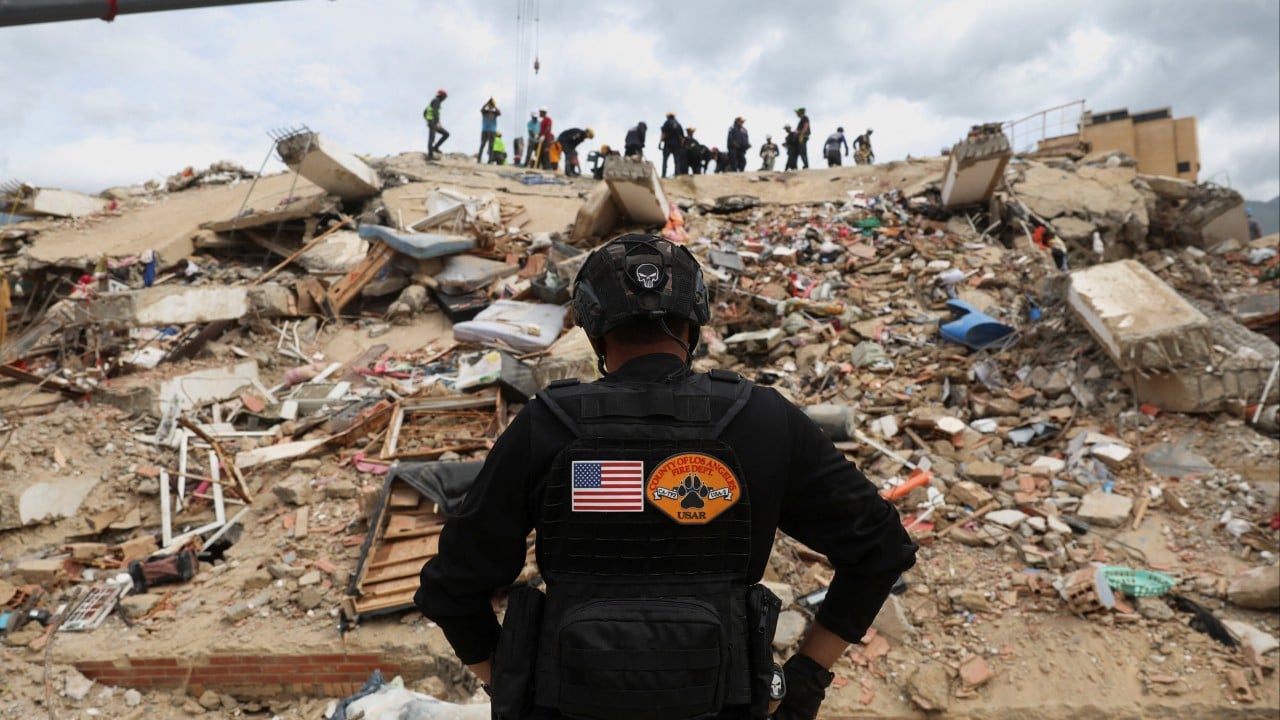
Venezuela’s devastating twin earthquakes have killed nearly 3,000, official figures showed on Saturday, as international rescue teams began winding down search operations for survivors in the rubble. Fatalities jumped by more than 300 from Friday to 2,954, following the June 24 disaster that left thousands homeless in the streets and shelter camps. Tens of thousands more are still missing. One of Latin America’s worst earthquake disasters hit hardest in the coastal La Guaira area north of the...
Narrative Intelligence Brief
This article was published by South China Morning Post, a source frequently categorized with a lean left bias based in Hong Kong. Our narrative intelligence engine continuously monitors coverage from this outlet to track framing, bias, and rhetorical patterns. Our initial algorithmic scan of this specific piece did not flag high-confidence rhetorical techniques, suggesting a generally straightforward reporting style or neutral framing. By understanding the editorial perspective of South China Morning Post, readers can better contextualize the information presented and compare it across our broader media matrix to find the real narrative.
More from South China Morning Post
July 4, 2026
China offers sea cable detection tech to clients in Middle East, Europe and Asia
July 4, 2026
‘Overcapacity’ talk reflects a West irked by China’s industrial rise
July 4, 2026
Zelensky denies Russia captured key Ukraine city, challenges Putin to meet him there
July 4, 2026
Trump seeks to put himself centre stage for US Independence Day
July 4, 2026
Hong Kong taxi driver dies, two passengers hurt in head-on crash with bus
Analysis Methodology
This narrative analysis was generated using the CoDataLab Global Intelligence Engine. Our proprietary AI scans thousands of cross-border sources to identify sentiment patterns, framing techniques, and potential media bias. While AI provides the data-driven foundation, our objective is to empower readers with additional context beyond the standard headline.The content displayed above is a structured summary designed for rapid information processing. For the full original report, please visit the source outlet.More Coverage
Discussion
"trump"
Trump FURIOUS as USMNT Defies his ADMINISTRATION’S WISHES!!!

Brian Feeney: From a beacon of democracy to Trump’s rotten, mafia state

Trump administration’s interpretation of slavery under George Washington can be reinstalled