Today in News History
On June 23, several notable moments in the history of News stand out. In 1305, A peace treaty between the Flemish and the French is signed at Athis-sur-Orge. In 1879, Huda Sha'arawi, Egyptian feminist and journalist (died 1947) was born. In 1913, William P. Rogers, American commander, lawyer, and politician, 55th United States Secretary of State (died 2001) was born. In 1940, George Feigley, American sex cult leader and two-time prison escapee (died 2009) was born. In 1953, Armen Sarkissian, Armenian physicist, politician and President of Armenia was born. In 1955, Glenn Danzig, American singer-songwriter and producer was born. In 1959, Convicted Manhattan Project spy Klaus Fuchs is released after only nine years in prison and allowed to emigrate to Dresden, East Germany where he resumes a scientific career. In 1967, Cold War: U.S. President Lyndon B. Johnson meets with Soviet Premier Alexei Kosygin in Glassboro, New Jersey for the three-day Glassboro Summit Conference. In 2014, The last of Syria's declared chemical weapons are shipped out for destruction. In 2017, A series of terrorist attacks take place in Pakistan, resulting in 96 deaths and wounding 200 others. Together, these milestones provide historical context for today's news news and ongoing narratives.
US waives Iran sanctions for 60 days as Trump warns Tehran to comply with peace deal
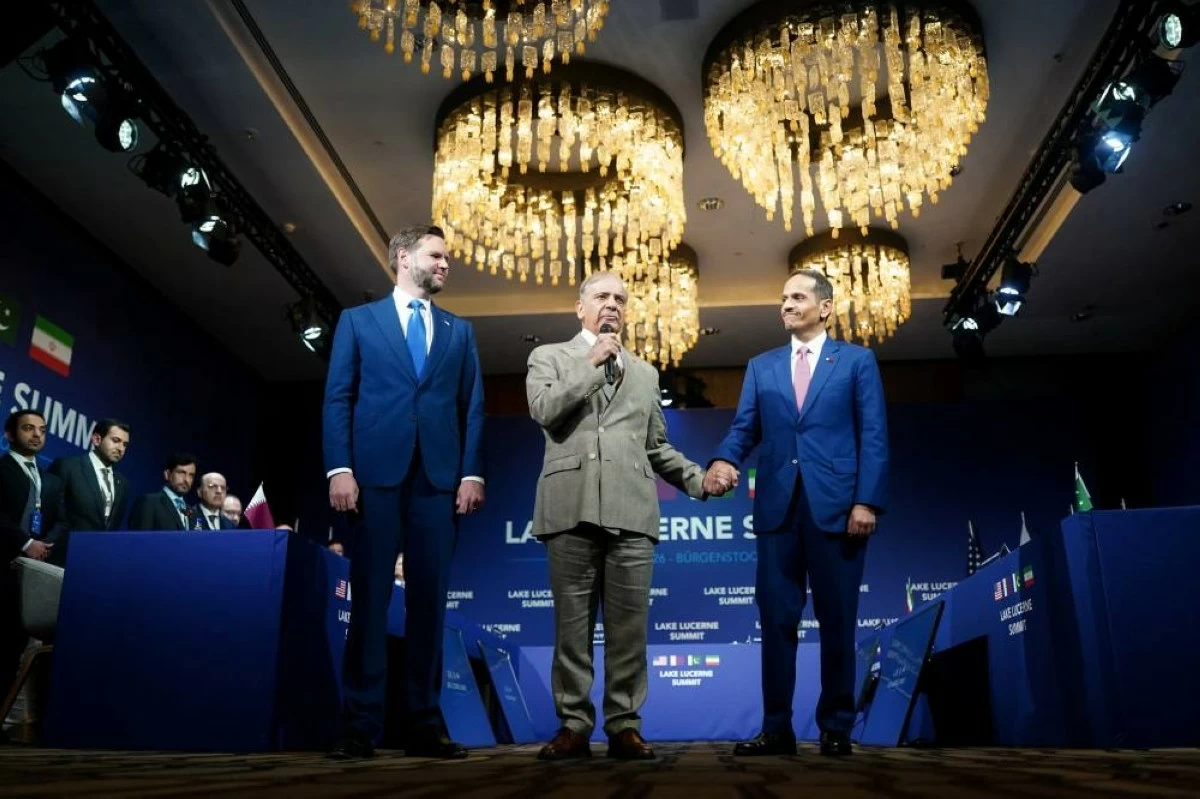
The United States waived sanctions on Iran for 60 days from Monday after the first talks under a nascent peace deal, with U.S. President Donald Trump saying he will do what I have to do if Iran does not stick to its side of the agreement.U.S. Vice President JD Vance said talks with Iranian officials in Switzerland had laid a good foundation for a final peace deal, although Iran denied that it had begun discussions of its nuclear program.The two sides, trying to build on the interim deal they signed last week, agreed a roadmap towards a permanent agreement within 60 days at the talks in the Qatari-owned Swiss mountain resort of Buergenstock, mediators Pakistan and Qatar said.They also agreed on a mechanism to end fighting in Lebanon between U.S. ally Israel and Iran-aligned Hezbollah, and opened a communications line to help ensure safe passage for commercial ships through the Strait of Hormuz in order to avoid conflict in the strategic waterway.In the first of several steps envisaged under the agreement to provide economic relief to Iran, the U.S. Treasury announced a waiver until August 21 on sanctions, allowing Tehran to sell oil and related products and receive payment for them.Officials reported a sustained lull in fighting in Lebanon under the agreement aimed at ending hostilities across the region, even as Israel said it would maintain a security zone in southern Lebanon and continue to act to neutralise threats against Israeli soldiers and citizens.Tanker traffic through Hormuz started to pick up on Monday, with the foreign minister of Oman affirming his country's commitment to international law and toll-free safe passage during negotiations with Iran over administering the vital waterway.U.S.-Israeli attacks on Iran, and Israeli strikes in Lebanon have killed thousands of people and displaced millions. The Iran war has also shaken markets around the world and raised global oil prices. Crude prices extended losses on Tuesday after settling 3 lower on Monday.Vance delivers upbeat assessmentIsrael was not party to the peace agreement but on Friday it agreed a new ceasefire in Lebanon. Though intense fighting continued for another day, Lebanese officials said it had abated since Saturday night.Israel and Lebanon were due to start a new round of talks in Washington on Tuesday, with Beirut determined to press ahead with direct negotiations even as they appear to be overshadowed by Iran's decision to make Lebanon part of its negotiations with the United States.Vance, who has maintained an upbeat tone since the memorandum of understanding was signed, said Tehran had agreed to allow nuclear inspectors into the country, and to establish mechanisms to handle its assets frozen abroad and manage ceasefires.We laid a very good foundation for a successful final deal, he told reporters after taking part in the talks.However, Iran's Foreign Ministry spokesperson Esmaeil Baghaei told the official IRNA news agency that Iran had not yet discussed nuclear issues or made new commitments.Trump said in a post on Truth Social on Monday that Iran will agree to have weapons inspections to ensure nuclear honesty.If Iran doesn't live up to their agreement, or if they're not behaving, I will do what I have to do, Trump later told reporters.Iran has limited inspections by the International Atomic Energy Agency since the U.S. and Israel launched a first round of air strikes last year, and suspended them entirely when war broke out in February. It says its nuclear program is peaceful.Iranian Foreign Minister Abbas Araqchi said on social media that Tehran had secured waivers for oil and petrochemical exports, the release of some of its frozen assets abroad and the launch of a reconstruction and development plan for Iran.Vance said White House envoy Jared Kushner, Trump's son-in-law, had come up with a process whereby the U.S. and Qatar would have control over Iranian funds when they are unfrozen, and the money could be spent on U.S. corn, soy and wheat.So, the money that we lift is going to go to our farmers, Trump told reporters.However, Iran's Central Bank Governor Abdolnaser Hemmati said there was no such obligation and said at least some of the remaining frozen funds could be used to buy other non-sanctioned goods, Iran's Tasnim news agency reported.Technical talks were due to continue for the rest of this week.
Narrative Intelligence Brief
This article was published by Emirates 24/7, a source frequently categorized with a lean right bias based in United Arab Emirates. Our narrative intelligence engine continuously monitors coverage from this outlet to track framing, bias, and rhetorical patterns. Our initial algorithmic scan of this specific piece did not flag high-confidence rhetorical techniques, suggesting a generally straightforward reporting style or neutral framing. By understanding the editorial perspective of Emirates 24/7, readers can better contextualize the information presented and compare it across our broader media matrix to find the real narrative.
More from Emirates 24/7
June 23, 2026
Pentagon seeks $80 billion from Congress for Iran war funding
June 23, 2026
Portugal coach Roberto Martínez stays mum on Cristiano Ronaldo start vs Uzbekistan after World Cup opener criticism
June 23, 2026
A ransom note about Nancy Guthrie's disappearance says she died: CNN report
June 23, 2026
Algeria stuns Jordan 2-1 with second-half comeback win in Group J
June 23, 2026
Dubai rental good conduct certificate: How tenants and landlords can apply
Analysis Methodology
This narrative analysis was generated using the CoDataLab Global Intelligence Engine. Our proprietary AI scans thousands of cross-border sources to identify sentiment patterns, framing techniques, and potential media bias. While AI provides the data-driven foundation, our objective is to empower readers with additional context beyond the standard headline.The content displayed above is a structured summary designed for rapid information processing. For the full original report, please visit the source outlet.More Coverage
Discussion
"prime"
Trump Administration Scrambles After Vance’s Embarrassing Snub Video

Kemi Badenoch breaks silence after Starmer’s resignation, reveals what she says is Labour’s real problem

Trump’s foolish rebuke of Italy’s Meloni