Today in News History
On June 28, several notable moments in the history of News stand out. In 975, Cyneweard, bishop of Wells passed away. In 1891, Esther Forbes, American historian and author (died 1968) was born. In 1917, World War I: Greece joins the Allied powers. In 1926, Mercedes-Benz is formed by Gottlieb Daimler and Karl Benz merging their two companies. In 1942, Frank Zane, American professional bodybuilder and author was born. In 1943, Klaus von Klitzing, German physicist and academic, Nobel Prize laureate was born. In 1947, Laura Tyson, American economist and academic was born. In 1978, The United States Supreme Court, in Regents of the University of California v. Bakke bars quota systems in college admissions. In 2006, Jim Baen, American publisher, founded Baen Books (born 1943) passed away. In 2012, The United States Supreme Court upholds the constitutionality of the Affordable Care Act's individual mandate in National Federation of Independent Business v. Sebelius. Together, these milestones provide historical context for today's news news and ongoing narratives.
U.S. Quantum Spending Surge Makes (NYSE: IBM) The Stronger Buy Over (NYSE: IONQ)
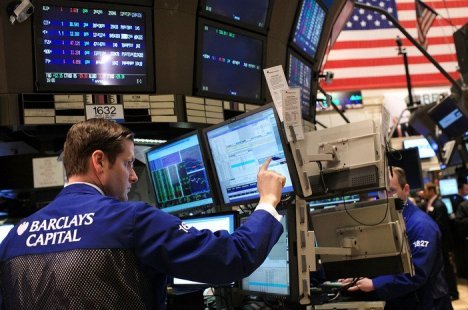
Washington’s aggressive push into quantum computing is generating real revenue, but Q1 2026 earnings from IonQ (NYSE: IONQ) and IBM (NYSE: IBM) reveal two drastically different financial stories beneath the same tailwind. IonQ posted 64.67 million in revenue for the quarter, a staggering 755 increase year over year, making it one of the fastest-growing pure-play [] The post U.S. Quantum Spending Surge Makes (NYSE: IBM) The Stronger Buy Over (NYSE: IONQ) appeared first on Foreign Policy Journal.
Narrative Intelligence Brief
This article was published by Foreign Policy Journal, a source frequently categorized with a left bias based in United States of America. Our narrative intelligence engine continuously monitors coverage from this outlet to track framing, bias, and rhetorical patterns. Our initial algorithmic scan of this specific piece did not flag high-confidence rhetorical techniques, suggesting a generally straightforward reporting style or neutral framing. By understanding the editorial perspective of Foreign Policy Journal, readers can better contextualize the information presented and compare it across our broader media matrix to find the real narrative.
More from Foreign Policy Journal
June 28, 2026
Three Unprofitable Stocks Raising Red Flags For Investors: (NASDAQ: FLWS), (NYSE: WNC), (NASDAQ: SOUN)
June 28, 2026
Walmart (NYSE: WMT) Summer Deals Event Slashes Garage Storage And Organizer Prices By Up To 56%
June 27, 2026
SoFi Technologies (NASDAQ: SOFI) CEO Anthony Noto Keeps Buying Stock Despite 30% YTD Price Decline
June 27, 2026
AAON (NASDAQ: AAON) Wins Applied Digital (APLD) Cooling Contract With Waterless Chiller System
June 27, 2026
Nike (NYSE: NKE) Earnings Report Looms As Stock Price Hovers Near 52-Week Lows
Analysis Methodology
This narrative analysis was generated using the CoDataLab Global Intelligence Engine. Our proprietary AI scans thousands of cross-border sources to identify sentiment patterns, framing techniques, and potential media bias. While AI provides the data-driven foundation, our objective is to empower readers with additional context beyond the standard headline.The content displayed above is a structured summary designed for rapid information processing. For the full original report, please visit the source outlet.More Coverage
Discussion
"strikes iran"
U.S. Air Force Strikes Iranian Missile Sites After Cargo Ship Attack Threatens Hormuz Strait Ceasefire

U.S. strikes Iran drone sites; Iran hits Bahrain

US Strikes Iran Again After Tanker Attack, Trump Says "They Will Never Learn"