Today in News History
On June 25, several notable moments in the history of News stand out. In 931, An Chonghui, Chinese general passed away. In 1903, George Orwell, British novelist, essayist, and critic (died 1950) was born. In 1928, Alexei Alexeyevich Abrikosov, Russian-American physicist and academic, Nobel Prize laureate (died 2017) was born. In 1948, William C. Lee, American general (born 1895) passed away. In 1959, Charles Starkweather, American spree killer (born 1938) passed away. In 1960, Cold War: Two cryptographers working for the United States National Security Agency left for vacation to Mexico, and from there defected to the Soviet Union. In 1968, Tony Hancock, English comedian and actor (born 1924) passed away. In 1975, Michele Merkin, American model and television host was born. In 1990, Ronald Gene Simmons, American sergeant and murderer (born 1940) passed away. In 2012, George Randolph Hearst, Jr., American businessman (born 1927) passed away. Together, these milestones provide historical context for today's news news and ongoing narratives.
US is ‘superhero’, China ‘supervillain’ in global AI contest, American officials warn
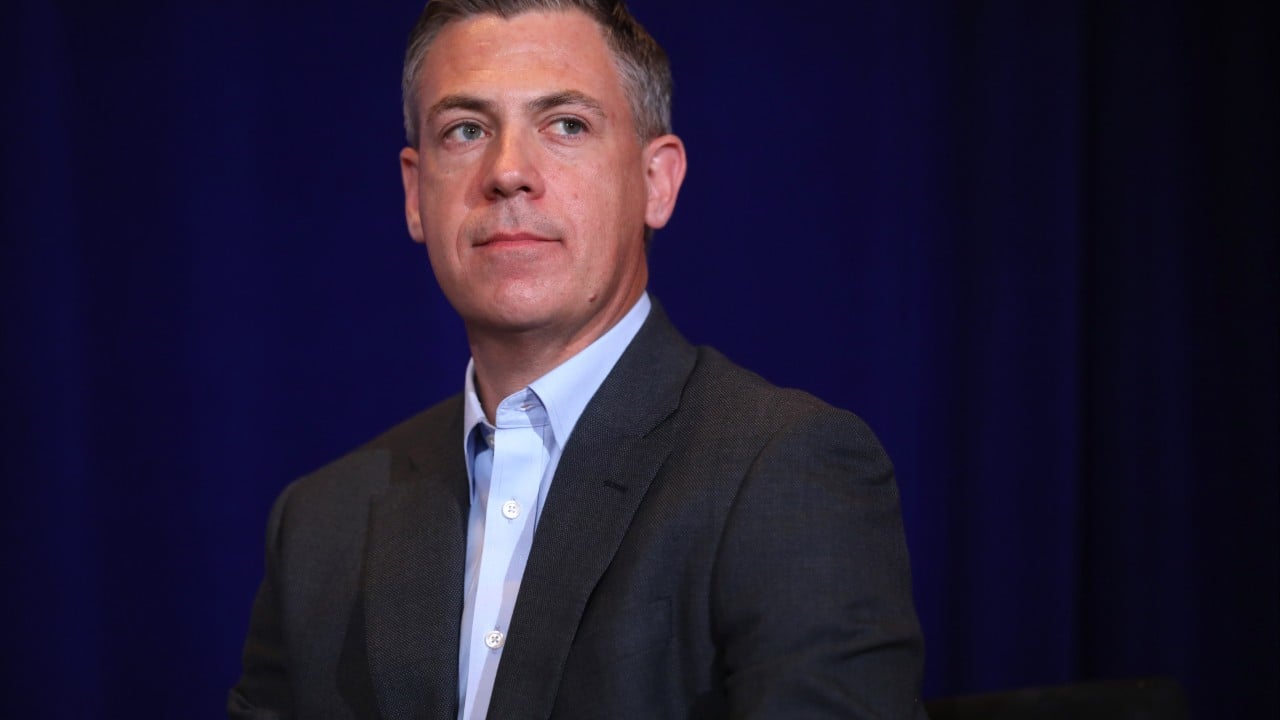
US House Foreign Affairs Committee Chairman Brian Mast warned that “America is the superhero” and China the “supervillain” in the contest for global artificial intelligence (AI) leadership on Thursday, just two days after US Treasury Secretary Scott Bessent said America’s “biggest risk” on AI is China getting ahead. The United States and China remain locked in an increasingly competitive race for worldwide AI supremacy, with many American officials concerned that China is eroding the US’ early...
Narrative Intelligence Brief
This article was published by South China Morning Post, a source frequently categorized with a lean left bias based in Hong Kong. Our narrative intelligence engine continuously monitors coverage from this outlet to track framing, bias, and rhetorical patterns. Our initial algorithmic scan of this specific piece did not flag high-confidence rhetorical techniques, suggesting a generally straightforward reporting style or neutral framing. By understanding the editorial perspective of South China Morning Post, readers can better contextualize the information presented and compare it across our broader media matrix to find the real narrative.
More from South China Morning Post
June 25, 2026
‘Alligator Alcatraz’ migrant detention centre has closed, Florida governor DeSantis says
June 25, 2026
Trump supports ‘Six Assurances’ to Taiwan but no timeline for arms sale, US diplomat says
June 25, 2026
Liner of Trump’s reflecting pool was cut with sharp blade, National Park Service says
June 25, 2026
Trump backs ‘Six Assurances’ to Taiwan but no arms sale timeline, US diplomat says
June 25, 2026
Singapore-flagged cargo ship hit by ‘unknown projectile’ while crossing Hormuz
Analysis Methodology
This narrative analysis was generated using the CoDataLab Global Intelligence Engine. Our proprietary AI scans thousands of cross-border sources to identify sentiment patterns, framing techniques, and potential media bias. While AI provides the data-driven foundation, our objective is to empower readers with additional context beyond the standard headline.The content displayed above is a structured summary designed for rapid information processing. For the full original report, please visit the source outlet.More Coverage
Discussion
"cup"
PODCAST: Is France prepared to face more hellish heatwaves and why are the French ruling the World Cup

Kevin Taylor blasts on Djed Spence after controversial Thomas Partey handshake snub incident

Energy crisis continues as households trapped in £4.79BILLION debt with bill hike only days away