Today in News History
On June 29, several notable moments in the history of News stand out. In 1170, A major earthquake hits Syria, badly damaging towns such as Hama and Shaizar and structures such as the Krak des Chevaliers and the cathedral of St. Peter in Antioch. In 1807, Russo-Turkish War: Admiral Dmitry Senyavin destroys the Ottoman fleet in the Battle of Athos. In 1874, Greek politician Charilaos Trikoupis publishes a manifesto in the Athens daily Kairoi entitled "Who's to Blame?" leveling complaints against King George. Trikoupis is elected Prime Minister of Greece the next year. In 1926, Jaber Al-Ahmad Al-Sabah, Kuwaiti ruler, 3rd Emir of Kuwait (died 2006) was born. In 1950, Korean War: U.S. President Harry S. Truman authorizes a sea blockade of Korea. In 1957, Gurbanguly Berdimuhamedow, Turkmen dentist and politician, 2nd President of Turkmenistan was born. In 1999, Karekin I, Syrian-Armenian patriarch (born 1950) passed away. In 2002, Naval clashes between South Korea and North Korea lead to the death of six South Korean sailors and sinking of a North Korean vessel. In 2006, Hamdan v. Rumsfeld: The U.S. Supreme Court rules that President George W. Bush's plan to try Guantanamo Bay detainees in military tribunals violates U.S. and international law. In 2014, The Islamic State of Iraq and the Levant self-declares its caliphate in Syria and northern Iraq. Together, these milestones provide historical context for today's news news and ongoing narratives.
US-Iran war LIVE updates: Iran's ‘serious’ warning to Bahrain after strikes; oil prices rise amid flare-up

US-Iran war LIVE updates: Iran's Abbas Araghchi warned that any attempt to bypass its preferred route in the waterway will cause “tension and escalation”.
Narrative Intelligence Brief
This article was published by Hindustan Times, a source frequently categorized with a lean left bias based in India. Our narrative intelligence engine continuously monitors coverage from this outlet to track framing, bias, and rhetorical patterns. Our initial algorithmic scan of this specific piece did not flag high-confidence rhetorical techniques, suggesting a generally straightforward reporting style or neutral framing. By understanding the editorial perspective of Hindustan Times, readers can better contextualize the information presented and compare it across our broader media matrix to find the real narrative.
More from Hindustan Times
June 29, 2026
Europe heatwave: Fact check on AC ban, sleeping with fans and climate change claims
June 29, 2026
Air conditioning is controversial in Europe. Culture & political wars, architecture, norms and costs are behind it
June 29, 2026
‘Ripping off the US’: Why is US targeting Germany's drug industry?
June 29, 2026
Israel moves to formally recognize 1.5 million Armenian deaths in WWI as genocide
June 29, 2026
Nancy Guthrie case: Ex-FBI agent says mystery email sender may hold key to Savannah's mother's disappearance
Analysis Methodology
This narrative analysis was generated using the CoDataLab Global Intelligence Engine. Our proprietary AI scans thousands of cross-border sources to identify sentiment patterns, framing techniques, and potential media bias. While AI provides the data-driven foundation, our objective is to empower readers with additional context beyond the standard headline.The content displayed above is a structured summary designed for rapid information processing. For the full original report, please visit the source outlet.More Coverage
Discussion
"south africa"
South Korea coach resigns after president condemns ‘incompetent people’ in World Cup exit

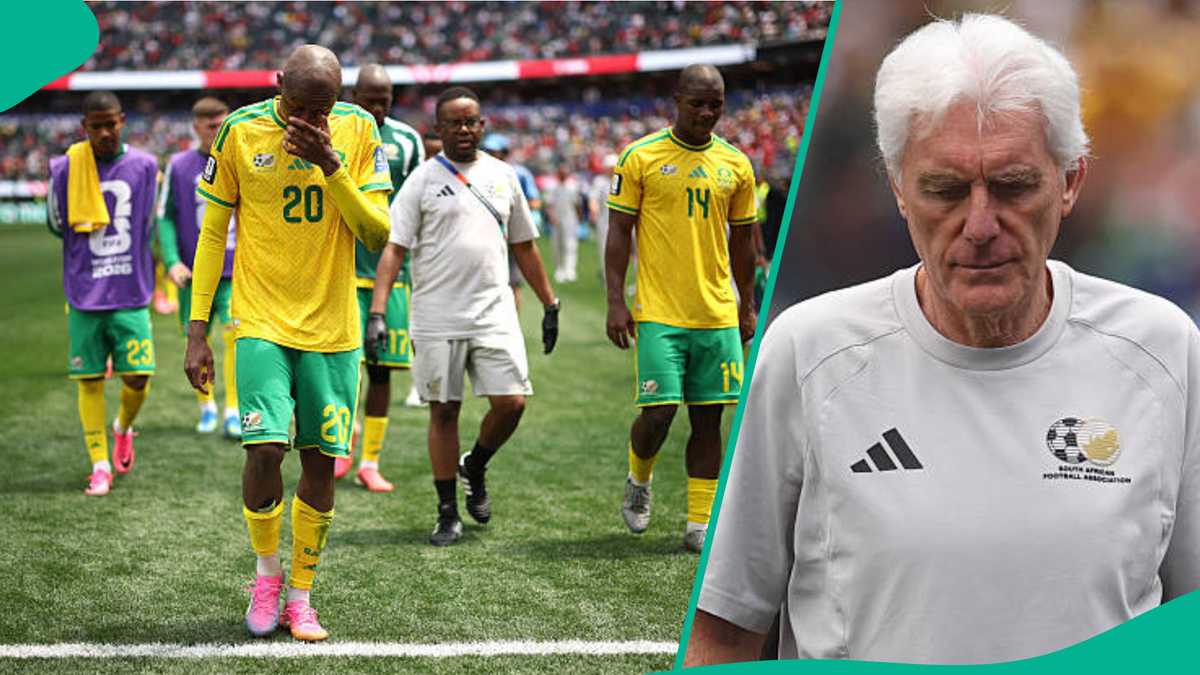
South Africa coach Hugo Broos reacts after painful Canada defeat: “My last World Cup”
Tony Leon Warns South Africa’s State Institutions Are Critically Hollowed Out Ahead of June 30 Protests