Today in News History
On June 25, several notable moments in the history of News stand out. In 931, An Chonghui, Chinese general passed away. In 1876, Boston Custer, American civilian army contractor (born 1848) passed away. In 1900, The Taoist monk Wang Yuanlu discovers the Dunhuang manuscripts, a cache of ancient texts that are of great historical and religious significance, in the Mogao Caves of Dunhuang, China. In 1903, George Orwell, British novelist, essayist, and critic (died 1950) was born. In 1910, The United States Congress passes the Mann Act, which prohibits interstate transport of women or girls for "immoral purposes"; the ambiguous language would be used to selectively prosecute people for years to come. In 1941, Denys Arcand, Canadian director, producer, and screenwriter was born. In 1948, The United States Congress passes the Displaced Persons Act to allow World War II refugees to immigrate to the United States above quota restrictions. In 1960, Cold War: Two cryptographers working for the United States National Security Agency left for vacation to Mexico, and from there defected to the Soviet Union. In 1972, Saif al-Islam Gaddafi, Libyan engineer and politician was born. In 2011, Annie Easley, American computer scientist and mathematician (born 1933) passed away. Together, these milestones provide historical context for today's news news and ongoing narratives.
US hearing warns Chinese economic espionage now targets AI
Narrative Analysis: Appeal to Fear
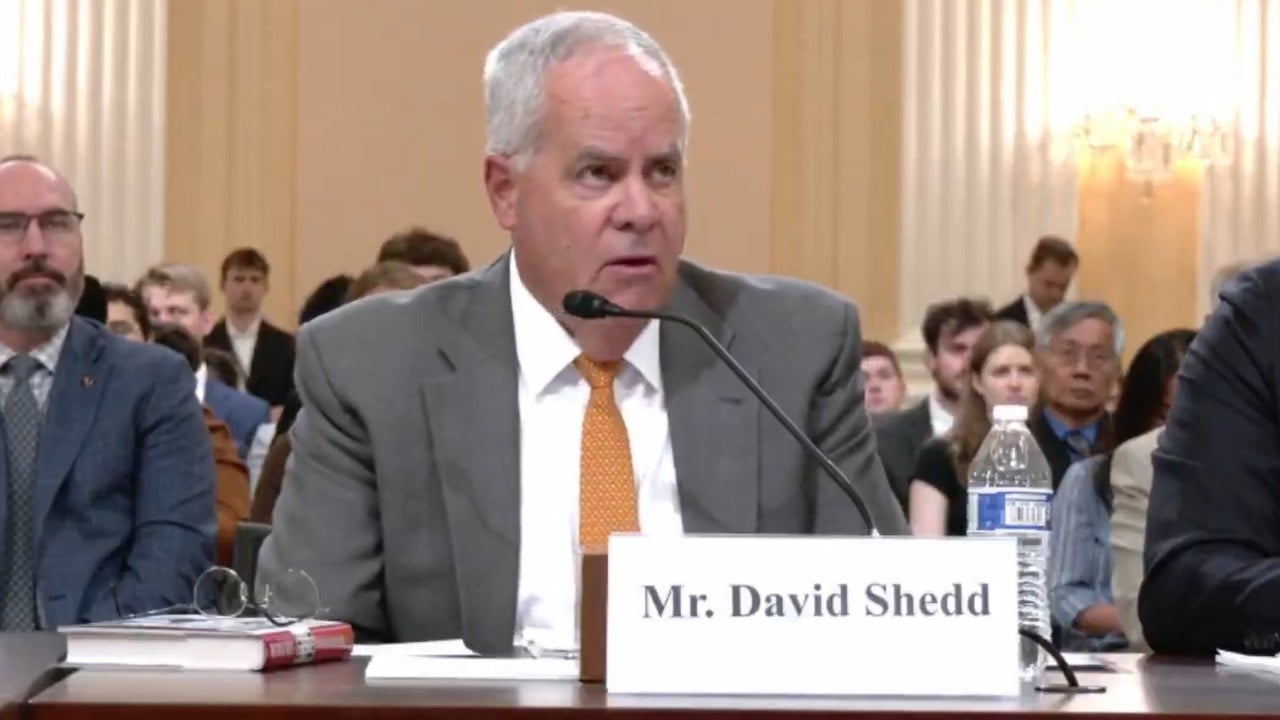
The United States has been asleep for decades as China undercut US economic strength by stealing ideas, technologies and, more recently, artificial intelligence advances, with the Chinese military first in line to benefit, according to testimony heard by a congressional committee on Thursday. The hearing by the House Select Committee on China, which focused on economic espionage and Chinese efforts to exert influence at state and local levels, was held amid mounting bilateral tension over export...
Narrative Intelligence Brief
This article was published by South China Morning Post, a source frequently categorized with a lean left bias based in Hong Kong. Our narrative intelligence engine continuously monitors coverage from this outlet to track framing, bias, and rhetorical patterns. In this specific piece, our systems detected the potential use of the "Appeal to Fear" technique. This narrative approach is often used to shape reader perception by highlighting specific emotional or rhetorical angles. By understanding the editorial perspective of South China Morning Post, readers can better contextualize the information presented and compare it across our broader media matrix to find the real narrative.
More from South China Morning Post
June 25, 2026
EU pitches Brazil a ‘more beneficial’ rare earths deal than US or China
June 25, 2026
Why Hong Kong’s bilingualism is uniquely indispensable in the AI era
June 25, 2026
Venezuelans search rubble for survivors after twin earthquakes kill at least 188
June 25, 2026
‘Alligator Alcatraz’ migrant detention centre has closed, Florida governor DeSantis says
June 25, 2026
Trump supports ‘Six Assurances’ to Taiwan but no timeline for arms sale, US diplomat says
Reliability Insights
P
Technique: Appeal to Fear
System analysis detected use of specific narrative techniques in this piece.Analysis Methodology
This narrative analysis was generated using the CoDataLab Global Intelligence Engine. Our proprietary AI scans thousands of cross-border sources to identify sentiment patterns, framing techniques, and potential media bias. While AI provides the data-driven foundation, our objective is to empower readers with additional context beyond the standard headline.The content displayed above is a structured summary designed for rapid information processing. For the full original report, please visit the source outlet.More Coverage
Discussion
"trump"
Deadly Cost of Trump’s ICE Crackdown Revealed

Anti-ICE Protestors in Texas Given Harsh, Excessive Prison Sentences

Commies taking over NYC is not shocking when you see how pathetic voter turnout was