Today in News History
On June 21, several notable moments in the history of News stand out. In 1630, Samuel Oppenheimer, German Jewish banker and diplomat (died 1703) was born. In 1864, Heinrich Wölfflin, Swiss historian and critic (died 1945) was born. In 1929, An agreement brokered by U.S. Ambassador Dwight Whitney Morrow ends the Cristero War in Mexico. In 1947, Shirin Ebadi, Iranian lawyer, judge, and activist, Nobel Prize laureate was born. In 1954, Mark Kimmitt, American general and politician, 16th Assistant Secretary, Bureau of Political-Military Affairs was born. In 1957, Johannes Stark, German physicist and academic, Nobel Prize laureate (born 1874) passed away. In 1972, Tomáš Valášek, Slovak diplomat and politician was born. In 2012, Abid Hussain, Indian economist and diplomat, Indian Ambassador to the United States (born 1926) passed away. In 2012, Sunil Janah, Indian photographer and journalist (born 1918) passed away. In 2014, Walter Kieber, Austrian-Liechtenstein politician, 7th Prime Minister of Liechtenstein (born 1931) passed away. Together, these milestones provide historical context for today's news news and ongoing narratives.
US and Iranian negotiators arrive in Swiss restort for latest round of peace talks
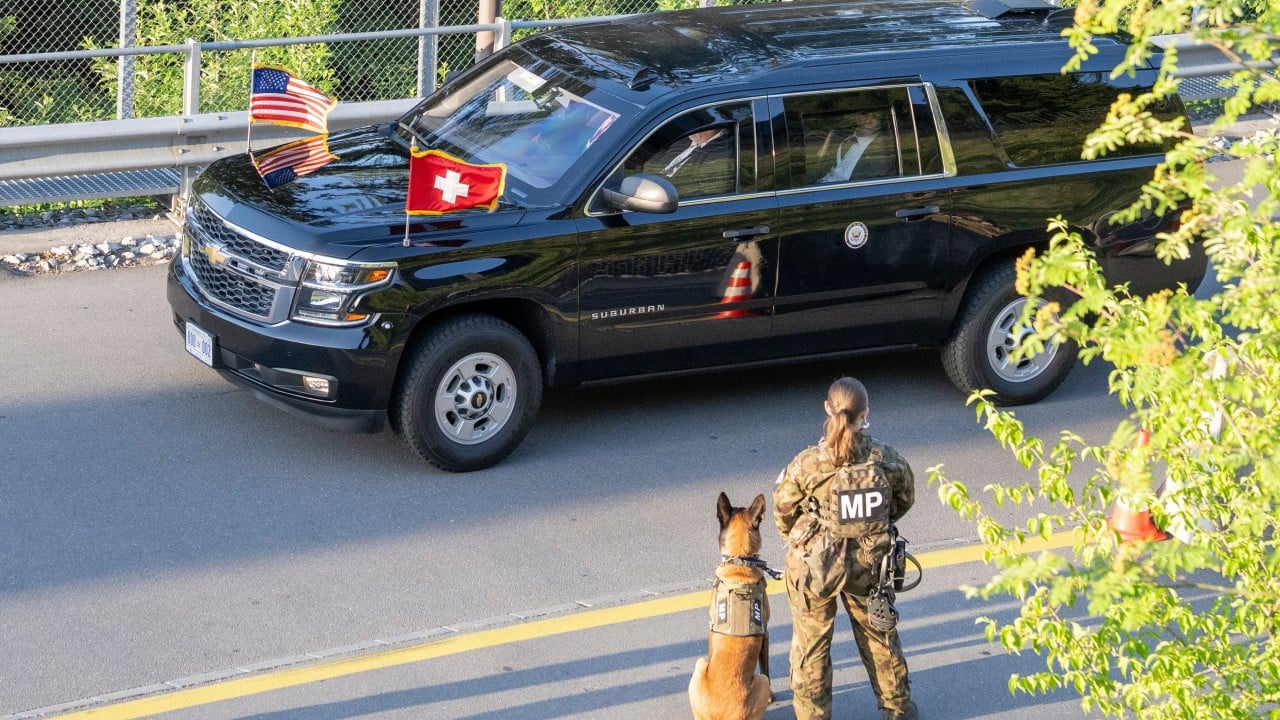
Top negotiators from the United States, Iran and Pakistan have arrived in Switzerland ahead of talks that aim to secure the fragile ceasefire and reach a deal on the future of Iran’s nuclear programme. The US team was led by Vice-President J.D. Vance, who arrived in Burgenstock, the resort hosting the talks on Sunday. He joined special envoy Steve Witkoff and Jared Kushner, President Donald Trump’s son-in-law, who were already on the ground, the Associated Press reported. Pakistani Prime...
Narrative Intelligence Brief
This article was published by South China Morning Post, a source frequently categorized with a lean left bias based in Hong Kong. Our narrative intelligence engine continuously monitors coverage from this outlet to track framing, bias, and rhetorical patterns. Our initial algorithmic scan of this specific piece did not flag high-confidence rhetorical techniques, suggesting a generally straightforward reporting style or neutral framing. By understanding the editorial perspective of South China Morning Post, readers can better contextualize the information presented and compare it across our broader media matrix to find the real narrative.
More from South China Morning Post
June 21, 2026
Colombians vote for president amid corruption fears, polarisation
June 21, 2026
4 injured after 2 taxis and private car collide on Hong Kong’s Shenzhen Bay Bridge
June 21, 2026
Iran, US claims conflict over Hormuz as 3 Indian crude tankers emerge
June 21, 2026
Iran, US claims conflict over Hormuz as three Indian crude tankers emerge
June 21, 2026
The US town, the Chinese company and the bankrupting battle over a battery plant
Analysis Methodology
This narrative analysis was generated using the CoDataLab Global Intelligence Engine. Our proprietary AI scans thousands of cross-border sources to identify sentiment patterns, framing techniques, and potential media bias. While AI provides the data-driven foundation, our objective is to empower readers with additional context beyond the standard headline.The content displayed above is a structured summary designed for rapid information processing. For the full original report, please visit the source outlet.More Coverage
Discussion
"iran"
Trump in full panic over war restarting – and ‘swearing a lot about it’: insider
Rahm Emanuel says Trump ‘got schooled’ by Iran in bad ceasefire deal

Lawsuit filed on behalf of families of Minab victims against US