
Today in News History
On July 9, several notable moments in the history of News stand out. In 551, A major earthquake strikes Beirut, triggering a devastating tsunami that affects the coastal towns of Byzantine Phoenicia, causing thousands of deaths. In 869, The 8.4-9.0 Mw Sanriku earthquake strikes the area around Sendai in northern Honshu, Japan. Inundation from the tsunami extended several kilometers inland. In 1807, The second Treaty of Tilsit is signed between France and Prussia, ending the War of the Fourth Coalition. In 1850, Persian prophet Báb is executed in Tabriz, Persia. In 1944, World War II: American forces take Saipan, bringing the Japanese archipelago within range of B-29 raids, and causing the downfall of the Tojo government. In 1955, The Russell-Einstein Manifesto calls for a reduction of the risk of nuclear warfare. In 1995, The Navaly church bombing is carried out by the Sri Lanka Air Force killing 125 Tamil civilian refugees. In 1999, Days of student protests begin after Iranian police and hardliners attack a student dormitory at the University of Tehran. In 2004, The Senate Report on Iraqi WMD Intelligence is released by the United States Senate Select Committee on Intelligence, casting doubt on the rationale for the Iraq War. In 2011, A rally takes place in Kuala Lumpur, Malaysia to call for fairer elections in the country. Together, these milestones provide historical context for today's news news and ongoing narratives.
US, Iran Trade Attacks for Second Day, Testing Fragile Ceasefire
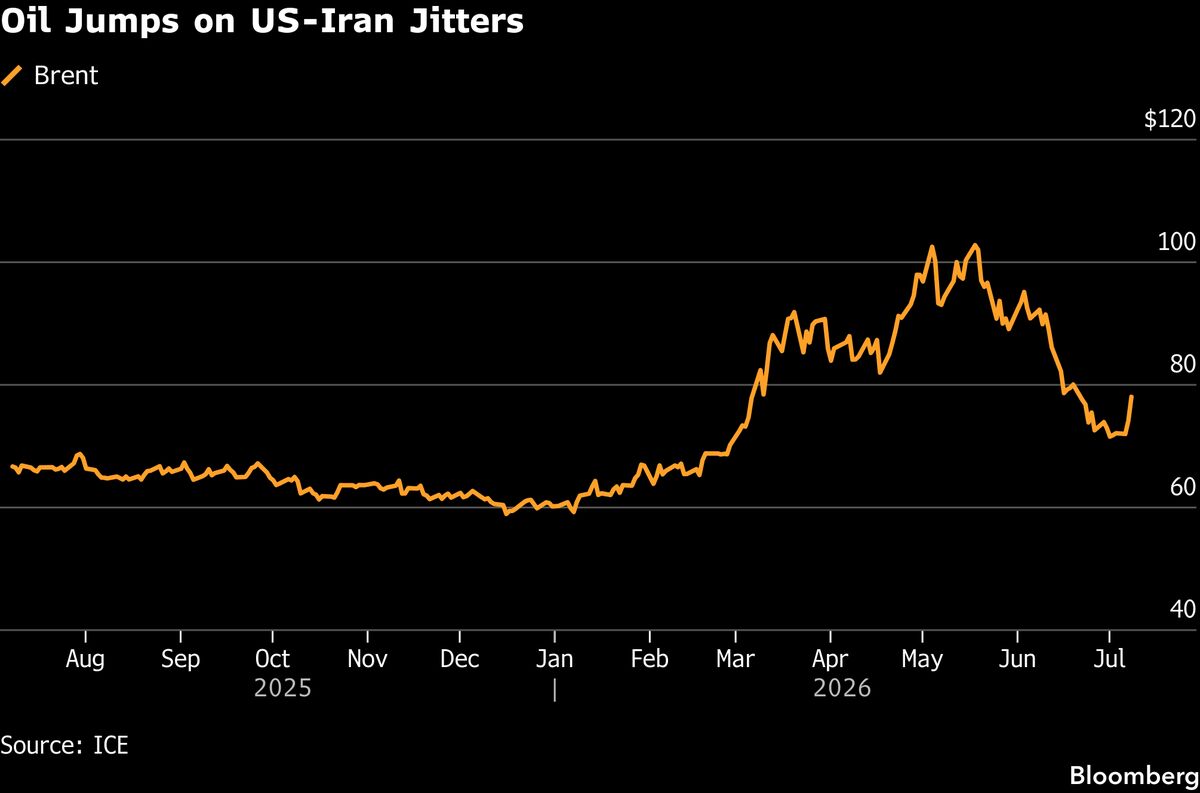
The US military struck Iran for a second day and Tehran retaliated against American allies in the Persian Gulf, raising fears that the tit-for-tat attacks may derail talks on a permanent peace deal.
Narrative Intelligence Brief
This article was published by Bloomberg, a source frequently categorized with a lean left bias based in United States of America. Our narrative intelligence engine continuously monitors coverage from this outlet to track framing, bias, and rhetorical patterns. Our initial algorithmic scan of this specific piece did not flag high-confidence rhetorical techniques, suggesting a generally straightforward reporting style or neutral framing. By understanding the editorial perspective of Bloomberg, readers can better contextualize the information presented and compare it across our broader media matrix to find the real narrative.
More from Bloomberg
July 9, 2026
Hugo Boss Board Rejects Frasers Bid as Not Reflecting Potential
July 9, 2026
Oil Fluctuates After Second Day of US Strikes on Iran
July 9, 2026
UK’s Capita Sinks on Profit Hit From Pension Contract Failures
July 9, 2026
The PWHL is Just Getting Started With Hilary Knight
July 9, 2026
BlackRock’s Jewell Sees AI Capex Stable for Two to Three Years
Analysis Methodology
This narrative analysis was generated using the CoDataLab Global Intelligence Engine. Our proprietary AI scans thousands of cross-border sources to identify sentiment patterns, framing techniques, and potential media bias. While AI provides the data-driven foundation, our objective is to empower readers with additional context beyond the standard headline.The content displayed above is a structured summary designed for rapid information processing. For the full original report, please visit the source outlet.More Coverage
Discussion
"trump"
Trump has CATASTROPHIC AM and KILLS 8 IRANIANS…WAR EXPLODES!!!

Trump’s surprise Ukraine shift steadies nervous Nato allies

Trump excoriates NATO, calls Iranians ‘lying scum,’ and declares MOU over in angry tirade
