Today in News History
On June 21, several notable moments in the history of News stand out. In 1582, Sengoku period: Oda Nobunaga, the most powerful of the Japanese daimyōs, is forced to commit suicide by his own general Akechi Mitsuhide. In 1582, Oda Nobunaga, Japanese warlord (born 1534) passed away. In 1730, Motoori Norinaga, Japanese poet and scholar (died 1801) was born. In 1919, Admiral Ludwig von Reuter scuttles the German fleet at Scapa Flow, Orkney. The nine sailors killed are the last casualties of World War I. In 1942, World War II: A Japanese submarine surfaces near the Columbia River in Oregon, firing 17 shells at Fort Stevens in one of only a handful of attacks by Japan against the United States mainland. In 1942, World War II: Tobruk falls to Italian and German forces; 33,000 Allied troops are taken prisoner. In 1945, World War II: The Battle of Okinawa ends when the organized resistance of Imperial Japanese Army forces collapses in the Mabuni area on the southern tip of the main island. In 1972, Nobuharu Asahara, Japanese sprinter and long jumper was born. In 2012, A boat carrying more than 200 migrants capsizes in the Indian Ocean between the Indonesian island of Java and Christmas Island, killing 17 people and leaving 70 others missing. In 2014, Yozo Ishikawa, Japanese politician, Japanese Minister of Defense (born 1925) passed away. Together, these milestones provide historical context for today's news news and ongoing narratives.
Unimaginable horrors of Japan's WW2 Death Railways: How PoWs were tortured, beheaded and thrown to crocodiles by ruthless guards in hellish race to build train tracks
Narrative Analysis: Name Calling

Narrative Intelligence Brief
This article was published by Daily Mail, a source frequently categorized with a right bias based in United Kingdom. Our narrative intelligence engine continuously monitors coverage from this outlet to track framing, bias, and rhetorical patterns. In this specific piece, our systems detected the potential use of the "Name Calling" technique. This narrative approach is often used to shape reader perception by highlighting specific emotional or rhetorical angles. By understanding the editorial perspective of Daily Mail, readers can better contextualize the information presented and compare it across our broader media matrix to find the real narrative.
More from Daily Mail
June 21, 2026
My father became a monster when he drank, so for years I was teetotal. But when I finally started drinking I realised this truth that everyone concerned about their alcohol consumption should know: JON HARVEY
June 21, 2026
Donald Trump declares Keir Starmer 'will resign' after ashen-faced Cabinet ally admits PM is facing up to 'political reality' amid expectation he will quit tomorrow
June 21, 2026
Furious Trump EXPLODES over war talks as he threatens to 'hit Iran very hard again' and tells rival leader he 'better watch his mouth'... while also slamming Israel for continuing to drop bombs
June 21, 2026
Reese Witherspoon REUNITES with Legally Blonde co-stars Jennifer Coolidge and Selma Blair 25 years after the film's release… see them now
June 21, 2026
Thousands of sun-worshippers flock to Stonehenge to celebrate summer solstice as sun rises on longest day of the year - as heatwave set to bring 38C temperatures amid hottest weather in three years
Reliability Insights
P
Technique: Name Calling
System analysis detected use of specific narrative techniques in this piece.Analysis Methodology
This narrative analysis was generated using the CoDataLab Global Intelligence Engine. Our proprietary AI scans thousands of cross-border sources to identify sentiment patterns, framing techniques, and potential media bias. While AI provides the data-driven foundation, our objective is to empower readers with additional context beyond the standard headline.The content displayed above is a structured summary designed for rapid information processing. For the full original report, please visit the source outlet.More Coverage
Discussion
"iran"
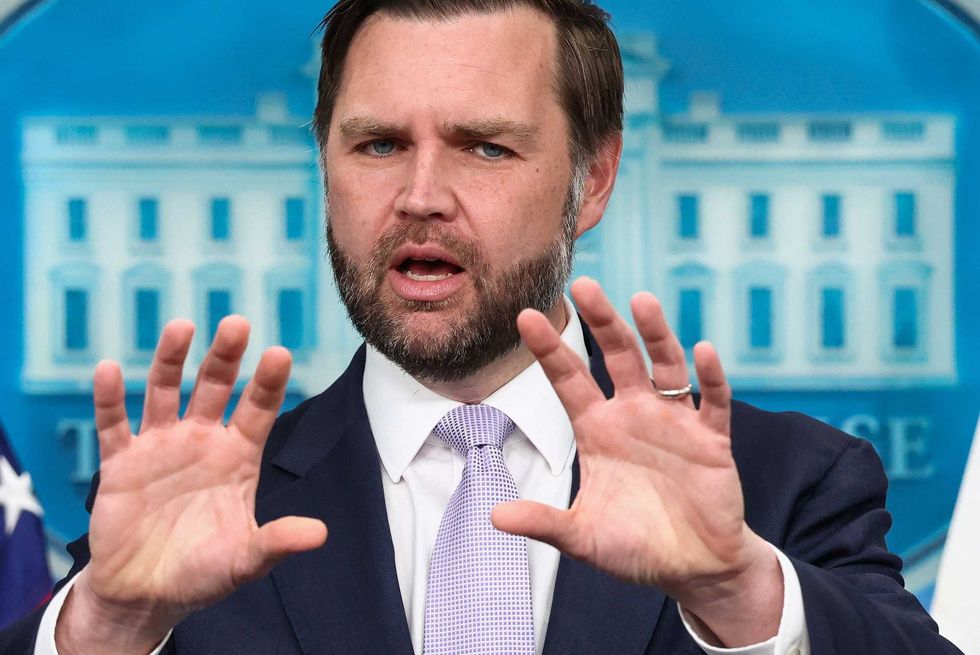
This insane JD Vance admission has Republicans — and Fox News — paralyzed with fear
Rahm Emanuel says Trump ‘got schooled’ by Iran in bad ceasefire deal

Lawsuit filed on behalf of families of Minab victims against US