Today in News History
On June 22, several notable moments in the history of News stand out. In 1824, Greek War of Independence: Egyptian forces capture Psara in the Aegean Sea. In 1910, Aleksandr Tvardovsky, Russian poet and author (died 1971) was born. In 1919, The Royal Canadian Mounted Police fire a volley into a crowd of unemployed war veterans, killing two, during the Winnipeg general strike. In 1940, World War II: Italy begins an unsuccessful invasion of France. In 1942, World War II: A Japanese submarine surfaces near the Columbia River in Oregon, firing 17 shells at Fort Stevens in one of only a handful of attacks by Japan against the United States mainland. In 1942, World War II: Tobruk falls to Italian and German forces; 33,000 Allied troops are taken prisoner. In 1958, Gennady Padalka, Russian colonel, pilot, and astronaut was born. In 1962, Viktor Tsoi, Russian singer-songwriter and guitarist (died 1990) was born. In 1979, Kostas Katsouranis, Greek footballer was born. In 2001, A federal grand jury in Alexandria, Virginia, indicts 13 Saudis and a Lebanese in the 1996 bombing of the Khobar Towers in Saudi Arabia that killed 19 American servicemen. Together, these milestones provide historical context for today's news news and ongoing narratives.
Ukrainian strikes on Russian-annexed Crimea kill four, pause fuel sales
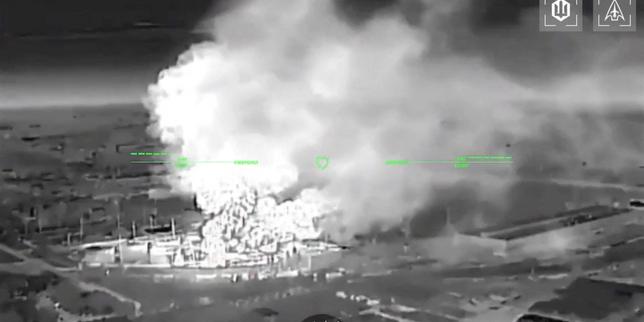
Ukraine said it targeted military and energy facilities in Crimea – Moscow's key logistics base for its four-year military offensive – in one of the biggest attacks on the peninsula in recent months.
Narrative Intelligence Brief
This article was published by Le Monde, a source frequently categorized with a lean left bias based in France. Our narrative intelligence engine continuously monitors coverage from this outlet to track framing, bias, and rhetorical patterns. Our initial algorithmic scan of this specific piece did not flag high-confidence rhetorical techniques, suggesting a generally straightforward reporting style or neutral framing. By understanding the editorial perspective of Le Monde, readers can better contextualize the information presented and compare it across our broader media matrix to find the real narrative.
More from Le Monde
June 22, 2026
Mysterious whale 'necropolis' discovered at the bottom of the Indian Ocean
June 21, 2026
Trump-backed candidate wins razor-tight Colombia presidential election
June 21, 2026
Jean Pisani-Ferry: 'France's top priority will be to regain control of its public and welfare finances'
June 21, 2026
What are prediction markets, the new form of sports betting promoted by the football World Cup?
June 21, 2026
'Twisted Face,' the French Gestapo collaborator who arrested historian and resistance fighter Marc Bloch
Analysis Methodology
This narrative analysis was generated using the CoDataLab Global Intelligence Engine. Our proprietary AI scans thousands of cross-border sources to identify sentiment patterns, framing techniques, and potential media bias. While AI provides the data-driven foundation, our objective is to empower readers with additional context beyond the standard headline.The content displayed above is a structured summary designed for rapid information processing. For the full original report, please visit the source outlet.More Coverage
Discussion
"iran"
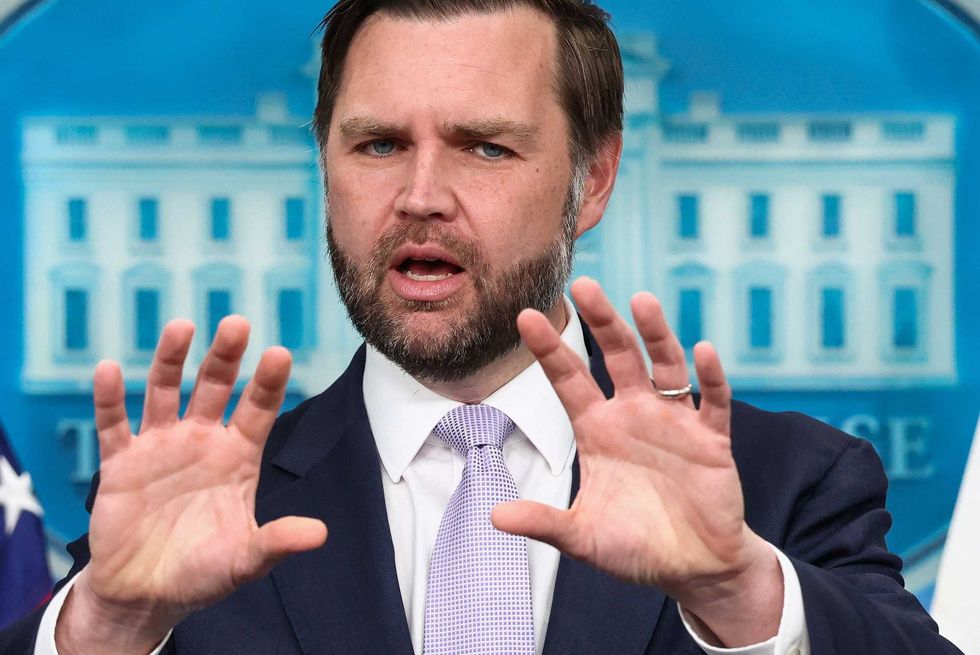
This insane JD Vance admission has Republicans — and Fox News — paralyzed with fear
Trump renews threat to New York Times over Iran coverage

‘Slowly, then very quickly’: Economist shares striking warning as Trump’s war deal falters