Today in News History
On June 17, several notable moments in the history of News stand out. In 1300, Turku Cathedral is consecrated by Bishop Magnus I in the city of Turku (Swedish: Åbo). In 1882, Igor Stravinsky, Russian pianist, composer, and conductor (died 1971) was born. In 1940, The three Baltic states of Estonia, Latvia and Lithuania fall under the occupation of the Soviet Union. In 1940, World War II: The British Army's 11th Hussars assault and take Fort Capuzzo in Libya, Africa from Italian forces. In 1953, Cold War: East Germany Workers Uprising: In East Germany, the Soviet Union orders a division of troops into East Berlin to quell a rebellion. In 1957, Uģis Prauliņš, Latvian composer was born. In 1982, Stanislava Hrozenská, Slovak tennis player was born. In 1989, Georgios Tofas, Cypriot footballer was born. In 1992, A "joint understanding" agreement on arms reduction is signed by U.S. President George Bush and Russian President Boris Yeltsin (this would be later codified in START II). In 1999, Elena Rybakina, Kazakhstani tennis player was born. Together, these milestones provide historical context for today's news news and ongoing narratives.
Ukraine Liberates 50 sq km as Russia Presses Along 1,200 km Front
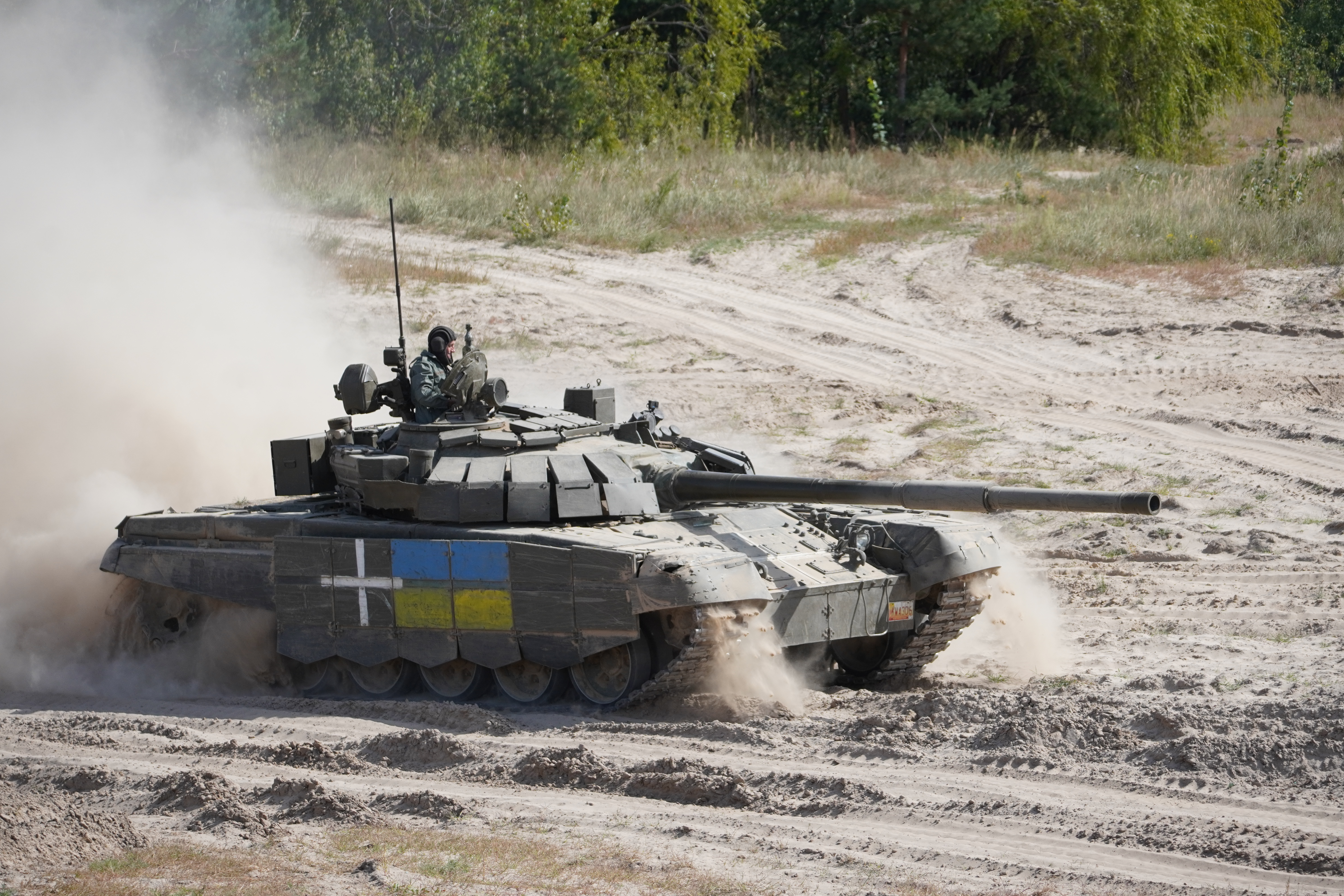
March 2026 marked a period of sustained high-intensity combat for Ukraine’s armed forces, with troops managing to regain control of additional territory while continuing to hold defensive lines under pressure, Commander-in-Chief Oleksandr Syrskyi reported on April 15.“Russian forces are suffering heavy losses, yet they are not abandoning their plans to seize Ukraine,” he said.According to Syrskyi, Ukraine’s core battlefield objectives remain unchanged: eliminate enemy forces, halt their advance, strike logistics and command nodes — including deep inside Russian territory — and maintain protection of the country’s airspace over cities and towns. He noted that Ukrainian forces conduct monthly assessments of combat operations, using the results to refine tactics and improve coordination across all levels of command. As weather conditions shifted, Russian forces intensified offensive activity along nearly the entire 1,200-kilometer front line. The heaviest fighting during March was concentrated in the Oleksandrivka, Pokrovsk, Kostiantynivka, and Lyman sectors.“We must seize the strategic initiative, which is why we are conducting active defense,” Syrskyi said. Despite sustained pressure, Ukrainian troops succeeded in restoring control over nearly 50 square kilometers of previously occupied territory during the month. Syrskyi emphasized that Ukraine is countering Russia’s numerical advantage through more effective battlefield tactics, forcing opposing forces to adapt and delaying the execution of their operational plans. At the same time, Ukraine continued to strike targets inside Russia linked to military infrastructure. In March alone, 76 targets were struck using deep-strike capabilities, including 15 facilities in the oil refining sector.The commander also reviewed updates on mobilization and recruitment efforts, logistics support, defensive fortifications, and the overall combat readiness of Ukrainian units. In addition, recent reports state that Ukrainian forces successfully took control of a Russian position using only drones and ground-based robotic systems. President Volodymyr Zelenskyy shared details of the mission through the Office of the President. He emphasized that this development represents a significant shift in how modern warfare is conducted. “For the first time in the history of this war, an enemy position was taken exclusively by unmanned platforms—UGVs and drones. The occupiers surrendered, and this operation was carried out without the participation of infantry and without losses on our side,” Zelenskyy said.
Narrative Intelligence Brief
This article was published by United24 Media, a source frequently categorized with a lean left bias based in Ukraine. Our narrative intelligence engine continuously monitors coverage from this outlet to track framing, bias, and rhetorical patterns. Our initial algorithmic scan of this specific piece did not flag high-confidence rhetorical techniques, suggesting a generally straightforward reporting style or neutral framing. By understanding the editorial perspective of United24 Media, readers can better contextualize the information presented and compare it across our broader media matrix to find the real narrative.
More from United24 Media
Analysis Methodology
This narrative analysis was generated using the CoDataLab Global Intelligence Engine. Our proprietary AI scans thousands of cross-border sources to identify sentiment patterns, framing techniques, and potential media bias. While AI provides the data-driven foundation, our objective is to empower readers with additional context beyond the standard headline.The content displayed above is a structured summary designed for rapid information processing. For the full original report, please visit the source outlet.More Coverage
Discussion