Today in News History
On July 2, several notable moments in the history of News stand out. In 1494, The Treaty of Tordesillas is ratified by Spain. In 1645, Battle of Alford: Wars of the Three Kingdoms. In 1776, American Revolution: The Continental Congress adopts the Lee Resolution severing ties with the Kingdom of Great Britain, although the wording of the formal Declaration of Independence is not adopted until July 4. In 1823, Bahia Independence Day: The end of Portuguese rule in Brazil, with the final defeat of the Portuguese crown loyalists in the province of Bahia. In 1890, The U.S. Congress passes the Sherman Antitrust Act. In 1914, Joseph Chamberlain, English businessman and politician, Secretary of State for the Colonies (born 1836) passed away. In 1915, Porfirio Díaz, Mexican general and politician, 29th President of Mexico (born 1830) passed away. In 1921, World War I: U.S. President Warren G. Harding signs the Knox-Porter Resolution formally ending the war between the United States and Germany. In 1964, Civil rights movement: U.S. President Lyndon B. Johnson signs the Civil Rights Act of 1964 meant to prohibit segregation in public places. In 2013, The International Astronomical Union names Pluto's fourth and fifth moons, Kerberos and Styx. Together, these milestones provide historical context for today's news news and ongoing narratives.
Two major reforms bring setbacks for federal government
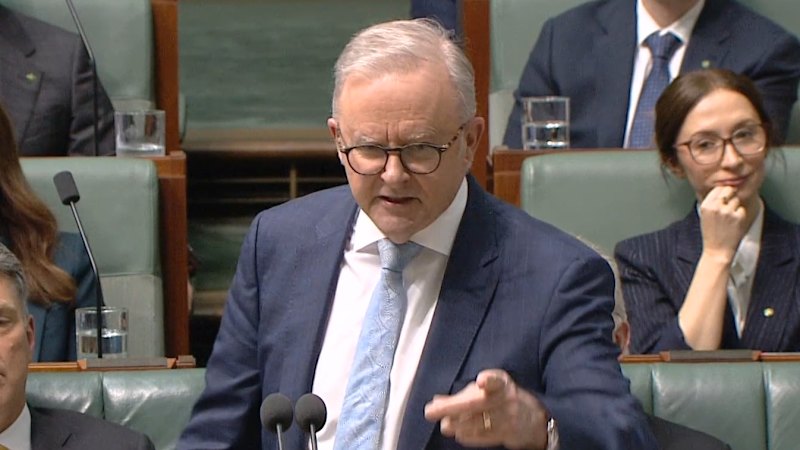
A double setback has emerged for the federal government on parliament's final sitting day as two major reforms railroaded by a Coalition-Greens alliance.
Narrative Intelligence Brief
This article was published by Brisbane Times, a source frequently categorized with a center bias based in Australia. Our narrative intelligence engine continuously monitors coverage from this outlet to track framing, bias, and rhetorical patterns. Our initial algorithmic scan of this specific piece did not flag high-confidence rhetorical techniques, suggesting a generally straightforward reporting style or neutral framing. By understanding the editorial perspective of Brisbane Times, readers can better contextualize the information presented and compare it across our broader media matrix to find the real narrative.
More from Brisbane Times
July 2, 2026
Wimbledon 2026 LIVE: De Minaur wins first set over Mannarino despite serve woes; Maya Joint to follow on same court
July 2, 2026
Brisbane’s best food and drink openings of 2026 (so far)
July 2, 2026
Australian-first facial recognition cameras hailed a success by police
July 2, 2026
Bird flu testing process called into question
July 2, 2026
Sharks star sin-binned
Analysis Methodology
This narrative analysis was generated using the CoDataLab Global Intelligence Engine. Our proprietary AI scans thousands of cross-border sources to identify sentiment patterns, framing techniques, and potential media bias. While AI provides the data-driven foundation, our objective is to empower readers with additional context beyond the standard headline.The content displayed above is a structured summary designed for rapid information processing. For the full original report, please visit the source outlet.More Coverage
Discussion
"cup"
Markwayne Mullin’s celebration of Iran’s World Cup exit is worse than poor sportsmanship

“Akwaaba!”: Massive crowd welcomes Black Stars to Kansas City ahead of World Cup clash with Colombia

Security expert: Anthropic’s dire warnings about its own AI are pure hype