Today in News History
On June 20, several notable moments in the history of News stand out. In 1800, Abraham Gotthelf Kästner, German mathematician and academic (born 1719) passed away. In 1963, Following the Cuban Missile Crisis, the Soviet Union and the United States sign an agreement to establish the so-called "red telephone" link between Washington, D.C., and Moscow. In 1965, Bernard Baruch, American financier and politician (born 1870) passed away. In 1972, Watergate scandal: An .mw-parser-output .frac{white-space:nowrap}.mw-parser-output .frac .num,.mw-parser-output .frac .den{font-size:80%;line-height:0;vertical-align:super}.mw-parser-output .frac .den{vertical-align:sub}.mw-parser-output .sr-only{border:0;clip:rect(0,0,0,0);clip-path:polygon(0px 0px,0px 0px,0px 0px);height:1px;margin:-1px;overflow:hidden;padding:0;position:absolute;width:1px}18+1⁄2-minute gap appears in the tape recording of the conversations between U.S. President Richard Nixon and his advisers regarding the recent arrests of his operatives while breaking into the Watergate complex. In 1972, Alexis Alexoudis, Greek footballer was born. In 1975, The film Jaws is released in the United States, becoming the highest-grossing film of that time and starting the trend of films known as "summer blockbusters". In 1985, Matt Flynn, American football player was born. In 1989, Javier Pastore, Argentinian footballer was born. In 2003, Hans Niemann, American chess player was born. In 2022, Caleb Swanigan, American basketball player (born 1997) passed away. Together, these milestones provide historical context for today's news news and ongoing narratives.
Trump’s student loan rate cut excludes most of the 9 million borrowers in default
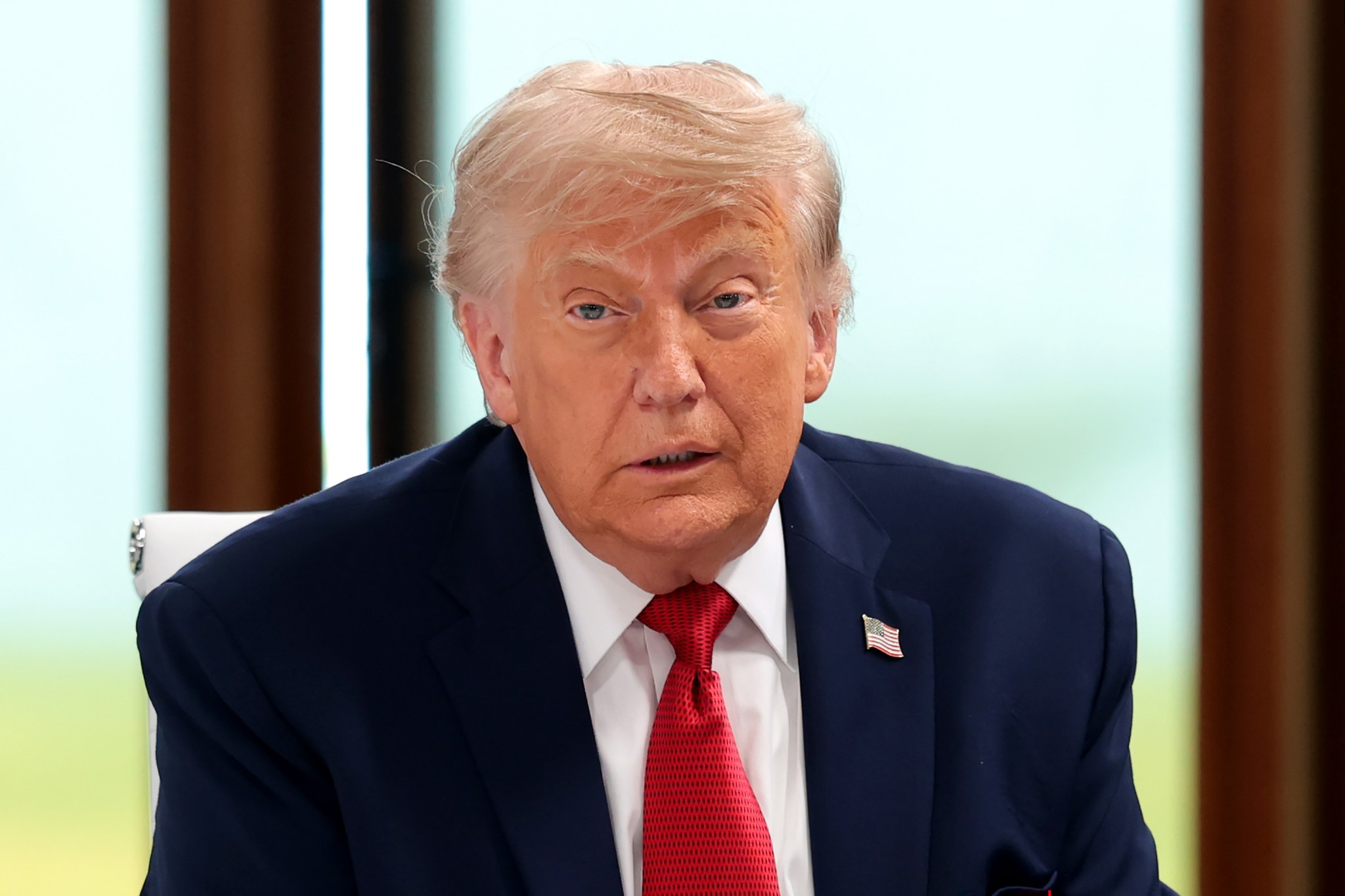
The Education Department's temporary 1 interest rate reduction requires auto-pay enrollment, loan consolidation, and good standing.
Narrative Intelligence Brief
This article was published by Fortune, a source frequently categorized with a center bias based in United States of America. Our narrative intelligence engine continuously monitors coverage from this outlet to track framing, bias, and rhetorical patterns. Our initial algorithmic scan of this specific piece did not flag high-confidence rhetorical techniques, suggesting a generally straightforward reporting style or neutral framing. By understanding the editorial perspective of Fortune, readers can better contextualize the information presented and compare it across our broader media matrix to find the real narrative.
More from Fortune
June 20, 2026
Shipping companies will decide when the Strait of Hormuz is truly open—not the U.S. or Iran—and the latest deal is already sowing confusion
June 20, 2026
Trump threatens to charge U.S. tolls in Strait of Hormuz for ‘services rendered as the Guardian Angel to the countries of the Middle East’
June 20, 2026
‘People are tired of hearing what government can’t do’: Democratic Socialists surge nationwide
June 20, 2026
Who needs rate cuts? Even the Fed’s new chair admits companies are easily raising capital on financial markets amid epic stock and debt binge
June 20, 2026
Americans on Trump and Iran: 65% disapprove, just like his job (dis)approval