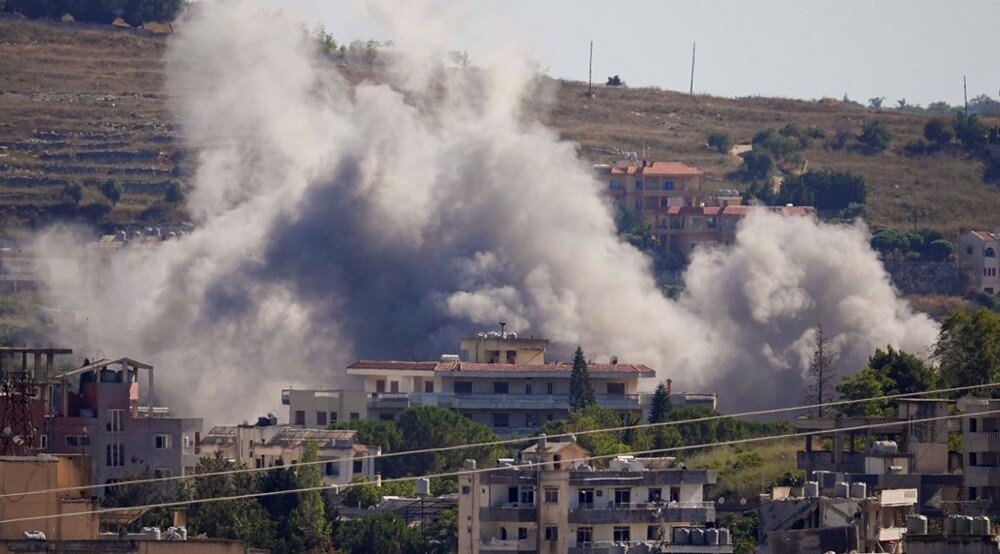
Today in News History
On June 20, several notable moments in the history of News stand out. In 1005, Ali az-Zahir, Fatimid caliph of Egypt (died 1036) was born. In 1926, Rehavam Ze'evi, Israeli general and politician, 9th Israeli Minister of Tourism (died 2001) was born. In 1927, Simin Behbahani, Iranian poet and activist (died 2014) was born. In 1946, David Kazhdan, Russian-Israeli mathematician and academic was born. In 1960, Philip M. Parker, American economist and author was born. In 1963, Following the Cuban Missile Crisis, the Soviet Union and the United States sign an agreement to establish the so-called "red telephone" link between Washington, D.C., and Moscow. In 1982, The International Conference on the Holocaust and Genocide opens in Tel Aviv, despite attempts by the Turkish government to cancel it, as it included presentations on the Armenian genocide. In 1990, The 7.4 Mw Manjil-Rudbar earthquake affects northern Iran with a maximum Mercalli intensity of X (Extreme), killing 35,000-50,000, and injuring 60,000-105,000. In 1994, The 1994 Imam Reza shrine bomb explosion in Iran leaves at least 25 dead and 70 to 300 injured. In 2019, Iran's Air Defense Forces shoot down an American surveillance drone over the Strait of Hormuz amid rising tensions between the two countries. Together, these milestones provide historical context for today's news news and ongoing narratives.
Trump’s Second Gamble on Iran

Donald Trump’s war against Iran began with one gamble and ended with another. Initially, the president bet that he could stop Iran’s nuclear ambitions by bombing Iran’s revolutionary regime out of existence. So he spent tens of billions of dollars, and upended the global economy, only to sign a memorandum of understanding undoubtedly weaker than []
Narrative Intelligence Brief
This article was published by DNyuz, a source frequently categorized with a lean right bias based in Armenia. Our narrative intelligence engine continuously monitors coverage from this outlet to track framing, bias, and rhetorical patterns. Our initial algorithmic scan of this specific piece did not flag high-confidence rhetorical techniques, suggesting a generally straightforward reporting style or neutral framing. By understanding the editorial perspective of DNyuz, readers can better contextualize the information presented and compare it across our broader media matrix to find the real narrative.
More from DNyuz
June 20, 2026
Italy’s prime minister cheered across world as she delivers ‘thrashing’ to Trump
June 20, 2026
The War Ended With a Surrender — Trump’s
June 20, 2026
My Father’s Death Was the Start of My Life
June 20, 2026
The hottest new rock star is the Vampire Lestat — with help from Bowie, Iggy and Freddie
June 20, 2026
The Science That Turned Lizard Venom Into GLP-1s Is Under Attack
Analysis Methodology
This narrative analysis was generated using the CoDataLab Global Intelligence Engine. Our proprietary AI scans thousands of cross-border sources to identify sentiment patterns, framing techniques, and potential media bias. While AI provides the data-driven foundation, our objective is to empower readers with additional context beyond the standard headline.The content displayed above is a structured summary designed for rapid information processing. For the full original report, please visit the source outlet.More Coverage
Discussion
"southern lebanon"
Lebanon ceasefire between Israel and Hezbollah remains fragile under US-Iran pressure
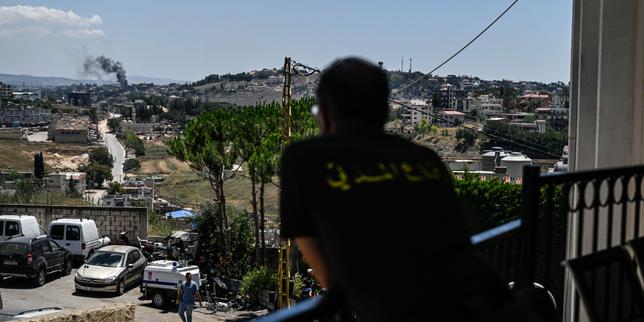
[Video] 🇮🇷🇮🇱⚡️ — Israeli Air Force (IAF) fighter jets are flying at low altitude over souther [...]

Israel kills more than 16 people in Lebanon’s Nabatieh