
Trump’s new tariffs will put America’s rivals on notice
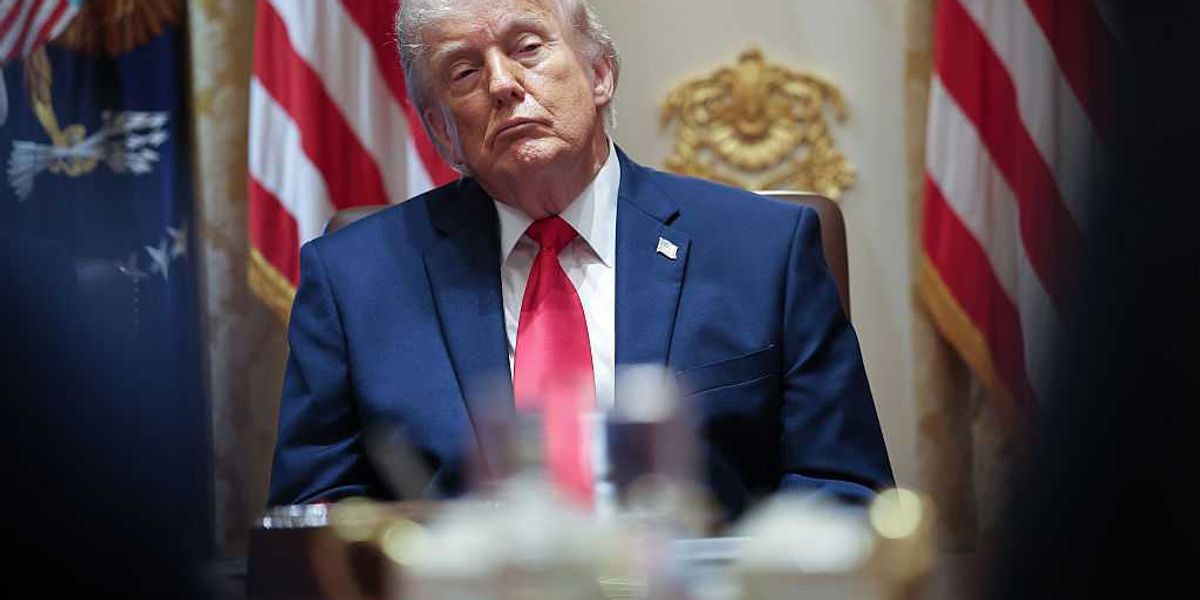
Though the Trump administration has faced a series of legal setbacks on tariffs, it seems to have found a solution. After the Supreme Court ruled that the administration’s reciprocal tariffs were wrongfully imposed, the president immediately leapt to Plan B: Section 122 tariffs, which allow the temporary placement of global tariffs.But these tariffs — derived from the Trade Act of 1974, which Trump used to install a 10 levy on most imported goods — expire in just over two months, and a court has ruled them unlawful. Although that case is still working through the system, the administration is already planning to replace Section 122 tariffs with Section 301 tariffs. These, too, stem from the Trade Act, but unlike the previous tariffs, they will be here to stay. These tariffs ... are durable, cover almost all American imports, and leave no questions for investors.They will also allow the Trump administration to target countries that have relied on unfair trade practices such as lax environmental standards that let our trade “partners” produce at excess capacity — essentially to get one over on the United States.Section 301, in short, gives the president the power to counter unfair foreign trade practices. Unlike the reciprocal and 122 tariffs, they can be placed only after a long process that includes public hearings and comment periods. While this may frustrate those who want quick action, the process practically guarantees courts will not rule them unconstitutional, as the authority is laid out explicitly in the statutory text.Currently, the only active 301 tariffs are against China, which have been in place since the first Trump administration. But the second Trump administration is planning to broaden the use of Section 301 significantly.The Office of the United States Trade Representative launched two investigations in the spring that covered 60 countries, accounting for nearly all American imports. The first investigation focused on products made with forced labor across the globe. Earlier this month, the administration revealed the results: Those countries, including the European Union, had failed to ban products made with forced labor or to stop forced labor within their borders.The second investigation, which is somewhat narrower in scope, is ongoing. It targets “excess capacity” — essentially unfair government intervention stemming from weak or absent environmental regulations abroad, with pollutants from China having been found in American water and air. This harms America’s labor force and limits businesses’ ability to expand facilities and production.According to United States Trade Representative Jamieson Greer, these tariffs are being pursued on “an accelerated timeframe” while still ensuring all legal requirements are being met. The next step for the forced labor tariffs will be a comment period ending in early July, followed by a hearing and — most likely — the announcement of the new tariffs.By relying on Section 301, the Trump administration is making a smart play for three key reasons.RELATED: Donald Trump is still the working-class president Chip Somodevilla/Getty ImagesFirst, President Trump is obviously committed to dismantling “free trade” ideology and replacing it with fair trade. Leaving office with only a handful of trade agreements and tariffs only on China — tariffs that all but the purest free traders would support — would not meaningfully advance that goal. But if comprehensive Section 301 tariffs can be placed on countries found violating a range of agreements, it becomes significantly harder for future administrations to lift them, as the Biden administration discovered with the China tariffs levied by the first Trump administration.Second, Section 301 is a more concrete process. It requires hearings and comment periods, conducted in a way where — even if the outcome is broadly understood — there are no surprises. Markets will therefore have essentially priced them in. While President Trump’s reciprocal tariffs came from a well-reasoned place, their back-and-forth nature spooked investors and at times threatened his broader economic agenda. These tariffs, by contrast, are durable, cover almost all American imports, and leave no questions for investors.Most importantly, Section 301 allows the United States to target trade both broadly and narrowly. Broadly, in the sense that a wide array of countries can be targeted at once, as the investigation of more than 60 countries shows. Narrowly, in that it allows the administration to focus on problems long derided by President Trump, including topics many conservatives have overlooked such as “inadequate environmental protections” and labor law violations. In previous Republican administrations, these would not have been priorities. But the United States has extremely strong environmental protections and labor laws; ignoring the disparity between our laws and those of our competitors means trade deficits never close and American jobs get offshored.With Section 301, that era is ending. New global tariffs will soon arrive, and this time they won’t be blocked by a court.Editor’s note: This article was published originally at the American Mind.
Narrative Intelligence Brief
This article was published by Conservative Review, a source frequently categorized with a right bias based in United States of America. Our narrative intelligence engine continuously monitors coverage from this outlet to track framing, bias, and rhetorical patterns. Our initial algorithmic scan of this specific piece did not flag high-confidence rhetorical techniques, suggesting a generally straightforward reporting style or neutral framing. By understanding the editorial perspective of Conservative Review, readers can better contextualize the information presented and compare it across our broader media matrix to find the real narrative.
Explore related topics: Stay informed with Real Narrative News as we track unfolding stories. Dive deeper into our coverage of pivotal topics including kennedy center, trooping colour, donald trump, white house, fifa cup, thomas partey, واشنطن وطهران, رئيس الوزراء, cup opener, and tren aragua. Our intelligence streams continuously monitor these keywords to bring you unbiased analysis and real-time updates on topics like "Trump’s new tariffs will put America’s rivals on notice".
More from Conservative Review
June 13, 2026
Corporate giants vs. the family farm: New initiative targets the monopolies pillaging rural America
June 13, 2026
Trump’s new tariffs will put America’s rivals on notice
June 13, 2026
America's salvage yards are on fire — and drivers are the ones getting burned
June 13, 2026
Terrifying video: Suspect in police car removes handcuffs, hops behind wheel, and drives away — as cop tries to stop him
June 13, 2026
Democrats can’t escape their trans problem
Analysis Methodology
This narrative analysis was generated using the CoDataLab Global Intelligence Engine. Our proprietary AI scans thousands of cross-border sources to identify sentiment patterns, framing techniques, and potential media bias. While AI provides the data-driven foundation, our objective is to empower readers with additional context beyond the standard headline.The content displayed above is a structured summary designed for rapid information processing. For the full original report, please visit the source outlet.More Coverage
Discussion