Today in News History
On July 4, several notable moments in the history of News stand out. In 1826, John Adams, American lawyer and politician, 2nd President of the United States (born 1735) passed away. In 1857, William L. Marcy, American lawyer, judge, and politician, 21st United States Secretary of State (born 1786) passed away. In 1938, Steven Rose, English biologist and academic was born. In 1970, Harold Stirling Vanderbilt, American sailor and businessman (born 1884) passed away. In 1971, August Derleth, American anthologist and author (born 1909) passed away. In 1997, John Zachary Young, English zoologist and neurophysiologist (born 1907) passed away. In 2008, Jesse Helms, American politician (born 1921) passed away. In 2010, Robert Neil Butler, American physician and author (born 1927) passed away. In 2012, The discovery of particles consistent with the Higgs boson at the Large Hadron Collider is announced at CERN. In 2014, Richard Mellon Scaife, American businessman (born 1932) passed away. Together, these milestones provide historical context for today's news news and ongoing narratives.
Trump’s new deputy HHS secretary has ties to the fertility industry
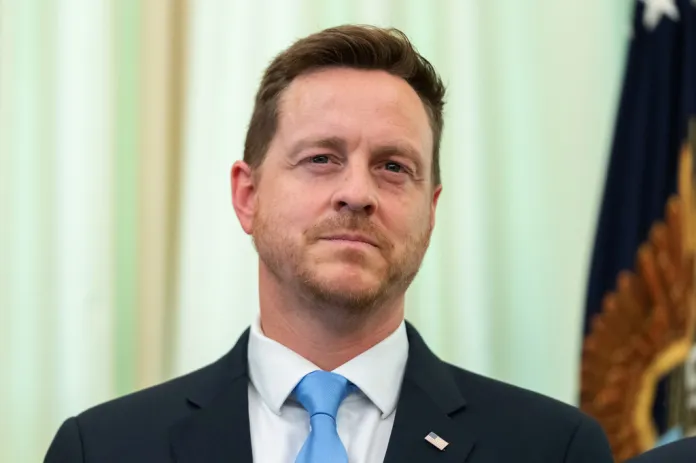
In Focus delivers deeper coverage of the political, cultural, and ideological issues shaping America. Published daily by senior writers and experts, these in-depth pieces go beyond the headlines to give readers the full picture. You can find our full list of In Focus pieces here. Chris Klomp, a rising star at the Department of Health and []
Narrative Intelligence Brief
This article was published by Washington Examiner, a source frequently categorized with a lean right bias based in United States of America. Our narrative intelligence engine continuously monitors coverage from this outlet to track framing, bias, and rhetorical patterns. Our initial algorithmic scan of this specific piece did not flag high-confidence rhetorical techniques, suggesting a generally straightforward reporting style or neutral framing. By understanding the editorial perspective of Washington Examiner, readers can better contextualize the information presented and compare it across our broader media matrix to find the real narrative.
More from Washington Examiner
July 4, 2026
Hard to see any ‘real progress’ with Iran: Byron York
July 4, 2026
Heat wave cancels some DC Independence Day celebrations
July 4, 2026
Democrats being ‘sour’ about America will not work for voters: Joe Concha
July 4, 2026
Two Americas: Mamdani and Trump give speeches ahead of Independence Day
July 4, 2026
Joe Concha slams James Talarico: ‘There’s too much for this guy to play defense on’
Analysis Methodology
This narrative analysis was generated using the CoDataLab Global Intelligence Engine. Our proprietary AI scans thousands of cross-border sources to identify sentiment patterns, framing techniques, and potential media bias. While AI provides the data-driven foundation, our objective is to empower readers with additional context beyond the standard headline.The content displayed above is a structured summary designed for rapid information processing. For the full original report, please visit the source outlet.More Coverage
Discussion
"cup"
Trump FURIOUS as USMNT Defies his ADMINISTRATION’S WISHES!!!

Mohamed Salah explains penalty after Egypt make history at World Cup 2026: ‘I had to decide at the last minute’
Man plunges to his death from 15-storey tower block as stunned neighbours ‘heard big scream and a crash of glass’