Today in News History
On June 21, several notable moments in the history of News stand out. In 1916, Herbert Friedman, American physicist and astronomer (died 2000) was born. In 1929, Leonard Trelawny Hobhouse, English sociologist, journalist, and academic (born 1864) passed away. In 1933, Bernie Kopell, American actor and comedian was born. In 1940, Michael Ruse, Canadian philosopher and academic was born. In 1979, Chris Pratt, American actor was born. In 1982, John Hinckley is found not guilty by reason of insanity for the attempted assassination of U.S. President Ronald Reagan. In 1983, Edward Snowden, American activist and academic was born. In 1990, Cedric Belfrage, English journalist and author, co-founded the National Guardian (born 1904) passed away. In 2011, Lil Bub, American celebrity cat (died 2019) was born. In 2018, Charles Krauthammer, American columnist and conservative political commentator (born 1950) passed away. Together, these milestones provide historical context for today's news news and ongoing narratives.
Trump's behavior at home is blowing up in his face on the world stage: analyst
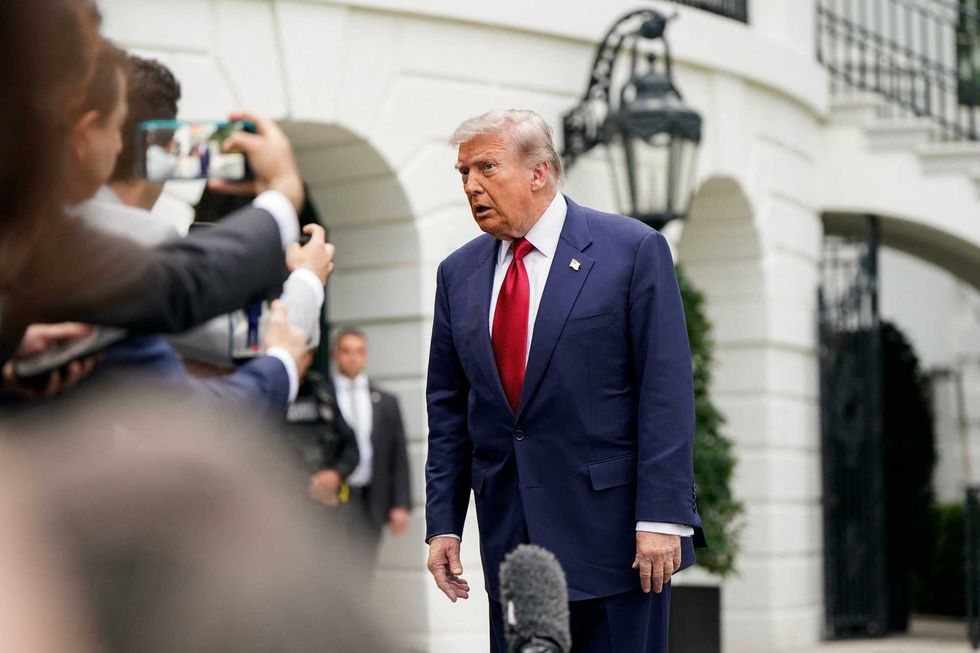
Donald Trump's habit of punishing Republicans who cross him may have just cost him the political cover he needs to sell his Iran deal, according to political analyst Sabrina Haake, who argues the president's domestic vendettas are actively undermining him abroad.In her latest newsletter, Haake makes the case that Trump's personal thirst for revenge at home is hurting him on Iran. Her logic is straightforward: the lawmakers Trump targeted in primaries, several of whom lost as a result, no longer owe him anything and are now free to attack his foreign policy without fear of consequences. As she puts it, they have zero Fs left to give.The result has been a chorus of Republican criticism aimed at the memorandum of understanding that ended Trump's war with Iran. Haake points to Sen. Bill Cassidy, who called the agreement the worst foreign policy blunder in decades and warned that Iran learned threatening the Strait of Hormuz works. Sen. Thom Tillis flagged the war's 100 billion price tag, while Rep. Thomas Massie noted that figure is five times what Congress spends annually on roads and bridges. Even former Vice President Mike Pence said the deal smacks of appeasement, and Sen. Ted Cruz blasted a reconstruction fund he described as handing billions of dollars to theocratic lunatics.Haake's central argument is that this is a self-inflicted wound. Trump alienated the very voices he would now need to defend the agreement, and he is reportedly planning to skip the congressional review required under the 2015 Iran Nuclear Agreement Review Act, a move that members of both parties have urged him not to make. Having burned those bridges, she contends, he is left without allies to make his case.The analyst is also sharply critical of the deal's substance, which she says bears no resemblance to the UNCONDITIONAL SURRENDER Trump demanded fifteen weeks ago. Instead of regime change, disarmament, or American control of Iranian oil, Haake writes that the MOU waives sanctions immediately, lets Iran resume oil exports, and steers an estimated 300 billion reconstruction package toward the country, while securing only a temporary 60-day window of toll-free passage through the Strait of Hormuz. She frames it bluntly as the US effectively paying Iran to stop threatening international shipping.
Narrative Intelligence Brief
This article was published by Raw Story, a source frequently categorized with a left bias based in United States of America. Our narrative intelligence engine continuously monitors coverage from this outlet to track framing, bias, and rhetorical patterns. Our initial algorithmic scan of this specific piece did not flag high-confidence rhetorical techniques, suggesting a generally straightforward reporting style or neutral framing. By understanding the editorial perspective of Raw Story, readers can better contextualize the information presented and compare it across our broader media matrix to find the real narrative.
More from Raw Story
June 21, 2026
Trump spirals in 'bonkers' phone call with reporter: 'I can do whatever I want'
June 21, 2026
'He will cave': Expert predicts Trump poised to give up to another major adversary
June 21, 2026
'Very possible' Trump leaves White House early as president 'falls apart': CNN legend
June 21, 2026
Ex-senior official suspects Trump to 'bury horrific' incident that killed children: report
June 21, 2026
'Throw it in the trash': MAGA turns against conservative magazine over Gabbard attack
Analysis Methodology
This narrative analysis was generated using the CoDataLab Global Intelligence Engine. Our proprietary AI scans thousands of cross-border sources to identify sentiment patterns, framing techniques, and potential media bias. While AI provides the data-driven foundation, our objective is to empower readers with additional context beyond the standard headline.The content displayed above is a structured summary designed for rapid information processing. For the full original report, please visit the source outlet.More Coverage
Discussion
"iran"
This insane JD Vance admission has Republicans — and Fox News — paralyzed with fear
Trump’s fears about economy undercut U.S. leverage in Iran talks

Lawsuit filed on behalf of families of Minab victims against US