
Today in News History
On June 23, several notable moments in the history of News stand out. In 1960, Donald Harrison, American saxophonist, composer, and producer was born. In 1967, Cold War: U.S. President Lyndon B. Johnson meets with Soviet Premier Alexei Kosygin in Glassboro, New Jersey for the three-day Glassboro Summit Conference. In 1972, Watergate scandal: U.S. President Richard M. Nixon and White House Chief of Staff H. R. Haldeman are taped talking about illegally using the Central Intelligence Agency to obstruct the Federal Bureau of Investigation's investigation into the Watergate break-ins. In 1978, Matt Light, American football player and sportscaster was born. In 2007, Elliana Walmsley, American dancer was born. In 2012, Frank Chee Willeto, American soldier and politician, 4th Vice President of the Navajo Nation (born 1925) passed away. In 2013, Nik Wallenda becomes the first man to successfully walk across the Grand Canyon on a tight rope. In 2013, Militants storm a high-altitude mountaineering base camp near Nanga Parbat in Gilgit-Baltistan, Pakistan, killing ten climbers and a local guide. In 2014, The last of Syria's declared chemical weapons are shipped out for destruction. In 2017, A series of terrorist attacks take place in Pakistan, resulting in 96 deaths and wounding 200 others. Together, these milestones provide historical context for today's news news and ongoing narratives.
Trump gets a shot across the bow from Republicans as his grip is 'slipping': CNN anchor
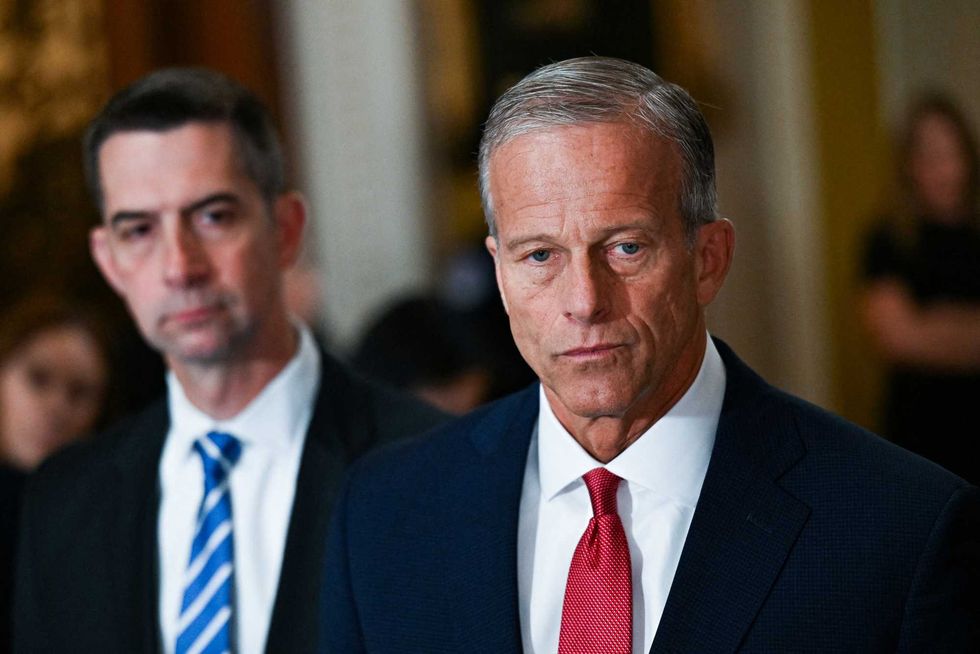
A major Senate rebuke of President Donald Trump on Tuesday led a CNN anchor to declare that the 80-year-old MAGA leader just received a clear message that his grip on the GOP has weakened.In a striking bipartisan rebuke, the Senate on Tuesday voted to order Trump to halt the war in Iran or seek congressional approval to keep fighting. Many Raju, CNN's chief congressional correspondent, told CNN anchor Abby Phillip it amounted to a major rebuke of Trump, though a largely symbolic one.One showing concern within the Democratic ranks and among some Republicans over the way the president has been waging this war with Iran, said Raju.The 50-48 vote saw four Republicans — Rand Paul of Kentucky, Lisa Murkowski of Alaska, Susan Collins of Maine and Bill Cassidy of Louisiana — cross the aisle to join Democrats. Pennsylvania's John Fetterman was the lone Democrat to vote against it. The measure prevailed partly because two Republicans were absent, including Mitch McConnell, who was recently hospitalized.It marked the first time since the War Powers Resolution of 1973 that both chambers have approved a resolution directing a president to end a military conflict. The House passed it earlier this month.The concurrent resolution doesn't require Trump's signature and doesn't carry the force of law, so it won't compel an immediate change. Sen. Jim Risch (R-ID) said Trump was not going to pay any attention to it. Even so, Phillip and Raju agreed it sent Trump a message.In an election year, it's even more significant, given that this was a war President Trump chose at this pivotal political moment for him, said Phillip. She concluded, A Republican House and a Republican Senate just voted to basically say, 'Time to stop and come to us for approval.' That is a pretty strong sign that the president's control, especially over the situation in Iran, is slipping.
Narrative Intelligence Brief
This article was published by Raw Story, a source frequently categorized with a left bias based in United States of America. Our narrative intelligence engine continuously monitors coverage from this outlet to track framing, bias, and rhetorical patterns. Our initial algorithmic scan of this specific piece did not flag high-confidence rhetorical techniques, suggesting a generally straightforward reporting style or neutral framing. By understanding the editorial perspective of Raw Story, readers can better contextualize the information presented and compare it across our broader media matrix to find the real narrative.
More from Raw Story
June 23, 2026
Trump's trade chief drops massive national security warning in secret meeting: report
June 23, 2026
Internal documents undercut Trump's Reflecting Pool vandalism claims: report
June 23, 2026
Justice Brown Jackson criticizes conservative colleagues for betraying immigrants
June 23, 2026
Trump just 'blurted out' a 'five-alarm scandal' about California meddling: critics
June 23, 2026
The bizarre plaudits fawning Republicans offered Trump on White House return: new book
Analysis Methodology
This narrative analysis was generated using the CoDataLab Global Intelligence Engine. Our proprietary AI scans thousands of cross-border sources to identify sentiment patterns, framing techniques, and potential media bias. While AI provides the data-driven foundation, our objective is to empower readers with additional context beyond the standard headline.The content displayed above is a structured summary designed for rapid information processing. For the full original report, please visit the source outlet.More Coverage
Discussion
"cup"
Crimea is burning and Putin’s grip is weakened

Jeremy Doku’s Belgium World Cup return date confirmed as presenter apologises for "completely useless" comment
/https%3A%2F%2Fsportsmole-media-prod.s3.gra.io.cloud.ovh.net%2Fuploads%2F2026%2F06%2Faaa-jd-6a3a27296adb3055463402.jpg)
Russia’s deep Crimea crisis will only get worse
