Today in News History
On June 24, several notable moments in the history of News stand out. In 1940, George Feigley, American sex cult leader and two-time prison escapee (died 2009) was born. In 1945, Kjell Albin Abrahamson, Swedish journalist and author (died 2016) was born. In 1948, Clarence Thomas, American lawyer and jurist, Associate Justice of the Supreme Court of the United States was born. In 1959, Boris Vian, French author, poet, and playwright (born 1920) passed away. In 1959, Convicted Manhattan Project spy Klaus Fuchs is released after only nine years in prison and allowed to emigrate to Dresden, East Germany where he resumes a scientific career. In 1967, Cold War: U.S. President Lyndon B. Johnson meets with Soviet Premier Alexei Kosygin in Glassboro, New Jersey for the three-day Glassboro Summit Conference. In 1972, Watergate scandal: U.S. President Richard M. Nixon and White House Chief of Staff H. R. Haldeman are taped talking about illegally using the Central Intelligence Agency to obstruct the Federal Bureau of Investigation's investigation into the Watergate break-ins. In 1977, Jaan Jüris, Estonian ski jumper was born. In 2012, James Durbin, English economist and statistician (born 1923) passed away. In 2014, The last of Syria's declared chemical weapons are shipped out for destruction. Together, these milestones provide historical context for today's news news and ongoing narratives.
Trump DOJ's Use of Subpoenas Against Journalists Is 'Straight Out of the Dictator's Playbook': Press Freedom Group
Narrative Analysis: Name Calling
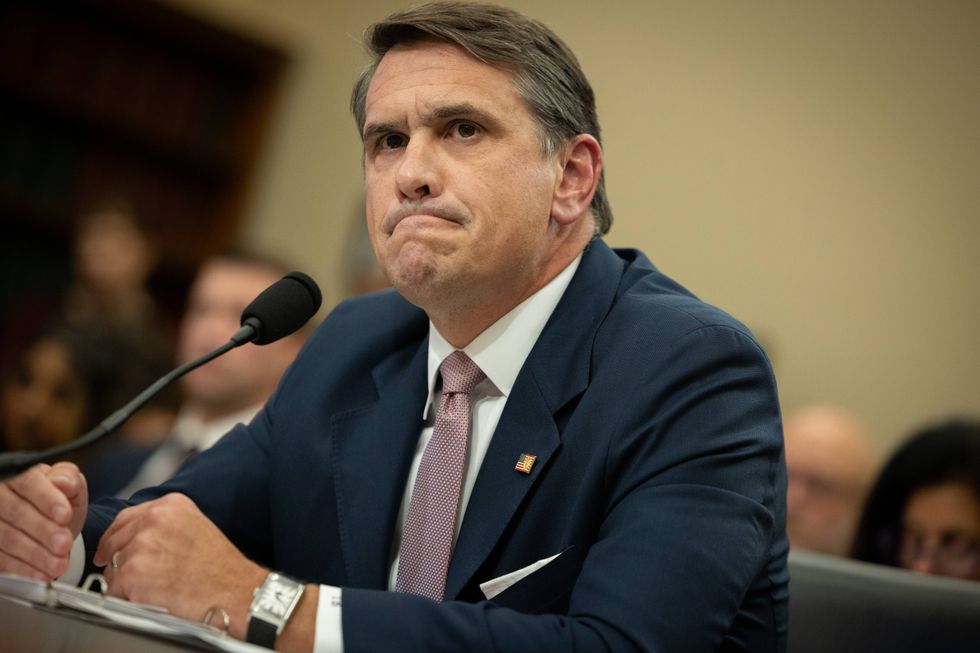
The US Department of Justice's attempt to compel journalists to testify before a grand jury is drawing blowback from a top press freedom group, which is accusing President Donald Trump's administration of behaving like an authoritarian regime.According to a Tuesday report in The New York Times, the DOJ earlier this month issued subpoenas for national security reporters at The Washington Post and The Wall Street Journal related to national security leaks.Subpoenas against both news organizations were withdrawn after they issued legal challenges in sealed filings.The Justice Department had sought information from three reporters at The Journal about an article detailing how top officials warned... Trump of the risks of a major military campaign against Iran, reported the Times. It also sought information from a reporter at The Post, Ellen Nakashima, about reporting related to US military action in Venezuela.As the Times noted, it is highly uncommon for government investigators to subpoena journalists when they are probing national security leaks, as such actions are generally seen as having a chilling effect on reporters' ability to gather information.After the details of the subpoenas and news of their withdrawal broke, Reporters Without Borders slammed the Trump DOJ for hitting a new low in its attempt to suppress information from the American people.Subpoenaing journalists to appear before a grand jury under the guise of ‘national security’ is straight out of the dictator's playbook, the group said. Fortunately, in the United States, newsrooms are fighting back and winning.A Tuesday CNN report claimed that Trump had personally pushed acting Attorney General Todd Blanche to subpoena the journalists, going so far as to hand Blanche a sticky note—with the word 'Treason' written in Sharpie—placed atop a stack of printed articles.CNN also reported that both the Post and the Journal remain on guard against the possibility that the subpoenas will be reissued in the future.A spokesperson for the Post ripped the Trump DOJ for issuing an unwarranted subpoena of our reporter, which the newspaper described as a clear violation of constitutionally guaranteed press freedom.We will continue to stand fully behind the journalism of The Washington Post, the spokesperson added, and fight all efforts by any administration that violate our First Amendment rights.Gabe Rottman, vice president of policy at Reporters Committee for Freedom of the Press, said in an interview with the Post that issuing grand jury subpoenas to reporters puts core First Amendment rights at risk because once you are up in front of the grand jury, the testimony can go in many different ways and can inquire into stories that are unrelated to the underlying investigation.The potential of the government intruding into the newsgathering process is even greater when you are in the grand jury than it is for a subpoena for documents, Rottman added.
Narrative Intelligence Brief
This article was published by Common Dreams, a source frequently categorized with a left bias based in United States of America. Our narrative intelligence engine continuously monitors coverage from this outlet to track framing, bias, and rhetorical patterns. In this specific piece, our systems detected the potential use of the "Name Calling" technique. This narrative approach is often used to shape reader perception by highlighting specific emotional or rhetorical angles. By understanding the editorial perspective of Common Dreams, readers can better contextualize the information presented and compare it across our broader media matrix to find the real narrative.
More from Common Dreams
June 23, 2026
'End It Now': Senate Passes War Powers Resolution Rebuking Trump's Iran War
June 23, 2026
Fearing Mass Job Loss, Working-Class US Voters Believe Government Must Act to Prevent Economic Disaster
June 23, 2026
More Than 5 Million People Have Lost Health Coverage Under Trump-GOP Law
June 23, 2026
UN Commission Finds 30 Percent of People Killed in Gaza Genocide Were Children
June 23, 2026
UN Commission Finds 30 Percent of Those Killed in Gaza Genocide Were Children
Reliability Insights
P
Technique: Name Calling
System analysis detected use of specific narrative techniques in this piece.Analysis Methodology
This narrative analysis was generated using the CoDataLab Global Intelligence Engine. Our proprietary AI scans thousands of cross-border sources to identify sentiment patterns, framing techniques, and potential media bias. While AI provides the data-driven foundation, our objective is to empower readers with additional context beyond the standard headline.The content displayed above is a structured summary designed for rapid information processing. For the full original report, please visit the source outlet.More Coverage
Discussion