
Today in News History
On June 23, several notable moments in the history of News stand out. In 1863, Sándor Bródy, Hungarian author and journalist (died 1924) was born. In 1898, Winifred Holtby, English novelist and journalist (died 1935) was born. In 1930, Donn F. Eisele, American colonel, pilot, and astronaut (died 1987) was born. In 1945, Kjell Albin Abrahamson, Swedish journalist and author (died 2016) was born. In 1959, Convicted Manhattan Project spy Klaus Fuchs is released after only nine years in prison and allowed to emigrate to Dresden, East Germany where he resumes a scientific career. In 1967, Cold War: U.S. President Lyndon B. Johnson meets with Soviet Premier Alexei Kosygin in Glassboro, New Jersey for the three-day Glassboro Summit Conference. In 1972, Watergate scandal: U.S. President Richard M. Nixon and White House Chief of Staff H. R. Haldeman are taped talking about illegally using the Central Intelligence Agency to obstruct the Federal Bureau of Investigation's investigation into the Watergate break-ins. In 1995, Jonas Salk, American biologist and physician (born 1914) passed away. In 2005, Shana Alexander, American journalist and author (born 1926) passed away. In 2012, James Durbin, English economist and statistician (born 1923) passed away. Together, these milestones provide historical context for today's news news and ongoing narratives.
Trump DOJ backtracks on exceedingly rare move against journalists: WaPo
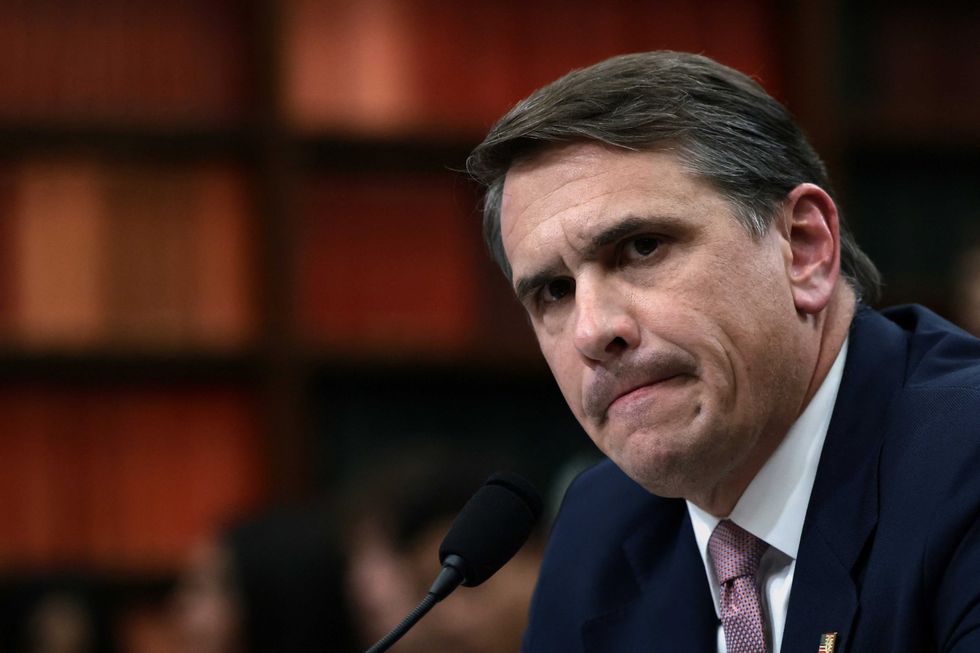
The Justice Department has withdrawn extraordinary grand jury subpoenas issued to reporters from two newspapers after they challenged the demands in federal court, marking a rare retreat from an exceedingly aggressive tactic against the press.The DOJ had sought to compel Washington Post national security reporter Ellen Nakashima and three Wall Street Journal journalists to testify before a federal grand jury regarding their reporting on sensitive national security matters, but the Post reported that both orders were pulled back.Both news organizations fought the subpoenas in sealed proceedings in the Eastern District of Virginia. The Justice Department rescinded Nakashima's subpoena before the judge ruled on the Post's motion to quash it, and the Wall Street Journal subpoenas were similarly withdrawn after the outlet challenged them in the same court. None of the journalists testified before the grand jury.The Washington Post condemned the action in a statement, calling Nakashima's subpoena a clear violation of constitutionally guaranteed press freedom and stating it represented the government seeking to compel journalists to become instruments of its investigations.The withdrawal signals a potential limit to the Trump administration's otherwise aggressive assault on press freedom. The DOJ had previously raided a Post reporter's home in January as part of a leak investigation, Trump and his allies have sued media outlets for allegedly defamatory coverage and the administration has used the Federal Communications Commission to threaten broadcast license revocations over Iran war coverage deemed unpatriotic.Press freedom advocates highlighted the danger grand jury testimony poses to journalists. Gabe Rottman of the Reporters Committee for Freedom of the Press warned that prosecutors could compel journalists to identify confidential sources, potentially resulting in contempt charges or obstruction of justice convictions if reporters refused to cooperate.The Trump administration has also rescinded Biden-era protections for journalists' phone and email records, allowing law enforcement to search reporters' communications when investigating government leaks — with only attorney general approval required.While the withdrawal represents a rare victory for press freedom, the administration's broader pattern of targeting journalists reporting on Trump administration actions continues, with experts warning of a dangerous erosion of press independence and the public's ability to access reporting on matters of significant national interest.
Narrative Intelligence Brief
This article was published by Raw Story, a source frequently categorized with a left bias based in United States of America. Our narrative intelligence engine continuously monitors coverage from this outlet to track framing, bias, and rhetorical patterns. Our initial algorithmic scan of this specific piece did not flag high-confidence rhetorical techniques, suggesting a generally straightforward reporting style or neutral framing. By understanding the editorial perspective of Raw Story, readers can better contextualize the information presented and compare it across our broader media matrix to find the real narrative.
More from Raw Story
June 23, 2026
Brown Jackson hammers Clarence Thomas' majority opinion giving Trump admin a 'blank check'
June 23, 2026
Hip hop legend hits back at 'creepy racist weirdo' who challenged him to boxing match
June 23, 2026
Elon Musk defends his role at DOGE as death reports tied to USAID cuts increase
June 23, 2026
Reporter catalogs Trump's cascading pet project failures: 'Consumed by botched renovation'
June 23, 2026
GOP group panics after mailers go out with white supremacist messaging
Analysis Methodology
This narrative analysis was generated using the CoDataLab Global Intelligence Engine. Our proprietary AI scans thousands of cross-border sources to identify sentiment patterns, framing techniques, and potential media bias. While AI provides the data-driven foundation, our objective is to empower readers with additional context beyond the standard headline.The content displayed above is a structured summary designed for rapid information processing. For the full original report, please visit the source outlet.More Coverage
Discussion
"cup"
DHS’ bizarre post about the U.S. men’s World Cup advancement got it all wrong

Jeremy Doku’s Belgium World Cup return date confirmed as presenter apologises for "completely useless" comment
/https%3A%2F%2Fsportsmole-media-prod.s3.gra.io.cloud.ovh.net%2Fuploads%2F2026%2F06%2Faaa-jd-6a3a27296adb3055463402.jpg)
“Amazon, War Criminal”
