Today in News History
On June 23, several notable moments in the history of News stand out. In 1945, John Garang, Sudanese colonel and politician, President of Southern Sudan (died 2005) was born. In 1953, Armen Sarkissian, Armenian physicist, politician and President of Armenia was born. In 1954, Salih Omurtak, Turkish general (born 1889) passed away. In 1959, Boris Vian, French author, poet, and playwright (born 1920) passed away. In 1972, Watergate scandal: U.S. President Richard M. Nixon and White House Chief of Staff H. R. Haldeman are taped talking about illegally using the Central Intelligence Agency to obstruct the Federal Bureau of Investigation's investigation into the Watergate break-ins. In 2006, Aaron Spelling, American actor, producer, and screenwriter, founded Spelling Television (born 1923) passed away. In 2012, Frank Chee Willeto, American soldier and politician, 4th Vice President of the Navajo Nation (born 1925) passed away. In 2013, Nik Wallenda becomes the first man to successfully walk across the Grand Canyon on a tight rope. In 2014, The last of Syria's declared chemical weapons are shipped out for destruction. In 2015, Miguel Facussé Barjum, Honduran businessman (born 1924) passed away. Together, these milestones provide historical context for today's news news and ongoing narratives.
Trump angered by suggestion Iran now has leverage over him: 'So stupid'
Narrative Analysis: Name Calling
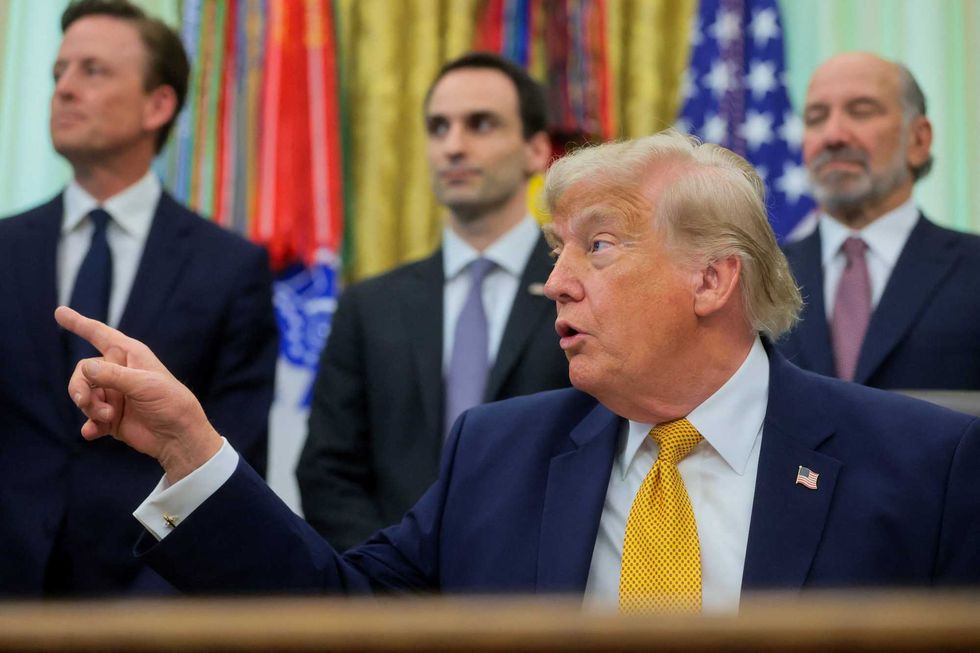
President Donald Trump appeared angered by a reporter's suggestion on Monday that his negotiation tactics with Iran may be giving the regime leverage over him. Trump held a press gaggle in the Oval Office after he signed an executive order to support America's quantum computing industry. While he was taking questions, one reporter asked Trump if he was willing to cause economic mayhem by striking Iran again, which Trump said was an option that he's considering. The back-and-forth escalated from there. War with Iran could cause worldwide depression, as you noted, Mr. President, the reporter began. Are you willing to risk economic catastrophe and strike Iran again?Well, not the way I'm doing it. It won't cause depression, Trump replied. Nuclear weapon supersedes depression. Depression is real bad. Nuclear weapons will cause depression.The reporter then asked if Trump's willingness to cause economic harm to Americans to continue fighting Iran gives the regime leverage over the Trump administration. Trump scoffed at the suggestion. Their Navy is gone. Their Air Force is gone. Their leaders are all dead. Their country is a mess. Their economy is shot, Trump began, repeating his claims from the weekend that recent reporting from The New York Times is all wrong about the state of Iran. The reason the news is doing so badly, or, put it another way, the reason why I won in a landslide even though I got 92 negative press is that nobody believes the press anymore, and they have to start believing, Trump said. The Times and everybody else, they're grasping for straws.Trump then claimed that the U.S. economy is doing well and continues to set records in performance. That's despite the most recent inflation report showing that inflation hit its highest point since the COVID-19 pandemic last month. So, when you ask a question like that, Trump said to the reporter, it's so stupid.
Narrative Intelligence Brief
This article was published by Raw Story, a source frequently categorized with a left bias based in United States of America. Our narrative intelligence engine continuously monitors coverage from this outlet to track framing, bias, and rhetorical patterns. In this specific piece, our systems detected the potential use of the "Name Calling" technique. This narrative approach is often used to shape reader perception by highlighting specific emotional or rhetorical angles. By understanding the editorial perspective of Raw Story, readers can better contextualize the information presented and compare it across our broader media matrix to find the real narrative.
More from Raw Story
June 22, 2026
Bombshell Nancy Guthrie revelation emerges in ransom note
June 22, 2026
Iran cracked the code on Trump and is exploiting his 'rapidly decaying' cognition: expert
June 22, 2026
Trump loyalist's 'stunning' first day as spy chief floors CNN reporter
June 22, 2026
'A boxcutter created algae?' Trump's new reflecting pool claim lands with a thud
June 22, 2026
Whoopi Goldberg turns the tables on Donald Trump
Reliability Insights
P
Technique: Name Calling
System analysis detected use of specific narrative techniques in this piece.Analysis Methodology
This narrative analysis was generated using the CoDataLab Global Intelligence Engine. Our proprietary AI scans thousands of cross-border sources to identify sentiment patterns, framing techniques, and potential media bias. While AI provides the data-driven foundation, our objective is to empower readers with additional context beyond the standard headline.The content displayed above is a structured summary designed for rapid information processing. For the full original report, please visit the source outlet.More Coverage
Discussion
"trump"
Trump’s Surrender Humiliation Deepens With Brutal Poll

Most Americans skeptical of Trump’s Iran deal: Poll

Chicago Mayor ignores another bloody weekend to focus on something called a, quote, “Transfemicide State of Emergency"