Today in News History
On June 23, several notable moments in the history of News stand out. In 1305, A peace treaty between the Flemish and the French is signed at Athis-sur-Orge. In 1879, Huda Sha'arawi, Egyptian feminist and journalist (died 1947) was born. In 1919, Mohamed Boudiaf, Algerian politician, President of Algeria (died 1992) was born. In 1920, Saleh Ajeery, Kuwaiti astronomer (died 2022) was born. In 1930, Marie-Thérèse Houphouët-Boigny, former First Lady of Ivory Coast was born. In 1931, Ola Ullsten, Swedish politician and diplomat (died 2018) was born. In 1942, Martin Rees, Baron Rees of Ludlow, English cosmologist and astrophysicist was born. In 1954, Salih Omurtak, Turkish general (born 1889) passed away. In 1961, The Antarctic Treaty System, which sets aside Antarctica as a scientific preserve and limits military activity on the continent, its islands and ice shelves, comes into force. In 2014, The last of Syria's declared chemical weapons are shipped out for destruction. Together, these milestones provide historical context for today's news news and ongoing narratives.
Top Iranian officials land in Oman to discuss managing Strait of Hormuz
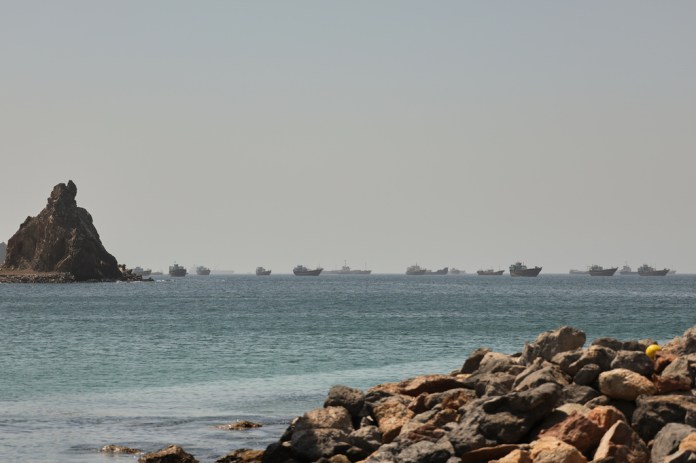
Two of Iran’s most prominent statesmen landed in Muscat, Oman, on Monday to discuss the possible management of the Strait of Hormuz. Iranian Parliament Speaker Mohammad Bagher Ghalibaf and Foreign Minister Abbas Araghchi are two of the most influential non-Islamic Revolutionary Guard Corps officials in Iran, making the visit particularly notable. They were welcomed by []
Narrative Intelligence Brief
This article was published by Washington Examiner, a source frequently categorized with a lean right bias based in United States of America. Our narrative intelligence engine continuously monitors coverage from this outlet to track framing, bias, and rhetorical patterns. Our initial algorithmic scan of this specific piece did not flag high-confidence rhetorical techniques, suggesting a generally straightforward reporting style or neutral framing. By understanding the editorial perspective of Washington Examiner, readers can better contextualize the information presented and compare it across our broader media matrix to find the real narrative.
More from Washington Examiner
June 22, 2026
Trump remembers Starmer as feckless on Iran war and energy as British PM resigns
June 22, 2026
Senate passes bill meant to curb housing costs, sending to House for final approval
June 22, 2026
FBI arrests two more men in foiled White House UFC drone attack
June 22, 2026
Four injured after Coast Guard helicopter crashes in Alaska
June 22, 2026
Supreme Court reinstates Pedro Hernandez murder conviction in Etan Patz case
Analysis Methodology
This narrative analysis was generated using the CoDataLab Global Intelligence Engine. Our proprietary AI scans thousands of cross-border sources to identify sentiment patterns, framing techniques, and potential media bias. While AI provides the data-driven foundation, our objective is to empower readers with additional context beyond the standard headline.The content displayed above is a structured summary designed for rapid information processing. For the full original report, please visit the source outlet.More Coverage
Discussion
"trump"
Trump’s Surrender Humiliation Deepens With Brutal Poll

Most Americans skeptical of Trump’s Iran deal: Poll

Chicago Mayor ignores another bloody weekend to focus on something called a, quote, “Transfemicide State of Emergency"