Today in News History
On June 18, several notable moments in the history of News stand out. In 860, Byzantine-Rus' War: A fleet of about 200 Rus' vessels sails into the Bosphorus and starts pillaging the suburbs of the Byzantine capital Constantinople. In 1788, Adam Gib, Scottish religious leader (born 1714) passed away. In 1902, Paavo Yrjölä, Finnish decathlete (died 1980) was born. In 1920, The Troubles in Northern Ireland (1920-1922) begin with a week of sectarian violence in Derry. In 1926, Tom Wicker, American journalist and author (died 2011) was born. In 1942, Pat Hutchins, English author and illustrator (died 2017) was born. In 1952, Tiiu Aro, Estonian physician and politician, Estonian Minister of Social Affairs was born. In 1955, Ed Fast, Canadian lawyer and politician was born. In 1964, Uday Hussein, Iraqi commander (died 2003) was born. In 1994, The Troubles: Members of the Ulster Volunteer Force (UVF) attack a crowded pub with assault rifles in Loughinisland, Northern Ireland. Six Catholic civilians are killed and five wounded. It was crowded with people watching the 1994 FIFA World Cup. Together, these milestones provide historical context for today's news news and ongoing narratives.
TikTok-era ‘fast-food terrorism’ is replacing ideological struggle
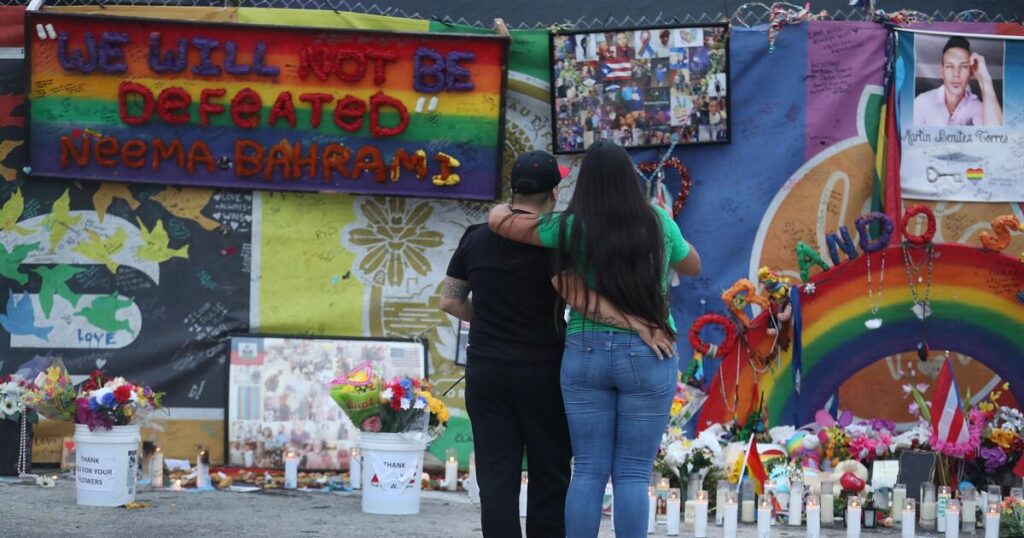
Terrorism is evolving, sometimes almost beyond recognition. The pace of radicalization is accelerating. Attacks have become increasingly basic, unsophisticated and cheap. For some, terrorism seems to be like a craving, a source of dopamine to satisfy carnal impulses. Quick preparation, convenience and mass production: Welcome to the age of fast-food terrorism. A growing proportion of []
Narrative Intelligence Brief
This article was published by DNyuz, a source frequently categorized with a lean right bias based in Armenia. Our narrative intelligence engine continuously monitors coverage from this outlet to track framing, bias, and rhetorical patterns. Our initial algorithmic scan of this specific piece did not flag high-confidence rhetorical techniques, suggesting a generally straightforward reporting style or neutral framing. By understanding the editorial perspective of DNyuz, readers can better contextualize the information presented and compare it across our broader media matrix to find the real narrative.
More from DNyuz
June 18, 2026
Erin Burnett throws Trump’s past Iran claims back in his face: ‘Exact same talking points’
June 18, 2026
Warsh Makes His Case With Jargon, and a Penchant for Detail
June 17, 2026
Effort to exempt new apartment buildings in L.A. from ‘mansion tax’ moves forward
June 17, 2026
Now you can visit dozens of state historic parks for free through 2026. Here’s how
June 17, 2026
Robert Thurman, Leading Interpreter of Tibetan Buddhism, Dies at 84
Analysis Methodology
This narrative analysis was generated using the CoDataLab Global Intelligence Engine. Our proprietary AI scans thousands of cross-border sources to identify sentiment patterns, framing techniques, and potential media bias. While AI provides the data-driven foundation, our objective is to empower readers with additional context beyond the standard headline.The content displayed above is a structured summary designed for rapid information processing. For the full original report, please visit the source outlet.More Coverage
Discussion
"england"
England storm to win over Croatia to banish big fear over Tuchel’s squad

FIFA World Cup 2026 LIVE updates: Colombia face Uzbekistan; Ghana defeat Panama 1-0; England beat Croatia 4-2; Ronaldo’s Portugal draw 1-1 with DR Congo

GB News offers verdict on Virgin Wines premium red trio on offer for just £15 this Father’s Day