Today in News History
On June 17, several notable moments in the history of News stand out. In 1740, Sir William Wyndham, 3rd Baronet, English politician, Chancellor of the Exchequer (born 1687) passed away. In 1858, Eben Sumner Draper, American businessman and politician, 44th Governor of Massachusetts (died 1914) was born. In 1933, Union Station massacre: In Kansas City, Missouri, four FBI agents and captured fugitive Frank Nash are gunned down by gangsters attempting to free Nash. In 1939, Eugen Weidmann, German criminal (born 1908) passed away. In 1940, World War II: RMS Lancastria is attacked and sunk by the Luftwaffe near Saint-Nazaire, France. At least 3,000 are killed in Britain's worst maritime disaster. In 1942, Doğu Perinçek, Turkish lawyer and politician was born. In 1943, Chantal Mouffe, Belgian theorist and author was born. In 1966, Mohammed Ghazy Al-Akhras, Iraqi journalist and author was born. In 2009, Ralf Dahrendorf, German-English sociologist and politician (born 1929) passed away. In 2013, Atiqul Haque Chowdhury, Bangladeshi playwright and producer (born 1930) passed away. Together, these milestones provide historical context for today's news news and ongoing narratives.
'Thousands of jobs are now at risk!' Labour MP sounds alarm over steel tariff plans
Narrative Analysis: Appeal to Fear
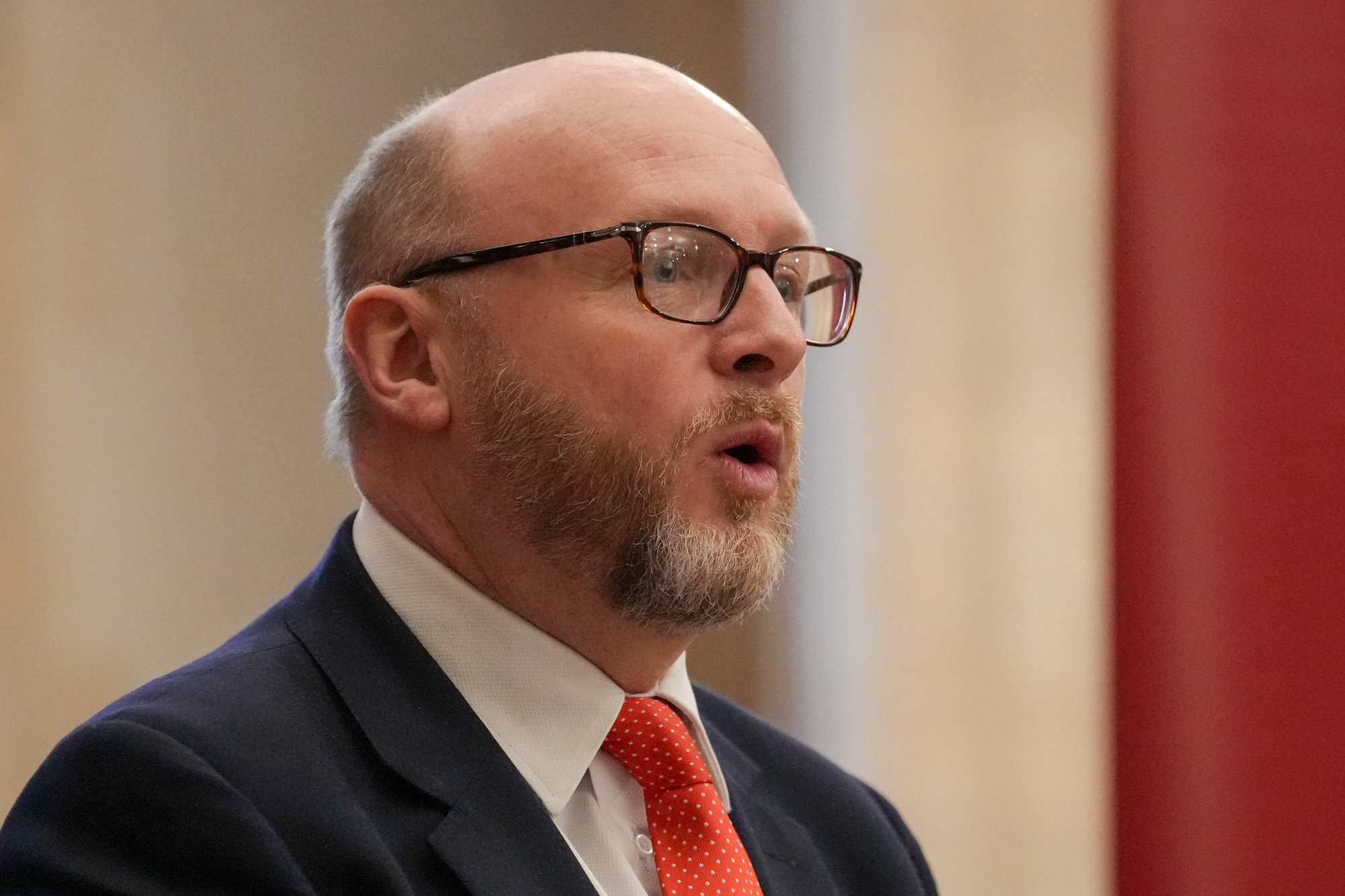
Thousands of jobs could be at risk under Labour’s proposed steel tariffs, politicians from across the political spectrum have warned ahead of the measures coming into force next month.Liam Byrne, the Labour chair of the business and trade select committee, said MPs had raised serious concerns with ministers after hearing evidence from steel producers about the impact of the planned changes. Speaking in the Commons, he said the committee had formally written to the Government following a round‑table discussion with industry representatives. “I’m today publishing the committee’s correspondence with ministers after the round table we held with steel producers, expressing a very high degree of alarm that these measures were not in the right place and thousands of jobs are now at risk,” he told MPs. TRENDING Stories Videos Your Say The concerns focus on plans to sharply tighten restrictions on steel imports entering the UK.Under the proposals, the volume of steel allowed into Britain tariff‑free will fall by 60 per cent, with imports above that quota facing a 50 per cent tariff, double the current 25 per cent rate.Ministers say the changes are intended to support domestic steelmaking and form part of a wider ambition to increase the share of British‑made steel used in the UK from around 30 per cent to 50 per cent.New arrangements are required because existing safeguard measures expire on July 30.The Government argues that without action, the UK risks becoming a destination for surplus steel diverted from markets such as the US, Canada and the EU, all of which operate strong protective tariffs. Officials say such a scenario would threaten the long‑term viability of Britain’s steel industry.Shadow business secretary Andrew Griffith said many of the steels required by aerospace, defence and other high‑value sectors are not made in the UK.“That is a real issue, for example in steel used in aircraft wings or in defence applications that we need to make ourselves safe,” he said.LATEST DEVELOPMENTSUK issues record £1million Russia sanction as Keir Starmer issues ultimatum to Vladimir PutinUK inflation holds at 2.8 but farmers warn food prices will rise after Iran conflictBBC to scrap shows and 'review' TV networks as it cuts £80million from content budgetHe also cited concerns raised by industry leaders, including Confederation of British Metal Forming president Stephen Morley, who warned the proposals risk “accelerating the decline of its manufacturing base rather than preserving it”.Liberal Democrat business spokeswoman Sarah Olney echoed those concerns, saying some sectors would struggle to adapt.“The specialist steels needed by aerospace, defence and precision engineering are not made in this country in the grades or volumes that those sectors require, and qualifying a new source takes not a fortnight, but several years,” she said.She argued that manufacturers could face significant additional costs despite having no viable domestic alternative.Business minister Chris McDonald, a former steelworker, defended the Government’s position and insisted the measures were necessary to secure the future of British steelmaking.He acknowledged that some specialist products not currently produced in the UK could be affected because tariff categories are defined broadly, but said ministers had made a deliberate choice to support greater domestic production capacity.“This is about choices, and this Government has decided that we do want to have a full aerospace supply chain including our own speciality steels production, and that is a different choice to the choice the previous Government made,” he said.Mr McDonald added that officials had listened carefully to concerns raised by manufacturers and industry groups regarding quota levels and specialist products.He did, however, maintain that the policy’s intention was to protect steels already made in Britain or that could be produced domestically in the future. Our Standards: The GB News Editorial Charter
Narrative Intelligence Brief
This article was published by GB News, a source frequently categorized with a lean right bias based in United States of America. Our narrative intelligence engine continuously monitors coverage from this outlet to track framing, bias, and rhetorical patterns. In this specific piece, our systems detected the potential use of the "Appeal to Fear" technique. This narrative approach is often used to shape reader perception by highlighting specific emotional or rhetorical angles. By understanding the editorial perspective of GB News, readers can better contextualize the information presented and compare it across our broader media matrix to find the real narrative.
More from GB News
June 17, 2026
AirPods 4 plummet to record-low price in early Amazon Prime Day deal
June 17, 2026
Lionel Messi's father 'suffering health problems' as tearful World Cup reaction explained
June 17, 2026
Michael Owen proposes radical plan for England involving substitutes ahead of Croatia match
June 17, 2026
Welfare has spiralled out of control but Rachel Reeves is too spineless to fix it
June 17, 2026
England's wildlife watchdog points out major flaw in Dartmoor pony cull
Reliability Insights
P
Technique: Appeal to Fear
System analysis detected use of specific narrative techniques in this piece.Analysis Methodology
This narrative analysis was generated using the CoDataLab Global Intelligence Engine. Our proprietary AI scans thousands of cross-border sources to identify sentiment patterns, framing techniques, and potential media bias. While AI provides the data-driven foundation, our objective is to empower readers with additional context beyond the standard headline.The content displayed above is a structured summary designed for rapid information processing. For the full original report, please visit the source outlet.More Coverage
Discussion
"die"
Hiring managers: Don’t make this fatal mistake when writing job descriptions

Lagos police demand retraction of misleading publication on Khan Salihu’s death

‘View’ Hosts Gets Visibly Angry as Their Trap for JD Vance Backfires