Today in News History
On July 6, several notable moments in the history of News stand out. In 1614, Man Singh I, Rajput Raja of Amer (born 1550) passed away. In 1837, R. G. Bhandarkar, Indian orientalist and scholar (died 1925) was born. In 1890, Dhan Gopal Mukerji, Indian-American author and scholar (died 1936) was born. In 1908, Anton Muttukumaru, Sri Lankan general and diplomat (died 2001) was born. In 1919, Edward Kenna, Australian Second World War recipient of the Victoria Cross (died 2009) was born. In 1925, Gazi Yaşargil, Turkish neurosurgeon and academic was born. In 1972, Zhanna Pintusevich-Block, Ukrainian sprinter was born. In 1975, Reşat Ekrem Koçu, Turkish historian, scholar, and poet (born 1905) passed away. In 1977, Makhaya Ntini, South African cricketer was born. In 2006, The Nathu La pass between India and China, sealed during the Sino-Indian War, re-opens for trade after 44 years. Together, these milestones provide historical context for today's news news and ongoing narratives.
Thousands of forgotten Punjabi WW1 soldiers recognised for first time in landmark update of war records
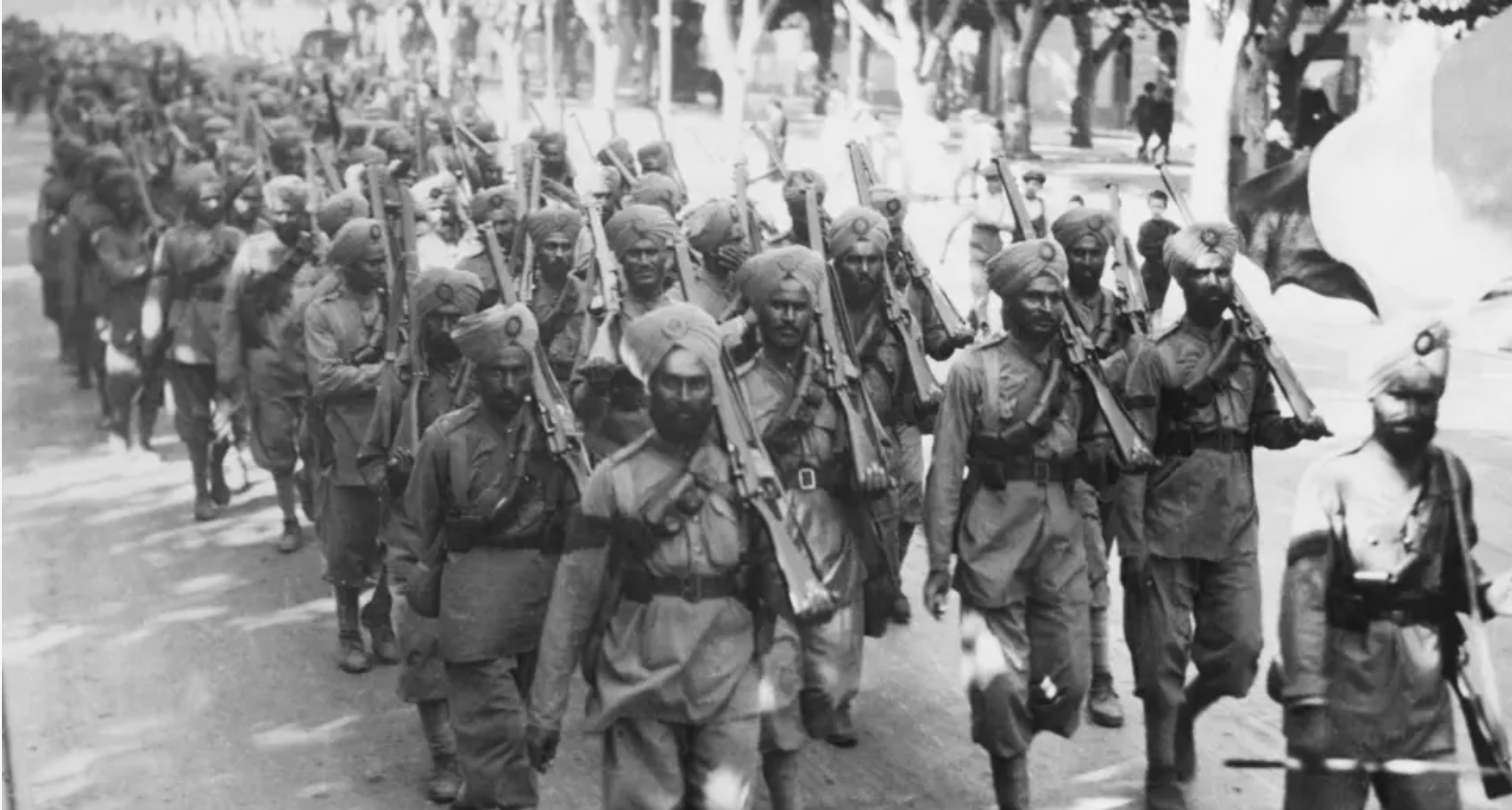
The Commonwealth War Graves Commission has undertaken its most significant records update in more than eight decades, adding nearly 10,000 British Indian Army soldiers who died during the World War One to its official casualty database.A total of 9,909 servicemen from pre-partition India will now receive formal recognition after researchers uncovered their names in historical documents.The discovery represents the largest expansion of CWGC records since the Second World War.British volunteers dedicated years to locating these forgotten soldiers within distinctive registers that were assembled in Punjab in the aftermath of the Great War. TRENDING Stories Videos Your Say Efforts are currently underway to identify and contact British descendants of the newly recognised casualties, finally acknowledging sacrifices that went unrecorded for over a century.For Sunney Palahey, a dentist based in Leicester, the update brings profound personal significance after years spent searching for details about his great-grandfather, who departed for war and never returned.Researchers reached out to inform him that his ancestor, Kesar Singh, had been identified within the newly examined registers and would be formally included in official records.The circle has closed. I feel much more complete, says Mr Palahey.It's been recognised by an authority, which it never was before. He is now an entry in the Commonwealth War Graves Commission. All the sacrifices seem to have been worth it.Mr Palahey describes how this official acknowledgement has instilled in him a sense of pride and connection to a worldwide community of those linked to First World War service.The UK Punjab Heritage Association spearheaded the initiative to digitise and examine these historical documents, a painstaking endeavour spanning several years.Dozens of weathered, leather-bound volumes containing handwritten entries sit on shelves at the Lahore Museum in Pakistan, each book embossed with a village name and filled with fragile pages documenting individual fates.LATEST DEVELOPMENTSNew bus service named after WW2 Dambusters to connect sites with links to RAFWorld War 2 veteran tells GB News 'in England we don't remember' as group honoured in the NetherlandsMajority of Britons believe World War 3 likely to erupt in next decade, poll findsFollowing the war's conclusion, officials had travelled to every settlement across Punjab to compile records of the 320,000 servicemen from that state alone.Jasmin Basra, a PhD student at the University of Greenwich who participated in the meticulous research, made an unexpected personal discovery during the project.As a Punjabi myself I feel really proud that I can do this part for the community, says Ms Basra.She encountered the names of her own great-great-grandfather and his brother, both of whom served in the British Indian Army during the conflict.That connection was emotional. As a second-generation British Punjabi, there is almost a disconnect from Punjab as well as not being fully connected to British history, but I think this is a tangible link to all of it, she says.Approximately 1.4 million individuals from the territories now comprising India, Pakistan and Bangladesh served in the British Indian Army during the First World War.CWGC historians explain that the majority of the 9,909 previously omitted men were casualties who succumbed to wounds away from the front lines.Decisions taken by the British Indian Government at the time denied these soldiers war graves status, a ruling that has now been reversed.Among the newly commemorated dead, roughly 40 per cent were Muslim, with Sikhs and Hindus each accounting for approximately 25 per cent.The Commission states that this inclusion forms part of broader efforts to address Euro-centric perspectives on the Great War, ensuring commemoration reflects the truly global nature of the conflict.Our Standards: The GB News Editorial Charter
Narrative Intelligence Brief
This article was published by GB News, a source frequently categorized with a lean right bias based in United States of America. Our narrative intelligence engine continuously monitors coverage from this outlet to track framing, bias, and rhetorical patterns. Our initial algorithmic scan of this specific piece did not flag high-confidence rhetorical techniques, suggesting a generally straightforward reporting style or neutral framing. By understanding the editorial perspective of GB News, readers can better contextualize the information presented and compare it across our broader media matrix to find the real narrative.
More from GB News
July 6, 2026
Killjoy council decides to remove historic stepping stones from picturesque river because someone might slip
July 6, 2026
Jeremy Clarkson's daughter mocked by Reform UK in new promo video
July 6, 2026
Traveller site located near school and historic hotel 'recommended for planning permission'
July 6, 2026
Hell may freeze over before British police once again become our true protectors. The rot set in many years ago
July 6, 2026
Claudia Winkleman, Prue Leith and Dr Who star lead best-dressed Wimbledon celebs as stars descend on day 8 of tennis tournament
Analysis Methodology
This narrative analysis was generated using the CoDataLab Global Intelligence Engine. Our proprietary AI scans thousands of cross-border sources to identify sentiment patterns, framing techniques, and potential media bias. While AI provides the data-driven foundation, our objective is to empower readers with additional context beyond the standard headline.The content displayed above is a structured summary designed for rapid information processing. For the full original report, please visit the source outlet.More Coverage
Discussion