
0
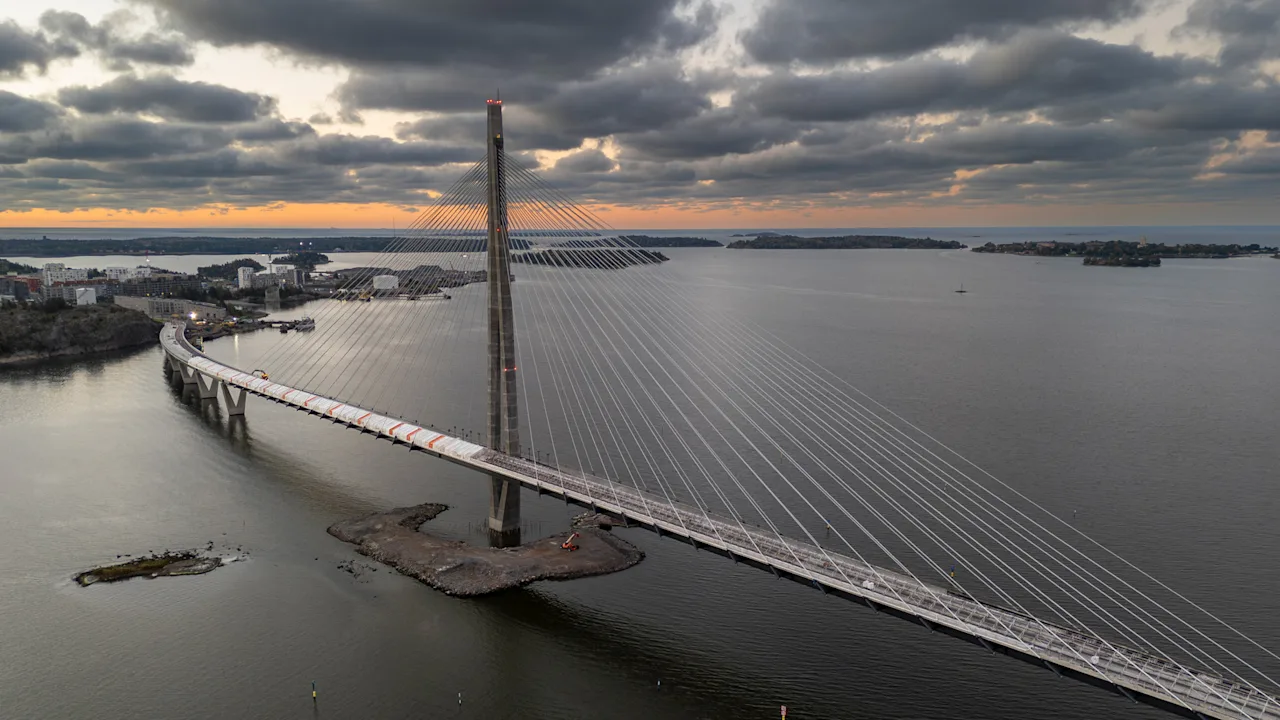
This stunning new bridge in Helsinki is designed for cyclists, pedestrians, and trams—but no cars
April 17, 2026
Posted 5 hours ago by
In a new neighborhood in Helsinki, you can skip owning a car. One key part of the district’s design? A new bridge that’s part of the city’s growing bicycle superhighway network. The 1.2-kilometer-long bridge, about three quarters of a mile, connects an island called Laajasalo to the city center. It opens to cyclists and pedestrians on April 18 and will soon also include trams.
No cars can cross it; drivers have to take a longer route over an older bridge. On one edge of the island, a former industrial site is now filled with apartment buildings, and the population is quickly expanding across the whole island. [Photo: ©Aarni Salomaa] “We’re looking at quite large new numbers of residents that will be in this part of town,” says Hanna Harris, the city’s chief design officer. “And the decision was made that we need to connect those parts of town across the water to downtown, but that we need to do it in a way that won’t increase congestion.” Called the Kruunuvuorensilta, or crown bridge, it’s part of the city’s broader work to decrease car use, including large investments in new rail lines and bike infrastructure. On the bridge, designers focused on the experience for people on foot or bike rather than those on the tram, who will only spend a couple of minutes crossing. “If people feel it’s too difficult or long a walk or cycle ride, then they won’t use it,” says Tom Osborne, director of UK-based Knight Architects, which partnered on the design with WSP Finland. [A test run of the new tram, which will start running later this year, taken before the bridge opened to pedestrians and cyclists. Photo: courtesy Helsinki Partners] The bridge curves slightly, which helps it seem less long to someone walking across. “A lot of times if you’re in a very long crossing and a very straight alignment, you get this vanishing point which can be quite intimidating and it feels like you’re never getting towards the end,” Osborne says. “But if you have a gentle curve, you can see your destination, which tends to make you feel safer and that you’re making better progress towards it.” [Rendering: courtesy Helsinki Partners] The bike path connects to the bigger bike network at each end of the bridge, and it’s separated so cyclists can ride quickly without the risk of crashing into pedestrians. Halfway across, the bridge widens and there are benches where people can rest and take in the view. In the winter, a snowplow will clear the paths so people can keep riding and walking. (Two tram lines will also begin running either late this year or in 2027.) Because Helsinki is built on an archipelago, the path connects to a few other small islands before reaching the main train station. [Rendering: courtesy Helsinki Partners] In the new development, residents are opting not to buy cars. “The density of that development is much greater because there’s no parking or fewer parking spaces required for each flat,” says Osborne. “And everyone’s buying bicycles, rather than buying cars, because that’s the mode that the bridge facilitates.” While the bridge was under construction, the city ran a ferry so that people weren’t tempted to start driving. [Photo: courtesy Helsinki Partners] The new bridge “makes biking and public transport a lot more attractive options on trips between Laajasalo and the inner city of Helsinki,” says Niko Setälä, the city’s team manager for the project. Transportation is now the city’s largest source of emissions. Though leadership is encouraging the switch to electric cars, it’s critical to make biking, walking, and transit as appealing as possible, he says. Right now, if someone wants to drive from the island to an office downtown, it’s a longer route. “You can still drive, but [the design is] trying to make people act in their own self interest,” Osborne says. “So if it’s cheaper and faster to cycle, then people will.”
Fast Company
Coverage and analysis from United States of America. All insights are generated by our AI narrative analysis engine.