Today in News History
On June 21, several notable moments in the history of News stand out. In 1860, William Dobinson Halliburton, British physiologist and biochemist (died 1931) was born. In 1894, Milward Kennedy, English journalist and civil servant (died 1968) was born. In 1915, The U.S. Supreme Court hands down its decision in Guinn v. United States 238 US 347 1915, striking down Oklahoma grandfather clause legislation which had the effect of denying the right to vote to blacks. In 1919, The Royal Canadian Mounted Police fire a volley into a crowd of unemployed war veterans, killing two, during the Winnipeg general strike. In 1947, Shirin Ebadi, Iranian lawyer, judge, and activist, Nobel Prize laureate was born. In 1949, Derek Emslie, Lord Kingarth, Scottish lawyer and judge was born. In 1951, Terence Etherton, English lawyer and judge was born. In 1973, In its decision in Miller v. California, 413 U.S. 15, the Supreme Court of the United States establishes the Miller test for determining whether something is obscene and not protected speech under the U.S. constitution. In 1989, The U.S. Supreme Court rules in Texas v. Johnson, 491 U.S. 397, that American flag-burning is a form of political protest protected by the First Amendment. In 2001, A federal grand jury in Alexandria, Virginia, indicts 13 Saudis and a Lebanese in the 1996 bombing of the Khobar Towers in Saudi Arabia that killed 19 American servicemen. Together, these milestones provide historical context for today's news news and ongoing narratives.
There’s no rule book for workplace investigations. So, how do we know they’re fair?
Workplace investigations, thrust into the spotlight by KPMG, can be conducted by people without accreditations and with no clear legal framework. Here’s how they work.
Narrative Intelligence Brief
This article was published by Sydney Morning Herald, a source frequently categorized with a lean left bias based in Australia. Our narrative intelligence engine continuously monitors coverage from this outlet to track framing, bias, and rhetorical patterns. Our initial algorithmic scan of this specific piece did not flag high-confidence rhetorical techniques, suggesting a generally straightforward reporting style or neutral framing. By understanding the editorial perspective of Sydney Morning Herald, readers can better contextualize the information presented and compare it across our broader media matrix to find the real narrative.
More from Sydney Morning Herald
June 21, 2026
These businesses made a buck from the war. Others are set to get a boost
June 19, 2026
This renovation takes heritage protection to a whole new level
June 19, 2026
Kyle Sandilands has victory lunch with John Ibrahim, John Singleton
June 19, 2026
ASX slumps amid mining rout; BHP tanks
June 19, 2026
ASX Runners of the Week: Norwood, Cauldron, 1414 Degrees & Red Metal
Analysis Methodology
This narrative analysis was generated using the CoDataLab Global Intelligence Engine. Our proprietary AI scans thousands of cross-border sources to identify sentiment patterns, framing techniques, and potential media bias. While AI provides the data-driven foundation, our objective is to empower readers with additional context beyond the standard headline.The content displayed above is a structured summary designed for rapid information processing. For the full original report, please visit the source outlet.More Coverage
Discussion
"iran"
Trump in full panic over war restarting – and ‘swearing a lot about it’: insider
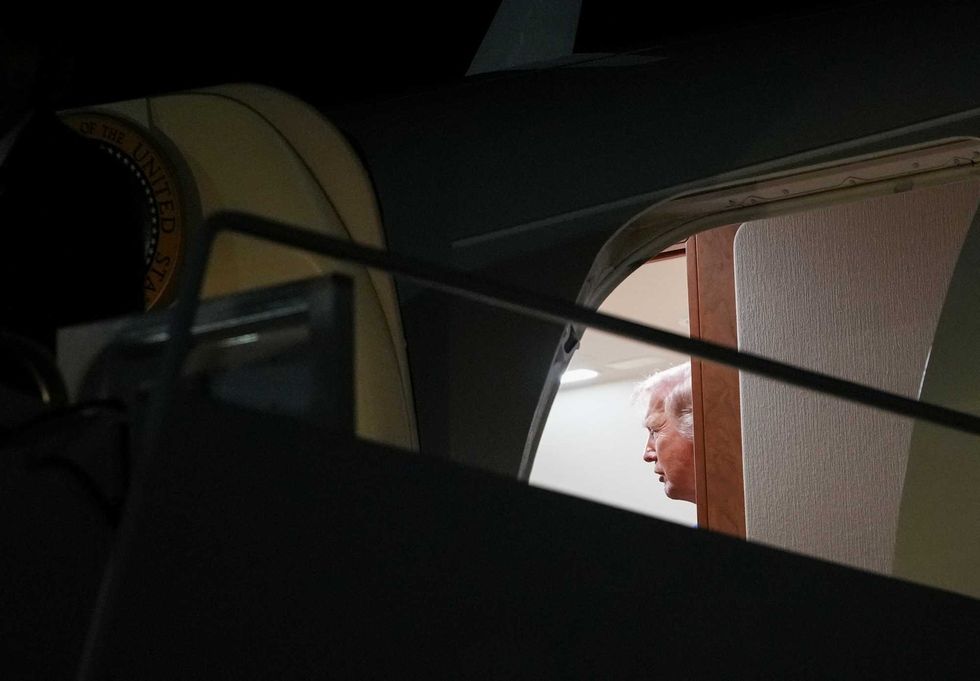
Rahm Emanuel says Trump ‘got schooled’ by Iran in bad ceasefire deal

Lawsuit filed on behalf of families of Minab victims against US