
Today in News History
On July 12, several notable moments in the history of News stand out. In 1801, British ships inflict heavy damage on Spanish and French ships in the Second Battle of Algeciras. In 1870, John A. Dahlgren, American admiral (born 1809) passed away. In 1918, The Imperial Japanese Navy battleship Kawachi blows up at Shunan, western Honshu, Japan, killing at least 621. In 1933, Victor Poor, American engineer, developed the Datapoint 2200 (died 2012) was born. In 1937, Robert McFarlane, American colonel and diplomat, 13th United States National Security Advisor (died 2022) was born. In 1946, Ray Stannard Baker, American journalist and author (born 1870) passed away. In 1973, A fire destroys the entire sixth floor of the National Personnel Records Center of the United States. In 1995, Chinese seismologists successfully predict the 1995 Myanmar-China earthquake, reducing the number of casualties to 11. In 1998, Arkady Ostashev, Soviet/Russian scientist and engineer (born 1925) passed away. In 2001, Space Shuttle program: Space Shuttle Atlantis is launched on mission STS-104, carrying the Quest Joint Airlock to the International Space Station. Together, these milestones provide historical context for today's news news and ongoing narratives.
The U.S. Navy’s Subsea Rare Earth Vulnerability
The Columbia-class ballistic missile submarine is the next generation of American nuclear deterrence. Twelve of these boats will replace the aging Ohio-class fleet, entering service over the 2030s and 2040s, each carrying 16 Trident IIs and driven by a ghost-quiet electric motor that renders them acoustically invisible to any adversary. What makes all of that possible — the propulsion, the stealth, the strike precision — depends almost entirely on rare earths refined in China. This is perhaps the Navy’s most consequential and least discussed vulnerability.The dependency runs through every layer of the capability stack. The sub’s permanent magnet motor requires The post The U.S. Navy’s Subsea Rare Earth Vulnerability appeared first on War on the Rocks.
Narrative Intelligence Brief
This article was published by War on the Rocks, a source frequently categorized with a center bias based in United States of America. Our narrative intelligence engine continuously monitors coverage from this outlet to track framing, bias, and rhetorical patterns. Our initial algorithmic scan of this specific piece did not flag high-confidence rhetorical techniques, suggesting a generally straightforward reporting style or neutral framing. By understanding the editorial perspective of War on the Rocks, readers can better contextualize the information presented and compare it across our broader media matrix to find the real narrative.
More from War on the Rocks
July 10, 2026
Going Over the Brink: How Hizballah’s Risk Strategy Made Lebanon Impossible to Ignore
July 9, 2026
Fraying Deals and Rising Strikes
July 9, 2026
The Pentagon’s Sprint to Get Tech Out of the Lab and to the Warfighter
July 9, 2026
The Pentagon’s AI Strategy Has a Funding Problem
July 9, 2026
Victory for al-Qaeda’s Affiliate in Mali Would be a Catastrophe
Analysis Methodology
This narrative analysis was generated using the CoDataLab Global Intelligence Engine. Our proprietary AI scans thousands of cross-border sources to identify sentiment patterns, framing techniques, and potential media bias. While AI provides the data-driven foundation, our objective is to empower readers with additional context beyond the standard headline.The content displayed above is a structured summary designed for rapid information processing. For the full original report, please visit the source outlet.More Coverage
Discussion
"wimbledon"
Back-To-Back! Jannik Sinner Keeps Hold of His Wimbledon Crown

Heartbreak for Cruz Hewitt as teen loses Wimbledon boys’ final thriller
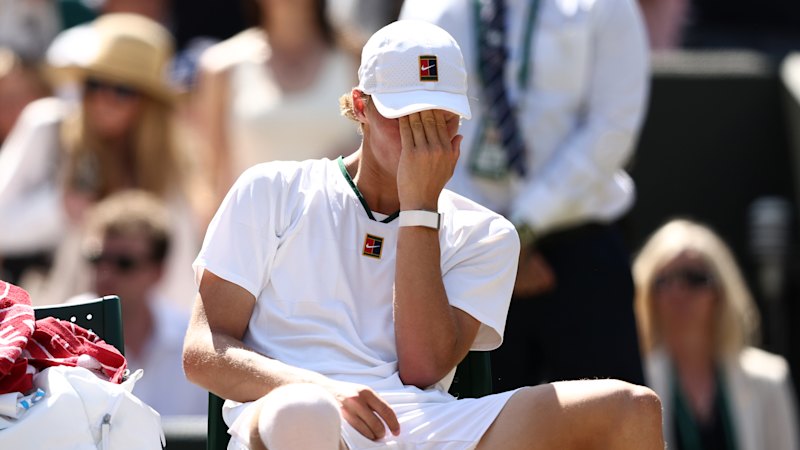
Jannik Sinner wins Wimbledon: Top seed beats Alexander Zverev in thrilling men's final to claim back-to-back titles

How other outlets are covering this story
Compare narratives across 6 related reports from 6 sources. Real Narrative News aggregates the coverage spectrum so you can see who emphasises what — bias tags reflect the outlet, not the story.
Coverage bias distribution
6 sources
Left 17%
Center 17%
Right 50%
Daily Sabah
· Jun 29, 2026
Rare marine life draws divers, researchers to Malaysia's Si Amil Island
Rare marine life draws divers, researchers to Malaysia's Si Amil Island
Korea Times News
· Jul 9, 2026
Korean shipbuilders eye US naval market after Canada submarine setback
Korean shipbuilders eye US naval market after Canada submarine setback
UrduPoint
· Jul 7, 2026
Ocean warming, marine heatwaves and sea-level rise pose increasing risk in South-West Pacific region: WMO
Ocean warming, marine heatwaves and sea-level rise pose increasing risk in South-West Pacific region: WMO
Fox News
· Jun 28, 2026
US Marine missing off Southern California coast after training exercise; search shifts to recovery
A U.S. Marine aboard the USS Anchorage went missing during a training exercise off Southern California, and the search has now shifted to a recovery.
Defence Blog
· Jul 12, 2026
USS Tucson fast-attack submarine relocates to Guam
The fast-attack submarine USS Tucson (SSN 770) slid into Apra Harbor on July 10, swapping its old home in Pearl Harbor for a new one at Naval Base Guam, in a routine-looking port call that carries real weight for how the U.S. Navy positions its undersea forces against a rapidly expanding Chinese fleet. Tucson, a []
Ars Technica
· Jul 10, 2026
Check out the first images of Quest shipwreck
The Quest shipwreck is in worse shape than expected, but it has turned into a thriving marine ecosystem.
Topics:
Related coverage for "The U.S. Navy’s Subsea Rare Earth Vulnerability": Daily Sabah — Rare marine life draws divers, researchers to Malaysia's Si Amil Island. Korea Times News — Korean shipbuilders eye US naval market after Canada submarine setback. UrduPoint — Ocean warming, marine heatwaves and sea-level rise pose increasing risk in South-West Pacific region: WMO. Fox News — US Marine missing off Southern California coast after training exercise; search shifts to recovery. Defence Blog — USS Tucson fast-attack submarine relocates to Guam. Ars Technica — Check out the first images of Quest shipwreck