
The U.K.’s next banknotes might feature cute foxes and prismatic butterflies
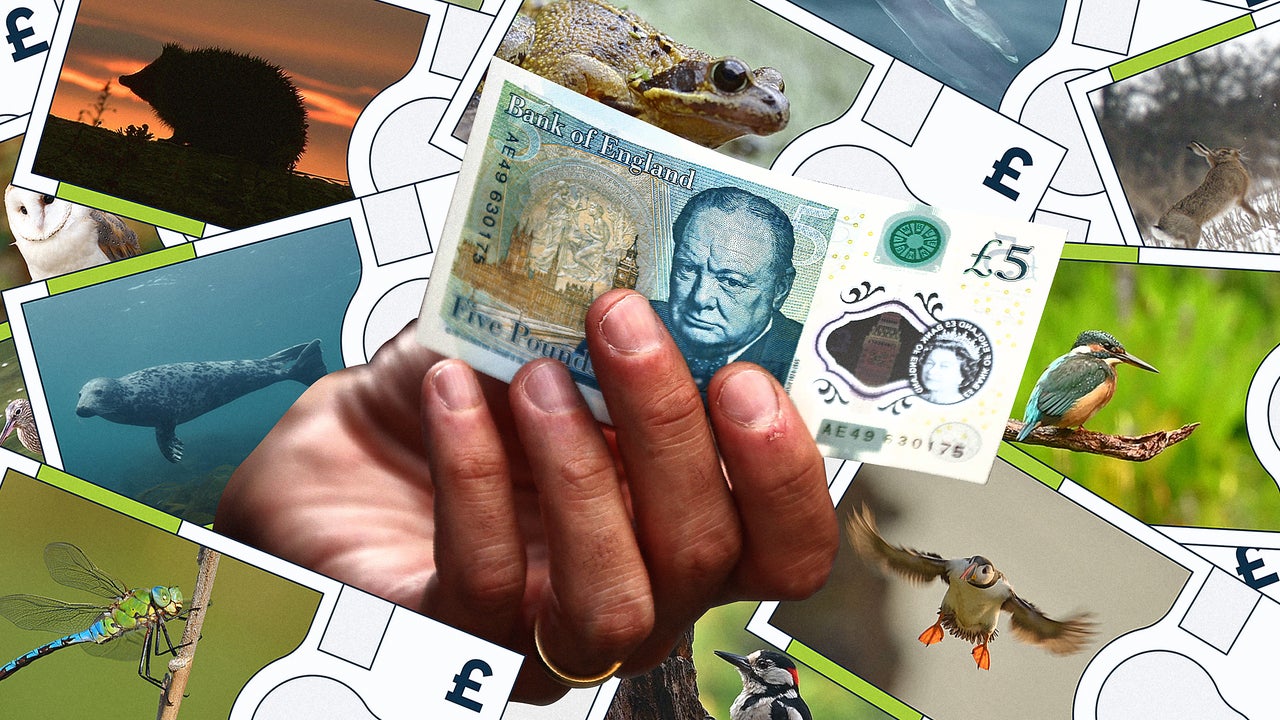
What do a European hedgehog, a Eurasian curlew, and a buff-tailed bumblebee have in common? They all might be the stars of the U.K.’s next run of banknotes. Following a public consultation last year, the Bank of England has decided its next series of £5, £10, £20, and £50 bills will feature wildlife instead of historical figures. The financial institution is letting the public vote on which creatures will star on the paper currency. The central bank released a shortlist of 18 species divided into three categories—mammals; birds; and amphibians, insects, and fish—with a public vote open from June 3 to July 3. The chosen animals will replace the former designs, among them one that includes the divisive former prime minister Winston Churchill. [Images: Bank of England] Voters can choose one animal per category of species, with candidates including the gray seal, red fox, great spotted woodpecker, and the common frog. The selected animals—all native to the United Kingdom (England, Scotland, Wales, and Northern Ireland) and chosen by a panel of wildlife experts—will replace current human figures on the banknotes. The winners will be announced by the end of the year. The central bank has stated that winners will not necessarily be the most-voted-for animals, but public feedback will be used in the decision process. Fear not: Humans aren’t disappearing entirely. The designs for the series will also include a portrait of the monarch. Despite the adorable nature of the wild subjects, the decision to redesign the bills is more of a practical than stylistic one. “To ensure our banknotes remain secure, we periodically issue a new series which incorporates the latest security features to help prevent counterfeits,” the Bank of England said on its website. “When we issue a new series, we also usually update the imagery on banknotes to help the public easily distinguish them.” While the redesign is under development, individuals shouldn’t expect to see the animal-themed banknotes in circulation anytime soon. “It will be a number of years before the next series is launched,” the bank said. “It is a detailed, multiyear process to design, test, and print the notes, ensuring they are high quality, resilient, and accessible, and incorporate the latest anti-counterfeiting technology.” Cute creatures on currency are far from an aberration. One in six countries prominently feature animals on their money, often because of their widespread cultural appeal, in order to raise awareness about conservation efforts and to avoid historically controversial people. When done well, the currency can become a collector’s item. In 2021, Mexico redesigned its 50-peso bill to feature an axolotl, a salamander-like amphibian whose face looks like it’s always smiling. The aquatic creature replaced José Maria Morelos (1765–1815), leader of the Independence movement, on the banknote. The design was an instant icon. Residents refused to spend the pinkish-purple bill, and the Bank of Mexico estimates that people are hoarding 26 million worth of the currency. One country, however, seems to be resisting the trend: the United States. The Trump administration has pushed for a 250 banknote featuring the president’s portrait to commemorate the U.S.’s 250th anniversary—despite federal law prohibiting living figures from appearing on currency. The U.K.’s announcement has sparked strong reactions, with some individuals sharing their discontent over replacing historical figures with the beauty of nature. Nigel Farage, the conservative leader of the Reform Party, called the decision “the definition of woke.” But the news has mostly been well received, with one user saying on X: “Churchill getting replaced by a dolphin would be one of the biggest glow-ups in banknote history.” Another commenter on X remarked: “Putting a red fox on the banknote is the perfect choice. At least the cunning nature matches the people running the banks.”
Narrative Intelligence Brief
This article was published by Fast Company, a source frequently categorized with a lean left bias based in United States of America. Our narrative intelligence engine continuously monitors coverage from this outlet to track framing, bias, and rhetorical patterns. Our initial algorithmic scan of this specific piece did not flag high-confidence rhetorical techniques, suggesting a generally straightforward reporting style or neutral framing. By understanding the editorial perspective of Fast Company, readers can better contextualize the information presented and compare it across our broader media matrix to find the real narrative.
Explore related topics: Stay informed with Real Narrative News as we track unfolding stories. Dive deeper into our coverage of pivotal topics including disparition lyhanna, coupe monde, مراسل المنار, senate passes, real madrid, james handy, hong kong, donald trump, emmanuel macron, and north korea. Our intelligence streams continuously monitor these keywords to bring you unbiased analysis and real-time updates on topics like "The U.K.’s next banknotes might feature cute foxes and prismatic butterflies".
More from Fast Company
June 5, 2026
Voters just did something no U.S. city has ever done to stop AI data centers
June 5, 2026
Summer blockbusters are back: 12 movies to see as Hollywood celebrates a historic year at the box office
June 5, 2026
Employees aren’t resisting AI—they’re resisting fear
June 5, 2026
Prediction markets are fueling a new era of political graft
June 5, 2026
Here’s everything ‘Infinite Jest’ got right 30 years ago about life in 2026
Analysis Methodology
This narrative analysis was generated using the CoDataLab Global Intelligence Engine. Our proprietary AI scans thousands of cross-border sources to identify sentiment patterns, framing techniques, and potential media bias. While AI provides the data-driven foundation, our objective is to empower readers with additional context beyond the standard headline.The content displayed above is a structured summary designed for rapid information processing. For the full original report, please visit the source outlet.More Coverage
Discussion